


Modern telecommunication hubs, colocation facilities, and enterprise server farms require continuous electrical supply with zero tolerance for unplanned interruptions. In mission-critical environments adhering to Uptime Institute Tier III or Tier IV standards, diesel generation assets serve as the definitive line of defense during utility grid anomalies. Selecting an engineered Yuchai generator set for data center backup power provides infrastructure operators with a high-displacement, mechanically robust standby resource designed to absorb severe step loads, mitigate transient frequency dips, and interface seamlessly with continuous power conditioning equipment. As grid instability and rack power densities climb globally, evaluating the verified mechanical specifications, excitation systems, and lifecycle maintenance parameters of these generator packages is essential for design engineers and facility procurement teams.
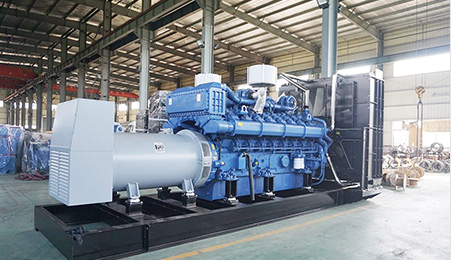
A mission-critical Yuchai generator set for data center backup power is not a standard industrial off-the-shelf unit; it is an integrated power generation package configured around heavy-duty engine platforms engineered for rapid startup and sustained high-load capacity. Built primarily around multi-cylinder platforms such as the V-type YC12VTD, YC16VC, or heavy inline 6-cylinder series like the YC6TD and YC6C, these assemblies leverage high-pressure common rail (HPCR) electronic injection and advanced electronic control units (ECU). The electronic governing system monitors operating states continuously to modulate fuel delivery dynamically within milliseconds, providing the tight rotational speed control and low steady-state frequency bands demanded by sensitive IT infrastructure.
Complementing the prime mover is an industrial-grade, four-pole, brushless synchronous alternator—typically sourced from global manufacturers such as Stamford, Leroy-Somer, or Marathon—featuring Class H insulation and Class H/F temperature rise ratings. Crucially for data center applications, these alternators incorporate permanent magnet generator (PMG) or auxiliary winding excitation systems paired with digital automatic voltage regulators (AVR). This configuration decouples the exciter field supply from the main stator output, preventing voltage collapse during high-inrush motor starting events or unexpected transient short circuits on downstream busbars.
Structural integration includes heavy-duty welded steel base frames with integrated anti-vibration isolators to dampen harmonic transfer to building structures. Cooling systems are customized with heavy-duty 50-degree-Celsius ambient-rated mechanical or remote electric radiators, avoiding thermal deration during peak summer grid failures. The entire package is managed by digital paralleling controllers capable of autonomous black-start sequencing, auto-synchronization, and multi-protocol communication with centralized Building Management Systems (BMS) via Modbus RTU, RS485, or SNMP interfaces.
Data center electrical loads are fundamentally distinct from conventional commercial or manufacturing loads. While industrial facilities often present progressive mechanical loads, data centers introduce significant non-linear loads characterized by switch-mode power supplies (SMPS), high harmonic distortion, and leading power factor conditions generated by lightly loaded input filters on uninterruptible power supplies (UPS). When utility power is lost, the emergency generation package must accept substantial block loads—including chilled water pumps, computer room air handlers (CRAH), chillers, and battery charging circuits—without exceeding strict frequency and voltage excursion limits defined by ISO 8528-5 Class G3 performance thresholds.
High-displacement Yuchai engine architectures supply the physical rotating inertia and low-end torque necessary to resist sudden rotational deceleration under sudden high-percentage block loading. The integration of high-performance turbochargers configured for transient recovery ensures that air intake volume matches rapid electronic fuel enrichment. Consequently, voltage dip remains within 15% and recovers to nominal levels within one second, while frequency deviation remains bounded, preventing upstream UPS units from rejecting generator power and draining facility battery banks unnecessarily.
Beyond electrical transients, Total Cost of Ownership (TCO) and long-term durability drive deployment decisions. Critical facilities require standby engines with verified mean time between failures (MTBF), low specific fuel consumption across partial and prime operating bands, and wide availability of standardized consumables. Industrial Yuchai platforms provide balanced mechanical tolerances, wet cylinder liners for overhaul economy, and extended valve adjustment intervals, presenting a competitive life-cycle investment profile for multi-megawatt standby deployments.
Correct sizing and system integration of a Yuchai generator set for data center backup power requires an analytical evaluation of electrical, mechanical, and ambient operational variables rather than a simple rule-of-thumb nameplate calculation. Sizing errors can lead to alternator overheating from harmonic currents or severe engine wet-stacking caused by extended operation below minimum thermal load thresholds. The following technical checklist outlines the critical verification parameters for data center power engineers:
Electrical configuration must account for both running capacity and dynamic step response. Key checkpoints include:
- Rating Verification: Clarify the rating criteria according to ISO 8528-1. Differentiate between Emergency Standby Power (ESP), Prime Power (PRP), and continuous Data Center Power (DCP) requirements. A standard standby rating cannot run continuously without limitation, whereas DCP ratings allow for continuous operation with variable load factors under specified parameters.
- Reactance and Harmonic Handling: Specify alternators with a low sub-transient reactance (typically X"d between 10% and 12%) to minimize the voltage distortion caused by harmonic current feedback from UPS rectifiers and variable frequency drives (VFDs).
- Alternator Deration and Thermal Margins: Size the alternator nameplate kVA at 120% to 130% of the engine kW rating to handle non-linear loads, high neutral currents, and low leading power factors without thermal degradation of the stator windings.
- Step-Load Capability: Confirm that the selected package complies with ISO 8528-5 Class G3 criteria, verifying that it can accept a single-step load of at least 50% to 60% of rated capacity while remaining within the voltage and frequency recovery windows required by downstream static switchgear.
The mechanical ecosystem surrounding the generator dictates its run-time resilience during prolonged outages:
- Radiator Sizing: Ensure radiators are engineered for 50-degree-Celsius ambient conditions, factoring in static pressure losses imposed by acoustic louvers, ductwork, and debris screens.
- Fuel Autonomy and Polishing: Maintain minimum continuous runtime requirements (standardly 24 to 72 hours) through a two-stage storage system comprising an isolated bulk storage tank and a gravity-fed or pump-assisted day tank inside the generator room. Include automated fuel polishing circuits to prevent microbial growth and particulate build-up in dormant diesel reserves.
- Preheating Systems: Incorporate dual thermostatically controlled jacket water heaters and lube oil heaters with circulation pumps. Maintaining engine core coolant at or above 40 degrees Celsius is critical for securing 10-second starting and immediate load pickup capabilities.
- Starting Systems: Install dual electric starting motors powered by redundant battery banks with cross-over switching and independent multi-stage float chargers, or specify hybrid electric/pneumatic starting architectures where extreme reliability mandates physical separation of starting energy sources.
Even a precisely calculated generation package will fail to provide reliable standby protection if on-site installation, commissioning, and scheduled maintenance deviate from rigorous industrial standards. Physical installation must address vibration isolation, exhaust backpressure calculations, and balanced airflow ventilation. Exhaust pipe routing should incorporate stainless steel expansion bellows to absorb thermal growth, low-restriction silencers engineered to target ambient sound decibel ratings, and properly insulated thermal wrapping to minimize radiant heat rejection within the mechanical plant room.
Site Acceptance Testing (SAT) is the most critical phase prior to handing the facility over to operations. Commissioning protocols must mandate comprehensive load bank testing rather than relying solely on utility-outage simulation with live IT infrastructure. A formal SAT protocol begins with cold-start verification to confirm full synchronization within 10 seconds, followed by stepped load profiling at 25%, 50%, 75%, and 100% of the continuous rating over extended multi-hour durations. Finally, transient load tests must subject the package to instantaneous 0-to-50% and 50-to-100% load steps while multichannel oscilloscopes record voltage and frequency recovery waveforms to verify Class G3 compliance.
Post-commissioning reliability relies on disciplined preventive maintenance. Because standby generators operate in static states for long intervals, light-load carbon buildup—commonly termed wet-stacking—poses a constant operational threat. Preventative routines require weekly unloaded test cycles for basic control verification, coupled with mandatory monthly or quarterly loaded runs using dynamic building loads or stationary load banks at not less than 60% load for at least two hours to maintain optimal exhaust temperatures and clean piston ring seats. In parallel, periodic fluid condition monitoring via laboratory oil analysis, fuel sediment sampling, and coolant inhibitor testing provides early detection of engine wear patterns long before physical components degrade.
Deploying heavy-duty generation assets in mission-critical environments requires an end-to-end focus on certified transient performance, rigorous mechanical matching, and balance-of-plant design. Standby power in modern computing facilities acts not simply as an insurance policy, but as an active component of the critical electrical distribution architecture. By selecting verified engine platforms like Yuchai's high-displacement diesel range, pairing them with correctly excited alternators, and adhering to strict step-load and thermal engineering checklists, infrastructure designers can assure resilient, deterministic backup capability across prolonged utility supply disruptions.
Browse server-rendered product categories, application solutions, project references and technical articles. These direct links help buyers and search crawlers reach useful pages without relying on JavaScript menus.
Compare equipment families before confirming output, duty, environment and accessories.
Start selection from critical loads, motor starting, operating hours and site derating.
Read project references, company updates and generator-set selection or maintenance articles.
Wanjin supports generator-set sales, configuration checks, quotation, installation coordination, repair and scheduled maintenance.

