


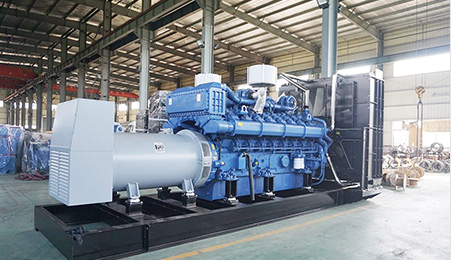
Proper Yuchai generator set engine and alternator matching is the foundational engineering requirement that dictates an industrial power system's operational efficiency, transient response, and structural longevity. In industrial power generation, an engine and an alternator cannot be coupled purely based on nominal nameplate capacity. An internal combustion diesel engine converts fuel energy into mechanical brake power, whereas a synchronous alternator converts mechanical torque into electrical output while introducing magnetic drag, reactive power demands, and rotational harmonics. When deploying heavy-duty power equipment, industrial operators and facility engineers must evaluate how specific Yuchai diesel platforms—ranging from multi-cylinder stationary units to heavy-duty prime power engines—interface mechanically, thermally, and electrically with brushless synchronous alternators under dynamic facility load conditions.
At its core, mechanical and electrical integration requires a balance between the engine's effective brake power (kWm) and the alternator's gross electrical output capacity (kWe). Alternators are not 100 percent efficient; magnetic core losses, copper winding resistance, and windage consume between 5 to 10 percent of the prime mover's mechanical energy. Consequently, the mechanical power supplied by the Yuchai diesel engine at the flywheel must exceed the targeted electrical output of the generator set divided by the alternator's operational efficiency. Failure to calculate this margin leads directly to premature engine lugging, under-frequency events, and elevated exhaust gas temperatures when operating at full design load.
Beyond steady-state energy conversion, torsional compatibility is a vital mechanical pillar of Yuchai generator set engine and alternator matching. The cyclical firing impulses of a multi-cylinder diesel engine generate alternating torsional stress along the crankshaft. If the rotational inertia of the alternator rotor and the flexible coupling disc does not align with the crankshaft's natural frequency harmonics, destructive torsional vibrations can develop. Industrial packaging standards mandate a mathematical Torsional Vibration Analysis (TVA) to confirm that the natural harmonic nodes fall safely outside the engine's nominal operating speed range of 1500 RPM (50 Hz) or 1800 RPM (60 Hz). Standardized SAE flywheel housings (such as SAE 00, 0, 1, or 2) and matching flexible drive discs (SAE 14, 18, or 21) ensure concentric alignment, but structural rigidity must be verified to prevent bearing shear and cyclical crankshaft fatigue.
Thermal classification and insulation ratings establish the electrical boundary conditions for this integration. Synchronous alternators paired with Yuchai engines are commonly rated under Class H insulation standards (180 degrees Celsius), but specifying them to operate at Class F (155 degrees Celsius) or Class B (130 degrees Celsius) temperature rise limits provides necessary thermal headroom. A diesel engine operating in severe ambient environments—such as high altitudes or high-temperature intake conditions—experiences progressive derating. If the alternator is tightly matched without corresponding thermal allowances, the combined unit will experience insulation breakdown, stator winding degradation, and localized hot-spot formation within the alternator core long before the mechanical engine reaches its physical thermal limit.
Accurate system configuration relies on distinguishing between real power (kW) and apparent power (kVA), dictated by the operating power factor (typically 0.8 lagging for three-phase industrial installations). While the diesel engine is sensitive strictly to the real power requirement and mechanical friction, the alternator is limited by current carrying capacity and magnetic saturation. Operating at an excessively low power factor (for example, 0.6 or 0.7 lagging due to unloaded induction motors or heavy transformer loads) draws higher amperage through the alternator stator. This condition produces thermal distress within the windings even if the Yuchai engine's mechanical brake power is only partially utilized.
In real-world facilities, loads are applied dynamically rather than continuously. ISO 8528-5 classifies generator set performance into G1, G2, and G3 execution classes based on permissible frequency and voltage deviations during sudden step loads. Yuchai engines equipped with electronic governors or common rail fuel systems deliver rapid fuel delivery responses to sudden load changes. However, recovering from a large block load demands high dynamic torque. If the alternator's subtransient reactance (X"d) is too high, instantaneous voltage dip (IVD) will exceed acceptable thresholds, causing contactors to drop out and sensitive variable frequency drives (VFDs) to fault before the engine's turbocharger can build boost pressure.
Direct-on-line (DOL) electric motor starting imposes an instantaneous inrush demand typically 6 to 8 times the motor's full-load running amperage. Sizing the alternator requires calculating the Motor Starting kVA (SkVA) capacity against permissible instantaneous voltage drops, usually capped at 15 to 25 percent. The choice of alternator excitation significantly alters this dynamic: standard shunt-excited alternators draw power directly from the main stator output, meaning a severe output voltage dip collapses the excitation field. Incorporating an auxiliary winding system (such as AREP) or a Permanent Magnet Generator (PMG) provides sustained short-circuit current (typically 300 percent for 10 seconds) and isolates the Automatic Voltage Regulator (AVR) from load-induced voltage distortion, allowing the Yuchai engine to pull through heavy transient loads cleanly.
A frequent error encountered in project procurement is the direct 1:1 nominal rating assumption, where a buyer pairs an engine rated for a specific standby output directly to an alternator of the exact same continuous rating without accounting for parasitic drivetrain losses. The mechanical fan on a radiator assembly consumes significant brake power—often 4 to 8 percent of the gross engine output depending on ambient temperature demands and static airflow pressure. Neglecting cooling fan power, alternator efficiency losses, and baseline house loads results in an over-committed engine that drops below nominal synchronous speed under full continuous electrical load.
Another systemic operational pitfall involves misinterpreting application duty cycles as defined by ISO 8528. Pairing an emergency standby-rated (ESP) engine with a continuous-rated (COP) or prime-rated (PRP) alternator creates an imbalance in long-term duty potential. Standby engines allow for short-duration high-output operations with varying load profiles, but operating them in base-load continuous regimes leads to rapid carbon accumulation, wet stacking, and thermal fatigue. Conversely, mating a high-displacement continuous Yuchai prime mover with an undersized, low-efficiency alternator wastes capital expense on fuel and mechanical capability while choking electrical output due to alternator stator temperature rise limits.
Specifying engineers also frequently fail to account for non-linear load profiles and harmonic currents. Modern processing plants, data nodes, and industrial complexes utilize heavy concentrations of rectifiers, uninterruptible power supplies (UPS), and variable speed drives. These loads draw non-sinusoidal currents, injecting 5th, 7th, and 11th order harmonics back into the electrical distribution system. When Yuchai generator set engine and alternator matching ignores harmonic content, these harmonic currents induce parasitic eddy-current heating within the alternator rotor pole faces and distort the zero-crossing points of the voltage waveform. This causes the AVR to deliver erratic field current, generating hunting phenomena that cyclic engine governing systems cannot stabilize.
Finally, environmental derating oversights continuously plague field deployments. Ambient temperature, site elevation, and relative humidity directly alter the mass flow rate of air entering naturally aspirated and turbocharged Yuchai engines, diminishing available combustion oxygen. Simultaneously, higher ambient temperatures reduce the density and cooling capability of the air forced through the alternator windings by its internal fan. If the alternator and engine are calculated using standard baseline test conditions (25 degrees Celsius, 100 meters above sea level) but deployed in desert environments or high-altitude mining sites without applying dual derating coefficients, the complete system will trip on thermal over-temperature or exhaust smoke density warnings.
To prevent integration failures and maintain warranty compliance across demanding installations, project engineers and procurement officers must execute a systematic technical evaluation before finalizing an equipment order. The following technical checklist delineates the mandatory parameters for industrial configurations:
Calculate the distinct breakdown of the connected load: total steady-state running kW, maximum transient step-load kW, total SkVA required for motor starting, and the percentage of non-linear loads. Ensure the alternator's subtransient reactance (X"d) is sized below 12-14 percent if non-linear loads exceed 25 percent of the total capacity, mitigating total harmonic distortion (THD) and preventing excessive waveform notch depth.
Verify that the Yuchai engine's net brake power at the specified duty rating satisfies the following formula across all operating conditions:
Net Engine Power (kWm) >= [Alternator Output (kWe) / Alternator Efficiency] + Radiator Fan and Parasitic Losses (kWm).
Cross-check fuel consumption curves at 50, 75, and 100 percent load steps against the targeted operational budget to ensure the engine operates within its optimal thermal efficiency window (typically between 70 and 85 percent of rated capacity).
Apply manufacturer-published derating curves for both the specific Yuchai engine model and the selected alternator frame. For locations above 1000 meters elevation or where ambient intake air exceeds 40 degrees Celsius, apply compounded derating factors. Ensure that the mechanical power derating margin tracks closely with the electrical thermal dissipation derating to avoid dynamic load imbalances under maximum ambient extremes.
Select the alternator excitation system based on the critical nature of the facility. For industrial facilities running heavy induction motors or automated industrial lines, eliminate standard shunt excitation in favor of PMG or auxiliary winding (AREP) systems. Ensure the digital Automatic Voltage Regulator features under-frequency roll-off (UFRO) curves that coordinate with the electronic governor profile of the Yuchai engine, enabling the engine to recover speed smoothly after sudden load steps.
Verify that the mechanical packaging specifications match precisely: single-bearing configurations utilizing flexible steel drive discs must be verified against the specific SAE flywheel housing dimensions of the Yuchai base engine. Ensure the manufacturer executes a multi-step Factory Acceptance Test (FAT) that includes a standard 0 to 100 percent resistive load step test, a transient motor-starting simulation, a full thermal heat run test, and vibration spectral analysis across all bearing journals.
The operational success of an industrial generation asset depends entirely on the precise mechanical, electrical, and thermal integration of its primary components. Comprehensive Yuchai generator set engine and alternator matching balances the raw rotational torque and dynamic response of the diesel engine against the reactive demands, thermal constraints, and harmonic impacts of the electrical system. Sizing must never be treated as a pure mathematical nameplate equivalence.
By establishing rigorous procurement specifications—grounded in accurate load profiles, proper ISO ratings, excitation field architectures, and thermal derating principles—engineers and facility operators can prevent common field failures such as torsional fatigue, voltage collapse, and premature thermal degradation. A properly engineered generator set delivers predictable fuel performance, robust transient handling, and stable continuous power under the most demanding industrial duty cycles.
Browse server-rendered product categories, application solutions, project references and technical articles. These direct links help buyers and search crawlers reach useful pages without relying on JavaScript menus.
Compare equipment families before confirming output, duty, environment and accessories.
Start selection from critical loads, motor starting, operating hours and site derating.
Read project references, company updates and generator-set selection or maintenance articles.
Wanjin supports generator-set sales, configuration checks, quotation, installation coordination, repair and scheduled maintenance.