


A diesel generator export delivery inspection checklist is a structured record used to verify that a generator set matches the approved quotation, technical specification, purchase order, and shipping requirements before it leaves the supplier's facility. For Yuchai diesel generator sets supplied for export and industrial projects, the inspection should cover the engine, alternator, control system, fuel and exhaust arrangements, physical condition, documentation, packing, and agreed after-sales scope. A well-prepared checklist helps the exporter, buyer, freight forwarder, and project team confirm the same information before delivery and reduces avoidable disputes during installation and commissioning.
The checklist should begin with product identity. Record the generator model, engine model, alternator model, rated power, frequency, voltage, phase configuration, speed, serial numbers, and quantity. These details must be compared with the approved quotation and technical documents. Power should be shown clearly in both kW and kVA where applicable, together with the power factor used for the conversion. For example, kVA is commonly calculated as kW divided by the stated power factor, but the rating and operating conditions should always follow the manufacturer's published data.
For a Yuchai generator set, the engine inspection should identify the exact Yuchai engine model supplied and verify the available technical parameters against the final specification. Depending on the model, relevant information may include standby or prime power, rated speed, displacement, cylinder arrangement, fuel consumption, cooling method, starting system, and governing system. The inspection record should use the figures confirmed for that specific engine rather than general values from another model in the same product family.
The alternator section should identify the manufacturer and exact model, rated output, insulation class, protection rating, winding arrangement, voltage, frequency, phase, excitation method, and voltage regulation information where supplied in the technical documentation. The inspection should also confirm that the alternator rating is suitable for the intended generator-set output and operating conditions. Any optional feature, such as a permanent magnet generator, anti-condensation heater, or special winding arrangement, should be listed only when it has been included in the quotation and confirmed by the supplier.
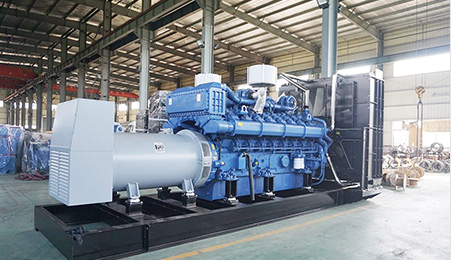
Mechanical and electrical accessories should be checked as separate line items. Typical items include the base frame, vibration isolators, radiator, cooling fan, batteries, battery cables, starting motor, battery charger, control panel, emergency stop, circuit breaker, exhaust outlet, flexible exhaust connection, fuel tank, fuel lines, and protective guards. The checklist should distinguish between standard configuration and optional equipment so that missing accessories can be identified before packing.
Export generator projects involve several handover points. The equipment may be inspected by the manufacturer, exporter, logistics provider, customs representative, installation contractor, and final user. Without a shared inspection record, each party may rely on a different description of the equipment. This creates risks such as incorrect voltage, unsuitable frequency, incomplete accessories, mismatched serial numbers, or documents that do not correspond to the delivered unit.
The checklist also protects the sizing decision. A generator selected by kVA may not provide the expected performance if the load profile, power factor, motor starting demand, or altitude has not been considered. Before shipment, the buyer and supplier should confirm whether the set is intended for prime power, standby power, continuous operation, emergency backup, or another defined duty. The inspection document should reflect the agreed duty and should not treat a standby rating as equivalent to a prime rating.
Physical inspection is equally important. The team should look for damage to the frame, radiator, control panel, alternator housing, cables, terminals, fuel system, and painted surfaces. Fasteners, covers, guards, and lifting points should be present and secure. Where the unit has been prepared for containerized or open shipping, the packing method should be checked against the transport route and local handling requirements. Particular attention should be given to moisture protection, loose components, battery handling, and the protection of electrical connectors.
Documentation is another major reason to use a formal checklist. The export package may include the commercial invoice, packing list, bill of lading information, operation manual, maintenance manual, wiring diagrams, engine documentation, alternator documentation, test records, and spare-parts list, depending on the agreed scope. The checklist should show which documents are included, their revision or issue date where applicable, and whether they are supplied in printed or electronic form. It should not state that a certificate or approval is included unless that document has been specifically confirmed.
Begin with a document review before conducting the physical inspection. Compare the purchase order, quotation, approved technical data, single-line diagram if provided, and any buyer comments. Confirm the destination country's voltage, frequency, phase arrangement, fuel requirements, ambient conditions, and connection expectations. If the project includes an automatic transfer system, remote monitoring, synchronization, or parallel operation, identify the interface requirements before the generator is dispatched.
The next step is to record nameplate and identification information. Photographing equipment may be part of a buyer's internal process, but the written checklist should remain complete without relying on photographs. Record the engine and alternator model numbers, generator-set serial number, control-panel identification, and any other labels needed for future service. If a nameplate contains a value that differs from the approved data, the discrepancy should be resolved before shipment rather than explained after arrival.
Verify the following points against the agreed specification:
Power rating: confirm prime or standby rating, kW, kVA, power factor, rated speed, frequency, and voltage.
Engine: confirm the Yuchai engine model, fuel system, cooling system, starting system, governing arrangement, and stated fuel-consumption data.
Alternator: confirm model, output, voltage, frequency, phase, insulation, protection, excitation, and regulation details where specified.
Control system: check the controller, display functions, alarm indications, shutdown protection, emergency stop, circuit breaker, and available communication or remote-monitoring interfaces.
Accessories: check batteries, charger, cables, vibration isolators, exhaust components, fuel connections, radiator protection, lifting points, tools, and agreed spare parts.
Electrical connections: check terminal labels, cable routes, grounding points, breaker rating, and the compatibility of the output arrangement with the project drawings.
Documentation: confirm the manuals, wiring diagrams, test records, packing list, maintenance information, and other documents included in the quotation.
Packing: check external protection, moisture control, loose-item packaging, identification marks, lifting instructions, and the shipping condition required by the transport plan.
Functional checks should be performed only within the agreed factory inspection scope and by qualified personnel. Depending on the purchase requirements, these checks may include visual inspection, insulation or continuity checks, controller operation, alarm and shutdown simulation, starting performance, voltage and frequency readings, and a no-load or load test. The record should state the test conditions, instruments or reference standards used where required, measured values, and acceptance status. It is important to separate a factory test result from a guarantee of performance at the final site, where altitude, ambient temperature, fuel quality, ventilation, exhaust back pressure, and load characteristics may be different.
Each nonconformity should have a clear disposition. The options may include correction before shipment, replacement, buyer approval, or a documented exclusion from the supply scope. A simple “checked” mark is not enough when an item is incomplete or subject to later confirmation. The final checklist should be signed or otherwise acknowledged by the responsible parties, with the inspection date and shipment reference recorded for traceability.
One frequent problem is a mismatch between the generator rating and the actual site load. The final user should provide a load schedule that identifies resistive loads, motors, transformers, variable-frequency drives, welders, pumps, and other equipment with significant starting or harmonic characteristics. The generator may need additional capacity for motor starting or step loading even when the running kW appears acceptable. A delivery inspection can confirm the supplied rating, but it cannot replace a proper site load assessment.
Environmental conditions should also be reviewed. High altitude and high ambient temperature can reduce available engine and generator output or require derating. Dust, humidity, salt exposure, restricted ventilation, and low ambient temperature may affect cooling, enclosure selection, battery performance, and maintenance intervals. These requirements should be stated in the technical specification before production whenever possible. If the site conditions change after shipment, the installation contractor should obtain technical guidance before commissioning.
Installation responsibilities must be clear. The delivery checklist should identify whether the supplier provides only the generator set or also supplies installation supervision, commissioning support, cables, fuel tanks, exhaust systems, acoustic enclosures, transfer switches, synchronization equipment, or civil works guidance. A generator can pass a factory inspection and still fail to operate correctly if the fuel system is contaminated, the exhaust is undersized, the ventilation is inadequate, the grounding is incorrect, or the battery system is poorly installed.
Commissioning should include confirmation of oil and coolant levels, battery polarity, fuel quality, cable termination, grounding, exhaust connections, air intake, ventilation, emergency-stop access, and controller settings. The first start should be completed under controlled conditions. Where the project requires load testing, the test should reflect the approved procedure and should record voltage, frequency, current, load level, temperatures, alarms, and shutdown behavior. Any abnormal reading should be investigated before the equipment is placed into service.
Maintenance and after-sales support should be documented as part of the handover. The buyer should receive the recommended service intervals, consumable information, troubleshooting guidance, and contact process for technical questions or spare-parts requests. The scope should identify what support is available from the authorized Yuchai dealer and what work must be completed by the site operator or local service provider. This keeps expectations practical and avoids treating general technical assistance as a substitute for on-site contractual service.
The latest practical approach to export delivery inspection is therefore more detailed than a simple visual check. It links the approved specification, identification records, measured test results, packing condition, installation requirements, and commissioning responsibilities in one controlled document. For industrial projects, that record provides a useful baseline for receiving inspection, future maintenance, warranty communication, and equipment performance review.
A complete diesel generator export delivery inspection checklist confirms that the right Yuchai engine and alternator configuration has been supplied, that the rated output and electrical characteristics match the project, that accessories and documents are accounted for, and that the equipment is prepared for transport and site work. Used together with accurate load data, clear quotation scope, qualified installation, and documented commissioning, it supports a more reliable handover from exporter to end user.
Browse server-rendered product categories, application solutions, project references and technical articles. These direct links help buyers and search crawlers reach useful pages without relying on JavaScript menus.
Compare equipment families before confirming output, duty, environment and accessories.
Start selection from critical loads, motor starting, operating hours and site derating.
Read project references, company updates and generator-set selection or maintenance articles.
Wanjin supports generator-set sales, configuration checks, quotation, installation coordination, repair and scheduled maintenance.

