


Understanding prime versus standby ratings for diesel generator sets is essential when specifying equipment for industrial facilities, construction sites, commercial buildings, and export projects. These ratings describe how a generator set may be loaded, how long it may operate, and whether it is intended for regular or emergency service. A correct selection requires more than comparing the advertised kW or kVA figure: the buyer must review the load profile, operating hours, site conditions, transfer arrangement, engine and alternator data, and the manufacturer’s rating definitions.
Prime power is intended for applications where the generator set serves as the main or regular source of electricity and the connected load varies over time. Under commonly used international rating practice, a prime-rated generator can operate for extended periods at variable load, subject to the engine manufacturer’s stated limits. The average load, maximum load, allowable overload, maintenance intervals, and annual operating hours must still be confirmed in the specific technical data sheet.
Standby power, often identified as emergency standby power, is designed for temporary operation when the normal utility supply fails. A standby-rated set normally starts through an automatic transfer system, carries the emergency load for the duration of the outage, and shuts down after utility power is restored. It is not generally intended to operate as the regular source for long daily operating periods unless the manufacturer expressly permits that use.
Prime and standby ratings can be published in both kW and kVA. Kilowatts describe usable real power, while kVA describes apparent power. The relationship depends on power factor: kW equals kVA multiplied by power factor. For example, a generator rated at 1,000 kVA at a 0.8 power factor corresponds to 800 kW under that rating condition. The actual capacity available to a project may change if the load power factor, voltage, frequency, or phase arrangement differs from the published conditions.
Some specifications also include a continuous power rating. Continuous power is normally used for a stable, constant load that operates for unlimited hours under defined conditions. It should not automatically be treated as interchangeable with prime power. The terminology may vary among manufacturers, so the quotation should state the exact rating standard, duty description, load assumptions, and permitted operating conditions.
The distinction directly affects reliability, service life, fuel planning, and total project cost. A standby set selected for a facility that operates eight or twelve hours every day may experience loading and thermal conditions outside its intended duty. Conversely, a prime-rated generator used only for occasional emergency outages may be technically suitable but unnecessarily expensive if the application does not require regular operation.
Rating also affects the engine’s ability to accept load. A facility with motors, pumps, compressors, elevators, or transformers may have high starting current even when its normal running load appears moderate. The generator must have sufficient transient performance to maintain voltage and frequency during load steps. The alternator, excitation system, engine control unit, and governing system must be assessed together rather than selecting capacity from steady-state kW alone.
For export and industrial projects, the rating influences the equipment schedule, container or enclosure arrangement, fuel tank size, ventilation design, exhaust routing, and maintenance plan. A prime application may require larger fuel storage and more frequent service planning because the set operates regularly. A standby application may require close attention to starting batteries, coolant heaters, automatic controls, and periodic test runs because availability during an outage is the main objective.
Current specification practice increasingly separates prime, standby, and continuous ratings instead of presenting one generalized generator capacity. Datasheets may also show different values for 50 Hz and 60 Hz operation, ambient temperature, altitude, voltage, emissions configuration, and cooling arrangement. These developments make comparisons more transparent, but they also mean that a nominal model number should not be treated as a universal output value.
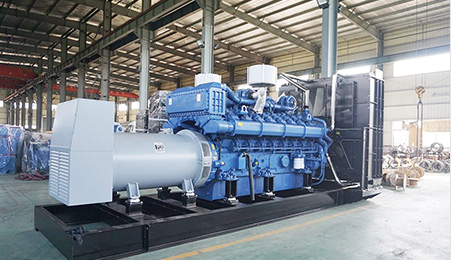
For Yuchai diesel generator sets, buyers should request the applicable engine and generator-end data for the intended duty. As an authorized Yuchai dealer supplying equipment for export and industrial projects, Nanning Wanjin Mechanical & Electrical can support the specification process by aligning the requested rating with the project load profile, voltage, frequency, and delivery scope. Final performance remains subject to the selected configuration and the manufacturer’s verified technical documentation.
Begin with the expected role of the generator set. If the set is the primary source where utility power is unavailable or unreliable, prime power is usually the starting point. If it supplies only legally or operationally essential loads during a utility interruption, standby power may be appropriate. If the load is constant and the equipment will run continuously, ask whether a continuous rating is required.
Record the expected running hours per day, days per year, seasonal variation, minimum load, average load, peak load, and the largest individual load step. Include future expansion where practical. A generator that is correctly sized for today’s facility may become overloaded after additional pumps, production equipment, HVAC units, or data-processing equipment are connected.
Prepare a load schedule that separates resistive, inductive, nonlinear, and motor loads. Identify the rated kW and power factor for each item, then calculate the combined demand. Where several loads start together, evaluate the starting kVA and voltage dip rather than only the running demand. Variable-frequency drives, UPS systems, rectifiers, and other electronic loads may also introduce harmonics or unusual power-factor behavior that should be reviewed with the alternator supplier.
Do not select a set simply because its standby kVA appears higher than the project’s prime kVA requirement. The relevant rating must match the intended duty. A quotation should clearly show prime kW/kVA and standby kW/kVA, rated voltage, frequency, phase, power factor, speed, and applicable site conditions. This prevents the common error of comparing a prime rating from one supplier with a standby rating from another.
Published ratings are usually based on defined reference conditions. High altitude, high ambient temperature, restricted ventilation, dusty environments, humidity, and long exhaust systems can reduce available output or affect cooling. Ask for the derating data applicable to the selected engine and alternator. The installation layout should provide adequate intake and discharge airflow, safe exhaust treatment, access for maintenance, and suitable fuel and electrical connections.
For an outdoor or remote installation, also confirm enclosure requirements, noise limits, fuel autonomy, cold-start provisions, and protection from weather. For an indoor plant room, verify radiator airflow, room pressure, exhaust back pressure, lifting access, and service clearance. These factors are part of usable generator capacity and should be considered before the final order.
A standby installation normally requires an automatic transfer switch or equivalent changeover arrangement, remote start and stop signals, alarms, battery charging, and a suitable exercise schedule. A prime installation may require synchronization, load sharing, paralleling with other generator sets, or coordination with a utility source. The control philosophy should be defined before equipment selection.
Commissioning should include no-load checks, staged load tests, protection verification, transfer testing, emergency-stop testing, and confirmation of voltage and frequency response. For parallel systems, verify synchronization, reverse-power protection, load sharing, breaker interlocking, and failure modes. The final acceptance criteria should refer to the agreed technical specification and the verified manufacturer data.
When reviewing prime versus standby ratings for diesel generator sets, request the following information in writing:
• Prime, standby, and, where applicable, continuous ratings in kW and kVA.
• Rated voltage, frequency, phase, speed, power factor, and connection arrangement.
• Engine model, alternator model, controller, excitation system, and governing method.
• Fuel consumption at defined load points, including the conditions used for measurement.
• Permitted operating hours, average load assumptions, overload provisions, and service intervals.
• Derating information for altitude, ambient temperature, and installation conditions.
• Starting performance, motor-starting capability, voltage dip data, and load-step response where available.
• Dimensions, dry and operating weight, fuel tank capacity, exhaust requirements, and ventilation data.
• Included scope: generator set, control panel, battery and charger, radiator, silencer, flexible connections, documentation, testing, installation support, commissioning, and spare parts.
• Warranty terms, after-sales responsibilities, recommended maintenance, and technical support arrangements for the destination country.
One frequent mistake is treating standby capacity as a permanent operating capacity. Another is selecting a generator from the total connected load without applying demand factors or evaluating starting conditions. Oversizing can also create problems: a lightly loaded diesel engine may operate inefficiently and may require a load-bank strategy or a revised configuration. The correct choice balances peak demand, minimum load, expansion margin, fuel consumption, and the duty rating.
Another issue is failing to confirm frequency and voltage. A 50 Hz set is not automatically suitable for a 60 Hz project, and a voltage change may affect alternator configuration, current, breaker selection, and motor performance. The same care is required for single-phase and three-phase loads, neutral arrangements, earthing, and short-circuit protection.
Buyers should also distinguish between equipment supply and complete project execution. A quotation may include the generator set but exclude civil works, cabling, fuel systems, exhaust installation, transfer equipment, lifting, commissioning, or load testing. Defining these boundaries early helps avoid delays and ensures that the installed system performs as specified.
Finally, do not rely on a model name or a brief commercial description as proof of suitability. Compare the verified engine and alternator specifications, duty rating, site derating, controls, and support scope. If the application changes from emergency backup to regular prime operation, review the rating and maintenance plan again before placing the equipment into service.
Prime versus standby ratings for diesel generator sets should therefore be treated as an engineering and lifecycle decision, not merely a catalog comparison. By documenting the load profile, matching kW and kVA to the correct duty, checking site conditions, and defining installation and after-sales responsibilities, project teams can select a Yuchai diesel generator configuration that is appropriate for its intended operating role. Clear specifications and careful commissioning provide the foundation for dependable performance in both export and industrial applications.
Browse server-rendered product categories, application solutions, project references and technical articles. These direct links help buyers and search crawlers reach useful pages without relying on JavaScript menus.
Compare equipment families before confirming output, duty, environment and accessories.
Start selection from critical loads, motor starting, operating hours and site derating.
Read project references, company updates and generator-set selection or maintenance articles.
Wanjin supports generator-set sales, configuration checks, quotation, installation coordination, repair and scheduled maintenance.

