


A Yuchai generator set for aquaculture facilities is an industrial-grade diesel power generation system specifically configured to provide either continuous prime power or automated emergency standby electricity for fish farms, shrimp hatcheries, and recirculating aquaculture systems (RAS). In modern commercial aquaculture, high stocking densities and closed-loop environmental controls mean that biological assets rely entirely on mechanical oxygenation, water circulation, filtration, and thermal regulation. Even brief utility power interruptions can cause dissolved oxygen levels to plummet and toxic ammonia to accumulate, leading to catastrophic stock mortality within minutes. As an authorized Yuchai dealer, Nanning Wanjin Mechanical & Electrical supplies verified Yuchai diesel generator sets for export and industrial projects, helping facility engineers and procurement managers navigate the technical specifications, sizing requirements, and environmental protections needed to safeguard aquatic operations.
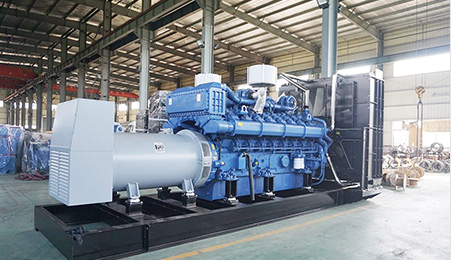
At its core, a Yuchai generator set for aquaculture facilities integrates a heavy-duty Yuchai four-stroke, water-cooled diesel engine with a brushless synchronous alternator, governed by an automated microprocessor control panel. Unlike standard commercial standby units used in office buildings, generator sets deployed in aquaculture must be engineered to handle continuous motor loads and harsh ambient conditions. The mechanical foundation relies on Yuchai engines equipped with either robust mechanical fuel injection pumps or advanced high-pressure common rail (HPCR) electronic fuel systems. These engines are designed for rapid load acceptance and stable frequency regulation, which are vital when energizing banks of paddlewheel aerators, root blowers, and high-capacity water transfer pumps.
Recent technical updates in industrial power generation for the aquaculture sector have focused heavily on electronic governance, telemetry integration, and environmental durability. Modern Yuchai engines increasingly utilize electronic Engine Control Units (ECUs) that communicate directly with digital generator controllers via CANbus protocols. This allows facility managers to monitor real-time operational parameters—such as coolant temperature, oil pressure, fuel consumption rates, and phase loading—remotely from a central farm management room or mobile device. When paired with an Automatic Transfer Switch (ATS), a Yuchai generator set for aquaculture facilities can detect a grid voltage drop or phase loss, initiate the engine start sequence, and assume the facility's electrical load within seconds without human intervention.
Furthermore, the alternator pairing in an aquaculture-grade generator set requires specific attention to insulation and excitation methods. Because aquaculture facilities frequently operate in coastal, brackish, or high-humidity inland environments, standard alternator windings can degrade prematurely due to moisture and salt-laden air. Consequently, a properly specified Yuchai generator set for aquaculture facilities utilizes alternators featuring Class H insulation and specialized anti-condensation space heaters, alongside vacuum pressure impregnation (VPI) or marine-grade epoxy coatings on the stator and rotor windings. This physical hardening ensures electrical integrity and consistent voltage output across years of humid operational cycles.
The primary justification for investing in a dedicated Yuchai generator set for aquaculture facilities is biological and financial risk mitigation. In intensive aquaculture, particularly in indoor Recirculating Aquaculture Systems (RAS) and high-density biofloc shrimp ponds, water quality parameters are maintained artificially around the clock. Dissolved oxygen (DO) is consumed rapidly by both the cultured species and the nitrifying bacteria within biofilters. If grid power fails and backup generation does not engage immediately, hypoxia sets in rapidly. Beyond immediate mortality, even sub-lethal drops in oxygen induce severe physiological stress in fish and crustaceans, compromising their immune systems, reducing feed conversion ratios, and ruining months of operational investment.
Many aquaculture operations are located in rural, coastal, or agricultural zones where utility grid infrastructure is inherently weak. These locations are prone to frequent brownouts, voltage sags, harmonic distortions, and prolonged outages caused by severe weather events such as typhoons or monsoon storms. Operating sensitive three-phase motors on unstable grid power causes overheating and premature burnout of expensive water pumps and oxygenation blowers. By deploying a Yuchai generator set for aquaculture facilities, operators establish an independent power island. When the grid fluctuates outside acceptable voltage or frequency tolerances, the generator system isolates the facility from the utility and provides clean, stable power, protecting both the biological stock and the mechanical infrastructure.
From an operational economics perspective, Yuchai diesel engines offer a pragmatic balance between capital expenditure and lifecycle operating costs. Yuchai engines are engineered for low specific fuel consumption, which is a decisive factor for off-grid hatcheries or remote coastal farms that rely on diesel generation for prime power several hours a day. Additionally, the mechanical architecture of Yuchai engines emphasizes serviceability. With wet replaceable cylinder liners and individual cylinder heads on many medium-to-high horsepower models, routine overhauls and maintenance can be executed efficiently by local technicians, minimizing maintenance downtime and ensuring the backup power system remains ready for emergency deployment.
Accurately sizing a Yuchai generator set for aquaculture facilities requires a comprehensive load analysis that accounts for both steady-state running loads and the high starting currents of inductive motors. Procurement managers must distinguish between kilowatts (kW), which measure real working power, and kilovolt-amperes (kVA), which measure apparent power taking the power factor (typically 0.8 lagging for industrial three-phase systems) into account. The most common sizing error in aquaculture projects is calculating only the sum of the nameplate running wattages of aerators, pumps, and chillers while ignoring the locked-rotor starting kVA. When an electric motor starts directly across the line, it can draw five to seven times its normal running current for a brief period.
To prevent the generator set from stalling or experiencing severe voltage dips during startup, the sizing calculation must coordinate with the facility's electrical control strategy. If all pond aerators and circulation pumps attempt to restart simultaneously the moment the generator comes online, the instantaneous kVA demand will overwhelm a standard-sized unit. Engineers can mitigate this and optimize the kW and kVA sizing of the Yuchai generator set for aquaculture facilities by implementing sequential step-loading via the PLC, or by installing Variable Frequency Drives (VFDs) and soft starters on major pumps and blowers. When VFDs are utilized, however, the alternator must be sized to handle the non-linear harmonic currents generated by these drives, often requiring a Permanent Magnet Generator (PMG) excitation system and slight derating of the alternator capacity to prevent overheating.
When requesting a formal quotation from Nanning Wanjin Mechanical & Electrical, buyers must clearly define the intended duty cycle according to ISO 8528 standards. An Emergency Standby Power (ESP) rating is suitable for facilities connected to a generally reliable utility grid, where the generator runs for limited hours annually during outages at variable loads without overload capability. Conversely, a Prime Rated Power (PRP) configuration is mandatory for off-grid farms or facilities practicing peak-shaving, allowing the generator set to run for unlimited hours annually at variable loads, complete with a 10% overload capacity for one hour in every twelve hours of operation.
A thorough B2B quotation scope should leave no ambiguity regarding the included components and commercial terms. When evaluating a proposal for a Yuchai generator set for aquaculture facilities, ensure the documentation explicitly details the engine model, alternator brand and excitation type, controller model, and the physical configuration (open skid vs. weatherproof/sound-attenuated canopy). The quotation scope should also specify the capacity of the base frame fuel tank (typically sized for 8 to 24 hours of continuous operation), heavy-duty starting batteries, battery charger, coolant jacket water heater for rapid cold starts, main circuit breaker rating, and whether an external ATS panel is included. For export projects, clarity on packaging standards, pre-shipment factory load bank testing protocols, and standard consumables for initial maintenance intervals is essential for seamless project execution.
Once the equipment is procured, the longevity and reliability of a Yuchai generator set for aquaculture facilities depend heavily on proper site installation, systematic commissioning, and disciplined preventive maintenance. Aquaculture environments present unique physical hazards to mechanical and electrical equipment—chiefly high ambient humidity, corrosive salt spray in mariculture setups, and ambient organic dust from feed handling. The following practical checklist outlines the critical engineering and operational steps required to protect the asset throughout its service life.
First, evaluate the elevation and foundation of the generator room or pad. Aquaculture facilities are inherently located near water bodies or low-lying coastal plains susceptible to flooding. The reinforced concrete foundation pad must be elevated well above the historical high-water mark and designed to support at least 1.5 times the wet weight of the generator set to absorb dynamic vibrations. Anti-vibration elastomer pads or spring isolators must be installed between the skid base and the foundation.
Second, engineer the ventilation and exhaust layout to prevent air recirculation and corrosion. If installing an open-type unit inside a plant room, the intake louvers and discharge radiator ducting must be positioned so that prevailing winds do not blow salt mist or pond spray directly onto the alternator or radiator core. Exhaust piping must include a flexible stainless-steel bellows to isolate engine vibration, a condensation trap, and a weather-cap or angled termination to prevent rainwater ingress into the turbocharger and cylinders.
Third, verify electrical cabling and earthing. High-humidity environments accelerate galvanic corrosion at electrical terminals. All power cables connecting the generator breaker to the ATS and main distribution board should be properly sized copper or aluminum conductors routed through sealed, water-tight conduits or corrosion-resistant cable trays. Termination lugs must be coated with anti-oxidant compound, and a dedicated grounding network must be established to protect the digital control modules from lightning strikes and static discharge.
Before placing the system into active service, a formal commissioning procedure must be executed. This begins with mechanical pre-checks: verifying crankcase lubricating oil levels, confirming the coolant mixture contains the proper concentration of corrosion-inhibiting glycol/antifreeze, and bleeding all trapped air from the fuel supply lines and filters. Electrical technicians must verify phase rotation (U-V-W) between the utility supply and the generator output to ensure three-phase water pumps and aerators do not spin backward when running on backup power, which would result in zero water movement and mechanical damage.
Commissioning must conclude with a simulated blackout test. By manually opening the utility main breaker, operators can observe the ATS delay timers, verify the automatic engine cranking and warm-up sequence, and monitor the step-loading of the facility's actual aquaculture equipment. During this test, technicians should record voltage stability, frequency recovery times, and exhaust gas temperatures to establish a baseline operational profile.
A standby generator that sits idle for months in a humid fish farm environment will fail when needed most unless a strict maintenance schedule is enforced. Operators must implement a weekly automated or manual exercise routine, running the generator under load for at least 30 minutes to bring the engine oil and coolant up to full operating temperature. This boils off internal condensation and keeps cylinder walls lubricated. Simultaneously, when the unit is in standby mode, the alternator anti-condensation heaters and engine jacket water heaters must remain energized continuously.
Fuel management is arguably the most critical maintenance task in aquaculture settings. High ambient humidity causes moisture to condense inside partially empty diesel tanks, creating an ideal breeding ground for microbial growth ("diesel bug") at the water-fuel interface. This biological sludge rapidly clogs fuel filters and ruins precision fuel injectors during an emergency run. Facility staff must drain water from the primary fuel-water separator weekly, maintain fuel tanks near full capacity to minimize air space, and periodically treat stored fuel with biocide and stabilizers.
Finally, establish a structured relationship for spare parts and after-sales support. Nanning Wanjin Mechanical & Electrical assists industrial and export clients in compiling customized consumable kits—including genuine Yuchai oil filters, fuel filters, water separators, air filter elements, and drive belts—alongside critical standby spares such as AVR modules, starter motors, and coolant sensors. By combining a correctly sized Yuchai generator set for aquaculture facilities with rigorous installation practices and proactive maintenance, aquaculture enterprises can ensure uninterrupted environmental control and long-term operational security.
Browse server-rendered product categories, application solutions, project references and technical articles. These direct links help buyers and search crawlers reach useful pages without relying on JavaScript menus.
Compare equipment families before confirming output, duty, environment and accessories.
Start selection from critical loads, motor starting, operating hours and site derating.
Read project references, company updates and generator-set selection or maintenance articles.
Wanjin supports generator-set sales, configuration checks, quotation, installation coordination, repair and scheduled maintenance.

