


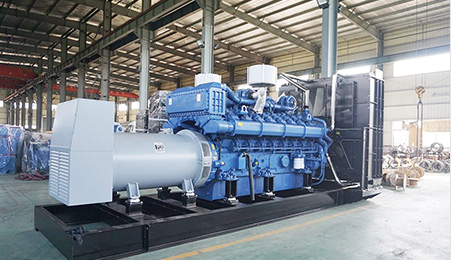
A Yuchai generator set for hospital backup power is a diesel-powered standby system designed to maintain electricity for essential medical, life-safety, building-services and operational loads when the utility supply fails. A complete installation normally includes the Yuchai engine, alternator, generator controller, base frame, fuel system, cooling and exhaust arrangements, automatic transfer equipment and site-specific protection. For hospitals, selection must be based on verified engine and alternator specifications, actual load behavior, required starting performance, operating environment and local electrical requirements. Nanning Wanjin Mechanical & Electrical is an authorized Yuchai dealer supplying Yuchai diesel generator sets for export and industrial projects, with support covering quotation scope, installation coordination, commissioning, maintenance and after-sales requirements.
A hospital generator set is more than a diesel engine connected to an alternator. It is part of an emergency power system that must detect a utility failure, start reliably, reach stable voltage and frequency, and transfer selected loads within the time required by the project specification. The generator set may supply emergency lighting, fire protection systems, medical equipment, operating rooms, intensive care areas, elevators, information systems, ventilation, water pumps, refrigeration and other designated circuits.
The Yuchai engine provides the mechanical power, while the alternator converts that power into electrical output. The controller monitors operating conditions such as speed, voltage, frequency, oil pressure, coolant temperature and battery status. The automatic transfer switch, or ATS, transfers the connected emergency loads between the normal utility source and the generator source. These components must be specified as a coordinated package. A correctly sized engine with an unsuitable alternator, controller or transfer arrangement can still produce an unreliable hospital backup system.
Generator ratings should be stated clearly in both kW and kVA where applicable. kW describes the real power available for useful work, while kVA expresses the apparent power handled by the alternator. The relationship depends on power factor. For example, a generator rated at 800 kVA at a 0.8 power factor corresponds to 640 kW under that rating condition. The final selection must also account for motor starting, nonlinear loads, harmonics, future expansion, altitude, ambient temperature and the duty classification required by the project.
Hospitals have a different risk profile from ordinary commercial buildings. A short interruption may affect patient monitoring, surgical equipment, medication storage, communications, water supply or ventilation. Some loads must be restored automatically, while others may require controlled sequencing to prevent a large inrush current from causing voltage or frequency instability. A Yuchai generator set for hospital backup power therefore has to be evaluated as part of the hospital's electrical distribution design, not as an isolated item of equipment.
Recent project requirements increasingly place attention on system integration and operating evidence. Buyers are asking for clearer engine data, alternator performance information, controller functions, remote monitoring interfaces, acoustic and exhaust arrangements, fuel autonomy, load-bank testing and maintenance access. These changes make the technical quotation more important. A quotation should identify the exact engine model, alternator model, rated output, standby or prime duty, voltage, frequency, phase arrangement, control panel, cooling method, dimensions, weight and included accessories. Generic descriptions create uncertainty during approval and installation.
Reliability also depends on the quality of the site preparation. The generator room or enclosure must provide adequate ventilation, combustion air, exhaust routing, heat rejection, fuel storage, drainage, access and fire-safety provisions. The foundation must support the set and control vibration. Cable routes must be planned so that power, control and communication wiring can be installed and maintained safely. Hospital projects may also require coordination with medical equipment suppliers, building-management systems and emergency-power distribution panels.
The financial impact of an underspecified system can be substantial. A unit that appears adequate by its continuous kW rating may fail to start large pumps, air-handling equipment or elevators. A generator that is oversized without a load strategy may operate for long periods at a low load, which can increase maintenance concerns and reduce operating efficiency. The correct decision balances electrical performance, fuel use, environmental conditions, serviceability, redundancy requirements and the consequences of a power interruption.
The first step is to prepare a load schedule. Separate life-safety loads, critical clinical loads, essential building services and nonessential loads. Record the running kW, kVA, power factor, starting method and starting current for each major item. Include elevators, pumps, compressors, HVAC equipment, imaging systems, laboratory equipment, data systems and battery chargers where they are part of the emergency supply. Identify which loads must start immediately and which can be delayed through automatic load sequencing.
Next, establish the required generator duty and operating profile. Standby duty is generally associated with emergency operation during utility failures, while prime duty is used where the generator is expected to operate for extended periods or as a primary source. The correct classification must follow the project design and the engine manufacturer's published rating conditions. Confirm whether the application is single-set or parallel operation. For larger hospitals, multiple generator sets may provide staged capacity and maintenance flexibility, but synchronization, load sharing, protection and control logic must be engineered as one system.
When reviewing a Yuchai generator set for hospital backup power, request the technical data rather than relying on a model name alone. The engine specification should include model, rated speed, aspiration, fuel consumption at relevant loads, cooling system, lubrication capacity, starting voltage and operating limits. The alternator data should identify manufacturer and model, insulation and protection information where applicable, voltage regulation, frequency, efficiency, short-circuit performance and nonlinear-load capability. All figures should be checked against the proposed frequency, voltage and ambient conditions.
Allow for derating. High altitude reduces air density, and high ambient temperature limits cooling performance. These conditions may reduce available engine power or generator output. The supplier should state the reference conditions used for the quoted rating and identify any correction required at the installation site. The same review should cover enclosure ventilation, radiator airflow, exhaust back pressure and fuel quality. A hospital generator set should not be selected using a nominal catalog output without confirming its output under actual site conditions.
Specify the control and transfer system in practical terms. The controller should support automatic start and stop, alarm indication, protective shutdowns, manual operation, event records and the communication functions required by the project. The ATS rating must match the connected load, fault level, switching arrangement and transition requirements. Where critical loads have different priorities, the design may include several transfer sections, delayed transfer, load shedding or staged retransfer. These functions must be tested during commissioning, not merely listed in the quotation.
Installation and commissioning should follow a documented sequence. Inspect the foundation, alignment, fuel piping, batteries, exhaust, ventilation, earthing, power cables and control wiring before startup. Verify phase rotation, insulation condition, voltage settings, frequency settings, emergency stops, alarms and ATS operation. Perform no-load and loaded tests, followed by a load-bank test where required by the project. The test record should show voltage, frequency, current, load level, coolant temperature, oil pressure, fuel consumption where measured and any alarms observed.
Operation should include routine visual checks, battery inspection, coolant and oil checks, fuel management, leak inspection and controller alarm review. Maintenance intervals must follow the specific Yuchai engine and alternator manuals, operating hours, fuel conditions and local service plan. Hospitals should keep a maintenance log and define who is authorized to start, stop, isolate and reset the equipment. Staff training should cover normal automatic operation as well as manual procedures during an ATS, controller or utility fault.
Confirm the exact Yuchai engine model and the alternator model. Check rated kW, kVA, power factor, voltage, frequency, phase, speed and duty rating. Confirm whether the quoted output is standby or prime and whether the rating applies at the hospital's altitude and ambient temperature. Request the published fuel consumption data at several load points, along with dimensions, shipping weight, connection details and service clearances.
Define the full quotation scope. It should state whether the package includes the base frame, vibration isolators, radiator, batteries, battery charger, silencer, flexible exhaust connection, exhaust pipe, fuel tank, control panel, ATS, remote monitoring interface, circuit breaker, cables, enclosure and documentation. Installation materials and local civil, electrical, ventilation and exhaust works should be identified separately. This prevents a low equipment price from becoming an unclear installed cost.
Verify the emergency load list with the consulting engineer or responsible electrical designer. Confirm which circuits require automatic transfer and which can be disconnected during a major outage. Review motor starting requirements and nonlinear loads. Check whether medical equipment manufacturers require a particular voltage tolerance, frequency response, grounding arrangement or power quality performance. Where the hospital uses multiple generator sets, confirm synchronization, redundancy, priority logic and fault isolation.
Check the ATS location and accessibility. Confirm that normal-source and emergency-source cables are routed correctly and that the switching method meets the project design. Test the failure of the utility source, generator start, transfer, load acceptance, retransfer and cool-down sequence. The system should also be tested under abnormal conditions, including low battery voltage, emergency stop activation, overspeed or protective shutdown signals, loss of communication and failure of the normal source sensing circuit.
One common problem is sizing only from the total running load. Starting currents and load steps can cause unacceptable voltage dips even when the total running kW appears within the generator rating. Use motor-starting data and a load sequence to evaluate the largest step. Another problem is specifying kVA without checking the actual power factor and harmonic content. Variable-frequency drives, medical electronics and uninterruptible power supplies may require additional alternator and system analysis.
Low-load operation is another issue. If the generator regularly operates at a very small fraction of its rated capacity, the maintenance plan and operating strategy should address the condition. Scheduled load-bank testing may be used where appropriate, subject to the project engineer's requirements and local rules. Fuel that remains stored for long periods also needs a management plan covering contamination, water accumulation, turnover and inspection.
Environmental and access problems should be resolved before delivery. Insufficient ventilation can cause overheating, while excessive exhaust back pressure can affect engine performance. Poor access can make oil changes, filter replacement and battery service unnecessarily difficult. Outdoor installations require suitable protection against weather, unauthorized access and noise, but the enclosure must still maintain the airflow needed for engine and radiator operation.
Finally, do not treat documentation as an administrative detail. Keep the approved load schedule, wiring drawings, controller settings, engine and alternator manuals, test reports, spare-parts recommendations, warranty conditions and maintenance records together. If a replacement component or control setting is needed later, accurate records reduce downtime and avoid assumptions. The supplier and hospital maintenance team should also agree on response procedures, inspection frequency, spare parts and after-sales communication before the generator enters service.
A Yuchai generator set for hospital backup power can provide a practical emergency supply when its engine, alternator, controls, ATS, installation and maintenance program are specified as a coordinated system. The most dependable selection process begins with a verified load schedule and continues through derating review, complete quotation definition, site preparation, commissioning and documented testing. For export and industrial projects, Nanning Wanjin Mechanical & Electrical can support the process by coordinating verified Yuchai equipment information, quotation scope, installation requirements, commissioning arrangements and ongoing after-sales support. The final system should always be confirmed against the hospital design, responsible engineer's requirements and applicable local regulations.
Browse server-rendered product categories, application solutions, project references and technical articles. These direct links help buyers and search crawlers reach useful pages without relying on JavaScript menus.
Compare equipment families before confirming output, duty, environment and accessories.
Start selection from critical loads, motor starting, operating hours and site derating.
Read project references, company updates and generator-set selection or maintenance articles.
Wanjin supports generator-set sales, configuration checks, quotation, installation coordination, repair and scheduled maintenance.

