


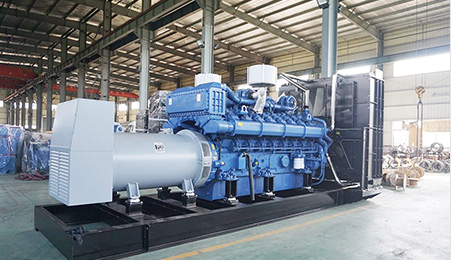
A Yuchai generator set for mining operations is a diesel-powered generating system configured to provide dependable electrical power for extraction sites, processing areas, workshops, camps, dewatering equipment and other industrial loads. Mining projects often operate far from stable utility networks, so the generator set must be selected around actual site conditions, load behavior, operating hours, transport limitations and maintenance access. For an export project, the engine, alternator, controller, cooling system, fuel system and supporting documentation should be verified as one complete package rather than evaluated only by the advertised kW rating.
A generator set combines a diesel engine, alternator, control panel, starting system, cooling system, exhaust system and base frame into a coordinated power unit. The Yuchai engine provides mechanical power, while the alternator converts that power into electrical output. The control system monitors operating conditions and allows the operator to start, stop and protect the set during abnormal conditions. Depending on the project, the package may also include a sound-attenuated enclosure, fuel tank, circuit breaker, automatic transfer equipment, remote monitoring interface or synchronization equipment.
In a mining application, the generator set may serve as the primary power source, a standby source, a temporary construction supply or part of a multi-set power station. These roles require different specifications. A standby set may run for short periods during utility failure, while a prime-power set can operate for long hours with changing loads. A temporary construction unit may need enhanced mobility and simple field connection, whereas a permanent plant may require synchronization, automatic load sharing and integration with a wider distribution system.
The stated generator rating must also be understood correctly. Electrical output is commonly described in kilowatts, or kW, and kilovolt-amperes, or kVA. kW represents real power used by equipment, while kVA represents apparent power carried by the electrical system. The relationship depends on power factor. A common planning reference is 0.8 power factor, meaning that a 500 kVA set corresponds to approximately 400 kW at that reference condition. The final selection should use the actual power factor and starting characteristics of the connected equipment.
Mining facilities can include crushers, conveyors, pumps, compressors, ventilation equipment, lighting, welding machines, communication systems, workshops and accommodation facilities. These loads do not all behave in the same way. Motors can draw high starting current, variable-frequency drives can affect harmonic performance, and welding or auxiliary equipment can create rapid load changes. A generator set that appears adequate based only on the total running kW may still experience unacceptable voltage or frequency disturbance during motor starting.
Mining power systems are exposed to conditions that are more severe than those found in many commercial facilities. Dust, vibration, high ambient temperature, altitude, moisture, long cable runs and limited service access can all affect performance. The generator set must therefore be matched to the environment as well as the connected load. A standard rating taken from a factory test condition may not represent the available output at a hot or high-altitude mine.
Reliability also has a direct effect on production planning. An unexpected power interruption can stop material handling, dewatering, ventilation, crushing or processing equipment. It may also create a safety concern if essential systems are not supported by an appropriate backup arrangement. For this reason, the selection process should consider operating duty, redundancy, spare-parts planning, service intervals and the response time required for technical support.
Recent procurement practice has placed more attention on lifecycle performance and project documentation. Buyers increasingly request clear engine and alternator model information, documented ratings, controller functions, electrical data, recommended maintenance schedules and a defined scope of supply. This is particularly important for export orders, where the generator set may be installed by a local contractor and supported by technicians who were not involved in the original quotation.
Fuel efficiency should be considered across the expected load profile rather than judged from one consumption figure. A mine that regularly operates at low load may need a different operating strategy from a mine with stable high demand. Multiple generator sets can offer flexibility by allowing the operating units to follow demand, but synchronization and load-sharing equipment must be properly specified. The best arrangement depends on the project load curve, required redundancy, available space and operating schedule.
The first step is to prepare a load schedule. List every major load, its rated kW or kVA, power factor, starting method, starting current where available, duty cycle and expected operating sequence. Separate continuous loads from intermittent loads and identify equipment that cannot tolerate a voltage dip or interruption. This information gives the supplier a practical basis for recommending the generator size and control arrangement.
Do not size the system only by adding nameplate ratings. The design should account for starting loads, future expansion, diversity, ambient derating and the difference between prime and standby duty. A reasonable operating margin can help accommodate normal fluctuations, but excessive oversizing may result in prolonged low-load operation. The supplier should explain the basis of the recommendation and identify which assumptions must be confirmed before production.
Ask for the exact Yuchai engine model, engine rating, duty classification, rated speed, cooling method, fuel system information and applicable technical data. The rating should be consistent with the requested prime or standby application. If the project has special ambient or altitude conditions, request confirmation of the corrected output rather than relying on the standard data-sheet rating.
The alternator should also be identified by manufacturer and model, with information covering rated voltage, frequency, phase configuration, insulation system, excitation method, voltage regulation and enclosure or protection characteristics. Compatibility between the engine and alternator is important because the combined system must respond correctly to load changes and motor starting. The controller, circuit breaker and protection functions should be reviewed as part of the electrical package.
For a single-set installation, confirm whether the unit can handle the largest motor start and the most demanding expected operating condition. For a multi-set installation, define the synchronization method, automatic load sharing, sequence of operation, standby logic and failure response. The distribution design should also identify how essential and non-essential loads are separated.
Prime and standby ratings should never be treated as interchangeable. A unit intended for extended operation must be assessed according to its prime-power rating and the manufacturer’s operating limits. If the mine requires continuous operation, the quotation should state the intended duty clearly, including any restrictions on average load, overload duration and maintenance intervals.
Provide the supplier with the site altitude, expected ambient temperature range, humidity, dust exposure, installation elevation, fuel characteristics and intended enclosure arrangement. The cooling system, air filtration, ventilation and exhaust design may need to be adapted to these conditions. At high altitude or high temperature, available engine output and cooling capacity can be reduced, so the final selection may need additional margin or a larger set.
Consider the physical route from the delivery point to the foundation. Mining sites may have restricted roads, steep access routes or limited lifting capacity. The generator dimensions, shipping weight, lifting points, base design and enclosure type should be confirmed before dispatch. The installation area should provide adequate clearance for ventilation, exhaust routing, inspection and removal of service components.
Before installation, verify that the foundation is level, structurally suitable and isolated from excessive vibration. Confirm the position of the fuel system, ventilation openings, exhaust outlet, batteries, control panel and cable entry points. Power cables should be selected for the operating current, installation method, voltage drop and fault conditions. Earthing and protection arrangements must follow the applicable project requirements and local electrical rules.
Commissioning should be treated as a documented technical process. Check fluid levels, battery condition, fuel cleanliness, coolant protection, cable connections, breaker settings and emergency-stop functions. The engine should be started without load first, followed by controlled load testing. Record voltage, frequency, current, oil pressure, coolant temperature and other available operating data. Where the application includes large motors or sensitive equipment, test the relevant starting and load-transfer sequence instead of performing only a simple no-load run.
For a multi-set system, commissioning should include synchronization, load sharing, automatic start and stop logic, transfer operation and fault simulation. Operators should receive practical instruction on normal start-up, shutdown, alarm response and emergency procedures. The final handover file should include the approved technical specification, operation and maintenance information, wiring diagrams, controller settings, test records and a recommended spare-parts list.
Mining sites should establish a maintenance schedule before the generator set enters regular service. Routine work commonly includes inspection of oil and coolant levels, fuel and air filter condition, battery charging, belts, hoses, terminals, leaks and exhaust components. Service intervals must follow the engine and alternator documentation while also reflecting actual operating hours, dust levels, fuel quality and load conditions.
Low-load operation deserves attention because extended light loading can affect diesel engine performance and may increase the need for inspection or corrective operating procedures. The maintenance team should keep accurate records of run hours, alarms, load levels, filter replacement and oil analysis where applicable. Critical projects should also define the minimum stock of consumables and wear parts that must be available at the site.
A useful quotation should state the generator model, engine model, alternator model, output in kW and kVA, voltage, frequency, phase configuration, duty rating, control panel, circuit breaker, fuel tank arrangement, cooling method and enclosure details. It should also distinguish standard supply from optional items. This prevents misunderstandings when the buyer compares offers with different levels of included equipment.
The quotation scope should cover packing, export documentation, delivery terms, commissioning responsibility, warranty conditions, technical support and after-sales communication. If installation is requested, clarify whether the supplier is responsible for mechanical placement only or also for cabling, fuel piping, exhaust work, synchronization and performance testing. A clear division of responsibility is especially important when the equipment is exported to a remote industrial site.
One common risk is comparing generator sets only by kVA while overlooking the duty rating, derating conditions and load profile. Another is accepting a generic engine description without confirming the exact model and technical configuration. Buyers should request the relevant data sheets and verify that the engine, alternator, controller and protection equipment correspond to the final quotation.
Environmental assumptions should also be checked carefully. A generator sized for a temperate, low-altitude location may not provide the same output in a hot or elevated mining area. Dust control, air filtration and ventilation can be just as important as the nominal engine rating. The installation design should be reviewed before shipment so that the enclosure, radiator airflow, exhaust system and service access are suitable for the site.
Another issue is inadequate planning for starting performance. Crushers, pumps, compressors and large fans can create a temporary demand much higher than their normal running load. Ask for a starting study or a written assessment of the largest motor, starting method and acceptable voltage dip. If necessary, consider staged starting, soft starters, variable-frequency drives or multiple synchronized generator sets.
Finally, confirm the after-sales process before placing the order. The buyer should know how technical questions will be handled, what documents will be supplied, which consumables are recommended and how warranty claims are initiated. Nanning Wanjin Mechanical & Electrical, as an authorized Yuchai dealer supplying generator sets for export and industrial projects, can use the project load data and site conditions to prepare a quotation scope for review. The final configuration should remain subject to verified manufacturer specifications and the purchaser’s approved engineering requirements.
A Yuchai generator set for mining operations should be selected as part of a complete power solution rather than as an isolated engine-and-alternator package. Accurate load information, correct kW and kVA interpretation, environmental derating, motor-starting analysis, installation planning and documented maintenance responsibilities all contribute to dependable operation. When these points are confirmed before production and delivery, the generator system is more likely to meet the mine’s electrical demand and remain supportable throughout its operating life.
Browse server-rendered product categories, application solutions, project references and technical articles. These direct links help buyers and search crawlers reach useful pages without relying on JavaScript menus.
Compare equipment families before confirming output, duty, environment and accessories.
Start selection from critical loads, motor starting, operating hours and site derating.
Read project references, company updates and generator-set selection or maintenance articles.
Wanjin supports generator-set sales, configuration checks, quotation, installation coordination, repair and scheduled maintenance.

