


Navigating commercial and industrial power generation requires a rigorous grasp of international testing criteria, engine displacement parameters, and operational duty cycles. When specifying power generation equipment for demanding projects, technical buyers must systematically evaluate verified engine curves, alternator pairings, and site-specific environmental variables. Mastering Yuchai generator set power ratings and model selection is critical for plant engineers, EPC contractors, and procurement managers seeking to maximize capital efficiency, avoid premature mechanical failure, and ensure total site reliability under transient and continuous loads.
Electrical power ratings are defined internationally by ISO 8528-1, which governs reciprocating internal combustion engine-driven alternating current generating sets. To properly implement Yuchai generator set power ratings and model selection, one must first distinguish between the primary rating classifications: Emergency Standby Power (ESP), Prime Rated Power (PRP), and Continuous Operating Power (COP). Standby Power represents the maximum electrical output available during a variable electrical power sequence in the event of a utility power outage, typically capped at an average 70 percent load factor over a 24-hour cycle and strictly limited to a defined number of annual operating hours. Under ESP ratings, no sustained overload capability is permissible.
Prime Rated Power serves as the benchmark for installations where utility mains are unreliable or entirely absent, such as remote mining camps, construction infrastructure, and isolated agricultural facilities. Under PRP classifications, a generator set can operate for an unlimited number of annual hours under variable electrical loads, maintaining an average load factor of up to 70 percent. Crucially, ISO-compliant prime packages engineered with Yuchai diesel engines allow for a 10 percent overload capability for one hour within every twelve hours of continuous operation. Continuous Operating Power, by contrast, applies to baseload utility plants where the generator runs at 100 percent constant load for unconstrained hours. Confusing an ESP rating with a PRP or COP profile can lead to severe engine strain, accelerated component degradation, and invalidation of manufacturer warranties.
Guangxi Yuchai Machinery manufactures engines spanning compact four-cylinder blocks up to massive sixteen-cylinder V-type powerhouses, with displacements scaled precisely to meet international rating thresholds. Each mechanical displacement tier—from the YC4D and YC6A series up to the heavy-duty YC6TD, YC6C, and YC12VC series—is tested against standard reference conditions (100 kPa barometric pressure, 25 degrees Celsius ambient temperature, and 30 percent relative humidity). Aligning the engine brake power (expressed in brake kilowatts, or kWb) with the alternator efficiency curve (converting mechanical energy to apparent electrical power in kVA and active power in kWe at a standard 0.8 lagging power factor) is the foundational baseline for all dependable sizing calculations.
Underestimating the thermal and mechanical stresses of electrical loads inevitably produces catastrophic operational interruptions. When an engine-generator set is undersized, inductive loads—such as large electric motors, submersible pumps, and heavy industrial chillers—impose instantaneous inrush currents that can drop line voltage and pull down engine speed. When frequency dips beyond the governor's recovery threshold, sensitive programmable logic controllers (PLCs), variable frequency drives (VFDs), and control switchgear initiate safety trips, shutting down entire assembly lines. Frequent deep-voltage sags also produce excessive thermal buildup in both the alternator stator windings and the engine's exhaust system, drastically shortening the equipment's mean time between overhauls (MTBO).
Conversely, the habit of excessive oversizing—frequently adopted by conservative planners trying to avoid undersizing risks—creates its own severe mechanical hazards. Diesel combustion cycles depend heavily on achieving adequate cylinder pressure and combustion chamber temperature to ensure complete fuel atomization and proper piston ring sealing. When a large diesel generator set routinely operates below 30 percent of its rated prime capacity, the combustion temperatures drop below optimal levels. This induces an operational malady known as wet stacking, wherein unburned fuel and condensed crankcase oil accumulate in the exhaust manifolds, turbocharger turbine housings, and exhaust piping. Over time, cylinder liners experience carbon glazing, leading to piston blow-by, excessive crankcase pressure, reduced thermal efficiency, and eventual turbocharger failure.
From a capital expenditure (CAPEX) and operating expenditure (OPEX) standpoint, selecting the exact operational envelope reduces unnecessary fuel consumption across thousands of operational hours. A correctly matched Yuchai engine running in its sweet spot—typically between 65 percent and 80 percent of its continuous nominal rating—delivers the lowest specific fuel consumption (grams of diesel per kilowatt-hour, g/kWh). Precision in model selection protects both upfront capital allocation and downstream operational liquidity, allowing facility managers to deploy right-sized gensets with predictable maintenance schedules.
Executing an engineering-driven Yuchai generator set power ratings and model selection requires a meticulous inventory of all connected electrical equipment. Sizing begins by segregating continuous resistive loads (lighting, heating elements, basic single-phase circuits) from dynamic inductive and non-linear loads. Motors starting Direct-on-Line (DOL) draw between six to eight times their full-load running current, requiring massive transient kVA capacity. If Star-Delta starters, soft starters, or modern Variable Frequency Drives (VFDs) are utilized, starting kVA demand is reduced substantially. Engineers must catalog total running kWe, maximum intermittent kVA, power factor anomalies, and harmonic distortions generated by non-linear rectifiers and uninterruptible power supply (UPS) systems.
Modern electrical engineering evaluates whether a single block load can be absorbed without exceeding maximum allowable frequency and voltage deviation parameters. Yuchai engines leverage robust displacement designs and high-inertia flywheels that inherently resist sudden transient decelerations. For small-scale commercial baseloads, telecommunication nodes, and light commercial properties ranging from 20 kVA to 100 kVA, the four-cylinder YC4D and YC4A series deliver high power density, compact physical footprints, and straightforward mechanical or electronic governor configurations.
For mid-tier industrial operations requiring 150 kVA to 400 kVA—such as cold-storage warehouses, regional hospitals, and mid-sized manufacturing sites—the six-cylinder inline platforms, including the YC6A, YC6MK, and YC6K series, are standard choices. These platforms incorporate four-valve-per-cylinder architectures, high-pressure common rail (HPCR) electronic fuel injection systems, and advanced turbocharger-intercooler circuits that rapidly respond to load steps while conforming strictly to contemporary emissions thresholds.
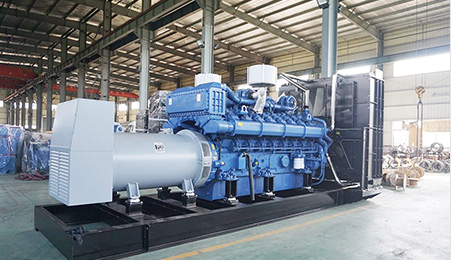
When continuous power requirements scale into the high-output domain (500 kVA to 1000 kVA and upward to 2500+ kVA), engineers turn to the YC6TD, YC6C, and the V-configured multi-cylinder YC12VC and YC16VC engine series. These heavy-duty industrial platforms feature rigid cast-iron block designs, individual cylinder heads, replaceable wet-type cylinder liners, and high-efficiency plate-fin oil coolers capable of sustained high-output operation. For multi-megawatt configurations, selecting multiple synchronized units driven by intelligent digital controllers is often superior to installing a single oversized genset. A synchronized multi-set Yuchai architecture allows generators to step in and out based on real-time plant load, completely mitigating the hazard of light-load wet stacking while offering N+1 redundancy during routine maintenance intervals.
Standard rating plates reflect sea-level conditions that rarely mirror actual industrial job site conditions. Environmental derating is the reduction in available mechanical output an engine must endure due to atmospheric constraints. Atmospheric pressure diminishes as installation altitude increases, thinning the ambient air and reducing the oxygen mass available inside the cylinder for complete combustion. As a standard rule of thumb, diesel engines suffer approximately a 1 percent power reduction for every 100 meters above 1000 meters above sea level, unless the turbocharger matching has been specifically re-calibrated for high-altitude thin-air induction.
High ambient temperatures similarly reduce air density while concurrently diminishing the heat-dissipation efficiency of the radiator core. If an export generator operates in desert conditions exceeding 40 degrees Celsius, engine water jackets and charge-air coolers cannot shed heat at standard rates, mandating ambient derates of 2 to 5 percent per 5 degrees Celsius increment above base rating. Heavy relative humidity further displaces dry oxygen, necessitating additional adjustment. Ignoring these ambient derates can cause automated engine derating or emergency high-coolant-temperature trips during peak summer production periods.
Alternator selection presents another critical vulnerability. Industrial loads that feature high Total Harmonic Distortion (THD)—frequently driven by large non-linear switched-mode power supplies, datacenters, or heavy induction furnaces—induce eddy-current heating within the alternator rotor and stator windings. In these scenarios, the alternator must be oversized relative to the engine brake power, opting for an auxiliary winding or permanent magnet generator (PMG) excitation system rather than a basic shunt field. A PMG system isolates the Automatic Voltage Regulator (AVR) from load-induced harmonic distortion, sustaining field current during short-circuit faults to reliably trip downstream breakers.
Prior to finalizing technical specifications and signing commercial procurement contracts, plant engineers and technical project teams should systematically audit the proposed generator package against the following technical criteria:
First, verify the authentic factory rating declaration. Ensure the engine manufacturer's specification sheet explicitly distinguishes between ESP, PRP, and COP ratings under ISO 8528 conditions, rather than relying on generalized sales collaterals. Check that the certified brake power output (kWb) of the selected Yuchai engine comfortably supports the calculated alternator mechanical input requirement after accounting for an alternator conversion efficiency of typically 90 to 94 percent.
Second, validate the cooling system engineering. Confirm whether the package includes an engine-mounted radiator capable of operating at a 40-degree or a heavy-duty 50-degree Celsius ambient limit. Tropical climates and enclosed generator canopies require high-static-pressure radiator fans to overcome airflow resistance created by acoustic attenuation louvers and ductwork.
Third, confirm the governing and fuel system configuration. Critical facilities with tight frequency tolerance (such as hospitals and datacenters) mandate electronic governing or high-pressure common rail injection regulated by a dedicated Electronic Control Unit (ECU). Mechanical governors, while robust and easy to service in extremely remote operations, exhibit an inherent speed droop (typically 3 to 5 percent) that may prove unacceptable for frequency-sensitive modern electronics.
Fourth, inspect the balance of plant and structural skid integration. This includes verifying that the heavy-gauge steel base frame incorporates integrated lifting lugs, vibration isolators matched to the total wet mass of the engine and alternator, and an adequately sized base fuel tank allowing at least eight hours of continuous full-load runtime. Ensure the circuit breaker selected is an appropriately sized molded case circuit breaker (MCCB) or air circuit breaker (ACB) equipped with adjustable thermal-magnetic or electronic trip units.
Finally, insist on documented Factory Acceptance Test (FAT) verification. A compliant commissioning cycle requires rigorous load-bank testing at stepped thresholds: 0 percent, 25 percent, 50 percent, 75 percent, 100 percent, and a full-duration 110 percent overload step. During these tests, transient voltage dip, frequency recovery times, lubricating oil pressure, exhaust temperatures per cylinder bank, and coolant temperature stabilization should be methodically logged against the factory engineering curves.
Through disciplined calculation of total electrical loads, meticulous accommodation of site ambient conditions, and matching load profiles to the appropriate displacement category within the Yuchai engine family, industrial operators can ensure seamless, cost-effective power generation across the entire lifecycle of their capital asset.
Browse server-rendered product categories, application solutions, project references and technical articles. These direct links help buyers and search crawlers reach useful pages without relying on JavaScript menus.
Compare equipment families before confirming output, duty, environment and accessories.
Start selection from critical loads, motor starting, operating hours and site derating.
Read project references, company updates and generator-set selection or maintenance articles.
Wanjin supports generator-set sales, configuration checks, quotation, installation coordination, repair and scheduled maintenance.

