


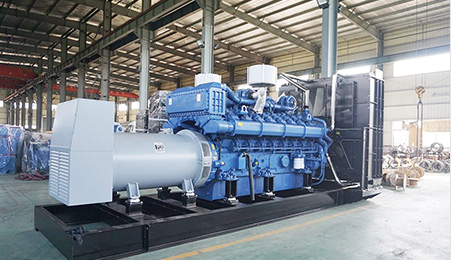
A Yuchai generator set quotation scope for export is the written definition of what a supplier has priced for an overseas diesel generator project, including the generating set, selected engine and alternator, control system, accessories, documentation, delivery conditions, installation responsibilities, commissioning support, and after-sales service. Because export projects involve different grid standards, climates, transport routes, site conditions, and responsibilities between buyer and supplier, a clear quotation scope is essential for accurate comparison and controlled project execution.
The starting point is the generating set configuration. A quotation should identify the Yuchai engine model, alternator brand and model, generator set model if applicable, rated output, frequency, voltage, phase arrangement, speed, and control panel configuration. It should also distinguish between prime power and standby power. These ratings are used differently: prime power is generally associated with variable-load operation over extended periods, while standby power is intended for emergency use when the normal power source is unavailable.
Both kW and kVA should be shown because they describe different aspects of generator capacity. kW represents usable active power, while kVA represents apparent power. The relationship depends on power factor, commonly shown as a value such as 0.8, but the actual project load may have a different power factor. A quotation that lists only one rating can make it difficult to confirm whether the set is suitable for motors, pumps, compressors, welding equipment, data equipment, or other loads with demanding starting characteristics.
The engine section should state the exact Yuchai engine model and the principal verified specifications relevant to the application. Depending on the model, this may include cylinder arrangement, displacement, aspiration method, cooling method, governor type, fuel consumption data, lubrication capacity, cooling system requirements, and starting system. These details should be taken from the applicable manufacturer documentation or technical data sheet. They should not be assumed from a similar-looking model or from a general product family description.
The alternator section should identify the manufacturer, model, insulation class, protection rating, winding arrangement, excitation method, voltage regulation, and other characteristics that affect compatibility with the load and installation environment. The quotation should also state whether the alternator includes an automatic voltage regulator and whether special requirements such as parallel operation, harmonic tolerance, or low-voltage motor starting have been considered.
A complete quotation normally explains whether the price includes a standard open-frame set, a weatherproof enclosure, a sound-attenuated enclosure, a mobile trailer, or a containerized configuration. It should state the materials and basic features of the selected configuration without making unsupported claims about sound levels, weather resistance, or protection performance. For outdoor or coastal applications, the buyer should request clarification on enclosure construction, corrosion protection, ventilation, rain protection, and access for maintenance.
Common accessories may include a base frame, vibration isolators, starting batteries, a battery charger, an exhaust silencer, a flexible exhaust connector, a fuel tank, a circuit breaker, an emergency stop, a control panel, and a battery disconnect switch. The quotation should identify which accessories are included as standard and which are optional. It should also clarify whether cables, fuel hoses, exhaust pipework, external fuel tanks, transfer switches, synchronization panels, and remote monitoring equipment are included.
For automatic operation, the quotation should describe the automatic transfer switch or identify it as a separate supply item. Important parameters include rated current, number of poles, transfer logic, bypass or manual operation, enclosure type, and interface compatibility with the generator controller. If the project requires multiple generator sets to operate in parallel, the scope should separately identify synchronization controls, load sharing, protection functions, busbar arrangements, and commissioning requirements.
Export quotations are often compared across different commercial and technical assumptions. One supplier may quote only the generator set, while another may include a control panel, batteries, an enclosure, spare parts, and delivery to a named port. The lower headline price is not necessarily the lower project cost if essential equipment has been excluded. A detailed Yuchai generator set quotation scope for export allows the buyer to compare equivalent configurations instead of comparing incomplete package prices.
Clear scope also reduces the risk of disputes after the order is placed. For example, a buyer may assume that installation includes fuel piping, exhaust work, power cables, earthing, testing, and operator training. The supplier may intend installation to mean only positioning the set and connecting the battery. Both interpretations can appear reasonable unless the quotation defines the boundary of work.
Technical clarity is especially important when the site has a high proportion of non-linear loads or large motor loads. The generator must be assessed for voltage dip, frequency response, starting current, load step behavior, harmonic effects, and load sequence. A set with sufficient steady-state kW may still be unsuitable if the largest motor cannot start reliably or if the control system cannot manage the planned operating sequence.
The quotation scope also supports logistics planning. Export equipment may require specific packing, lifting points, dimensions, gross weight, center-of-gravity information, moisture protection, and shipping documents. These details influence freight cost, container selection, unloading equipment, site access, and customs preparation. They should be confirmed before production or shipment rather than discovered when the equipment reaches the destination.
A quotation should identify the commercial basis of the price, including currency, validity period, payment terms, delivery point, estimated lead time, packing method, and whether freight, insurance, duties, taxes, or destination charges are included. Delivery terms should be stated using the applicable trade term and named place. The buyer should confirm who is responsible for export clearance, main carriage, import clearance, local transport, unloading, and final delivery.
Warranty wording should be specific enough to be useful. It should state the warranty period, the starting point, covered components, exclusions, claim procedure, and responsibilities for labor, travel, replacement parts, and freight. Warranty terms may differ between the engine, alternator, controller, and other components. The quotation should not imply a uniform warranty if the actual coverage is component-specific.
After-sales support is another part of the quotation scope rather than an informal promise. The supplier should explain the available technical communication channels, recommended maintenance intervals, spare parts process, troubleshooting support, and commissioning assistance. If local service availability is not confirmed, the quotation should describe remote support and the buyer's responsibilities for qualified technicians, tools, consumables, and site access.
Begin with a project data sheet. It should include the required continuous and emergency load, voltage, frequency, phase, site altitude, ambient temperature, humidity, fuel type, operating hours, load profile, largest motor, starting method, and expected expansion. It should also identify whether the set will operate as the sole power source, an emergency backup, or part of a multi-set installation.
Prepare a load schedule rather than using only the total connected load. List each major item with its running kW, starting method, starting current if available, power factor, duty cycle, and priority. Separate essential loads from non-essential loads. This makes it possible to assess the required generator rating, load shedding strategy, automatic transfer sequence, and future capacity needs.
Ask the supplier to provide a technical compliance table against the project requirements. The table should show the requested value, the offered value, and any deviation. This is useful for voltage, frequency, rated output, enclosure, control functions, fuel tank capacity, breaker rating, emissions requirements where applicable, ambient derating, and documentation. A deviation should be written clearly rather than hidden in a general note.
When reviewing the kW and kVA selection, consider both running load and transient load. A generator should not be sized solely by adding nameplate ratings if the actual operating pattern is much lower, but it should also not be selected so close to the calculated load that future additions, motor starting, or derating create instability. The final choice should be based on the load profile and the engine-alternator package, not on kW or kVA in isolation.
Define the site boundary in practical terms. The supplier quotation should state whether it covers delivery to site, unloading, positioning, alignment, exhaust installation, cooling air arrangements, fuel connections, power cabling, earthing, control wiring, transfer switch installation, and connection to the building distribution system. If any of these items are excluded, the buyer should identify the responsible contractor and the required interface information.
Commissioning should include a written description of the tests to be performed. Depending on the project, this may include visual inspection, insulation checks, battery and charger checks, no-load running, step-load testing, voltage and frequency verification, automatic start testing, transfer switch operation, alarm verification, emergency stop testing, and a review of operating parameters. The final test procedure should reflect the actual site design and agreed scope.
Training and handover documents should also be listed. Useful documents may include operation and maintenance manuals, wiring diagrams, controller manuals, engine data sheets, alternator data sheets, recommended spare parts lists, test records, packing lists, and certificates or declarations that are actually available for the supplied configuration. The quotation should avoid listing documents that have not been confirmed by the manufacturer or supplier.
Check model consistency throughout the quotation. The engine model, alternator model, generator rating, control panel, and spare parts list should describe the same proposed configuration. Watch for technical tables that combine data from different models or show a rating that belongs to a different frequency, voltage, or duty category. Request clarification whenever the commercial description and technical attachment do not match.
Review derating conditions carefully. High altitude and high ambient temperature can reduce available engine output and cooling performance. The supplier should confirm the applicable rating at the actual site conditions or state the assumptions used for the quoted rating. For enclosed sets, ventilation design and heat rejection may also affect the installation even when the engine rating itself appears adequate.
Confirm fuel and maintenance assumptions. Fuel consumption should be associated with a defined load percentage, speed, rating, and test condition. It should not be treated as a fixed value for every operating point. Maintenance scope should clarify filters, lubricants, coolant, belts, batteries, and other service items, as well as the party responsible for routine maintenance after commissioning.
Examine the packing and shipping information before finalizing logistics. Dimensions and weight should correspond to the actual configuration, including the enclosure, base frame, batteries, silencer, and optional fuel tank. Confirm whether loose accessories are packed separately and whether lifting points are marked. Export packing requirements should be aligned with the transport method and destination handling conditions.
Do not treat unverified claims as part of the quotation. Certifications, test reports, emissions documentation, local approvals, stock status, delivery dates, branch locations, and service coverage should be stated only when confirmed for the specific order and destination. If a project requires a particular approval or document, list it as a contractual deliverable and verify its applicability before purchase.
Finally, request a revision-controlled quotation. The document should include a quotation number, issue date, revision, technical attachments, exclusions, and validity period. Any changes to engine model, alternator, rating, accessories, delivery terms, or service scope should create a new revision. This provides a reliable reference for purchase orders, technical approvals, factory preparation, shipping documents, and later warranty discussions.
A well-prepared Yuchai generator set quotation scope for export connects the technical selection with the commercial and installation responsibilities of the project. It identifies the exact engine and alternator package, explains the kW and kVA ratings, records accessories and exclusions, defines delivery and commissioning boundaries, and sets realistic expectations for maintenance and after-sales support. By checking these points before acceptance, an exporter or industrial buyer can compare quotations on an equivalent basis and reduce avoidable problems during shipment, installation, and operation.
Browse server-rendered product categories, application solutions, project references and technical articles. These direct links help buyers and search crawlers reach useful pages without relying on JavaScript menus.
Compare equipment families before confirming output, duty, environment and accessories.
Start selection from critical loads, motor starting, operating hours and site derating.
Read project references, company updates and generator-set selection or maintenance articles.
Wanjin supports generator-set sales, configuration checks, quotation, installation coordination, repair and scheduled maintenance.

