


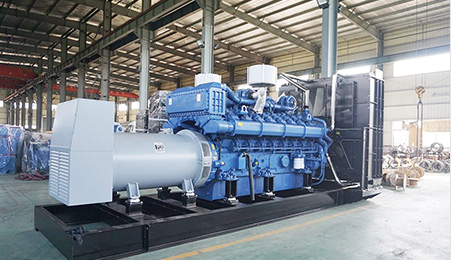
Yuchai generator set engine and alternator matching is the process of selecting an engine and alternator that can deliver the required electrical output together under the specified operating conditions. A suitable configuration must align engine power, alternator rating, speed, frequency, voltage, power factor, duty class, control system, and site conditions. For export orders and industrial projects, the matching decision should be based on current manufacturer data sheets, the actual load profile, and the required quotation scope rather than on a nominal kW or kVA number alone.
A diesel generator set converts mechanical power from the engine into electrical power through the alternator. The engine supplies torque at a controlled rotational speed, while the alternator converts that torque into three-phase or single-phase electrical output. The engine and alternator therefore operate as one engineered system. Selecting each component separately without checking their operating points can result in insufficient load response, excessive fuel consumption, unstable frequency, or an output rating that cannot be used continuously.
Engine ratings are commonly expressed in kW, while alternator ratings are often expressed in kVA. These units describe different aspects of the system. Electrical real power is measured in kW, and apparent power is measured in kVA. The relationship is:
kW = kVA x power factor.
At a power factor of 0.8, a 1,000 kVA alternator corresponds to 800 kW of real power. If the connected load has a different power factor, the usable relationship changes. The engine must have enough mechanical power to support the alternator at the specified electrical output, including losses and the operating reserve required by the selected duty rating.
Matching also includes speed and frequency. In many applications, a 50 Hz generator set operates at 1,500 rpm with a four-pole alternator, while a 60 Hz set commonly operates at 1,800 rpm with the same pole arrangement. The correct combination depends on the required local grid frequency and the exact engine and alternator models. Frequency should never be inferred only from the rated kW.
The first reason matching matters is dependable power delivery. An alternator may have a high nameplate rating, but the complete generator set can only provide that output when the engine can maintain speed under the required load. If the engine is undersized, frequency may fall during load application, voltage regulation may deteriorate, and the set may experience repeated overload or protective shutdowns.
The opposite problem is also possible. An excessively large engine paired with an alternator that has a lower rating does not create additional electrical capacity. The alternator, circuit breaker, cables, and control settings still limit the available output. Operating a large diesel engine for long periods at very light load can also be unsuitable for some applications. The final selection should balance the normal load, maximum load, step-load behavior, and expected operating hours.
Correct matching is particularly important for loads with high starting current or rapidly changing demand. Motors, pumps, compressors, elevators, fire systems, and some power electronic loads may require additional engine capacity or a carefully selected alternator. The starting method, motor efficiency, starting current, load sequence, and acceptable voltage dip should be reviewed before the set rating is confirmed.
Matching also affects commercial accuracy. A useful quotation should identify the engine model, alternator model, rated output, frequency, voltage, power factor, duty rating, controller, standard accessories, and any optional equipment. It should also state what is included for installation, commissioning, testing, transport, and after-sales support. This reduces the risk that a quoted kVA figure is interpreted as a guaranteed operating result under conditions that were never defined.
Begin with a load schedule rather than a single estimated total. List the continuous loads, intermittent loads, standby loads, motor loads, and future expansion allowance. Record the voltage, phase arrangement, frequency, power factor, starting method, and whether loads will start simultaneously. For a project with several motors, identify the largest motor and the order in which major equipment will be connected.
Separate the normal running load from the maximum demand. A generator set should not be selected only from the sum of nameplate ratings because many loads do not operate at full capacity at the same time. However, applying an arbitrary reduction factor can also create risk. The load calculation should be supported by actual operating data, engineering assumptions, or the project consultant's design basis.
Identify whether the set will be used for prime power, standby power, limited-time operation, or another duty defined by the applicable project specification. Prime and standby ratings are not interchangeable. Standby operation may allow a different loading profile than continuous prime operation, and the permitted annual running hours or load factor may vary by the manufacturer's rating definition.
Request the current Yuchai engine data for the intended duty. Important information includes rated engine power, rated speed, fuel consumption, governor type, cooling method, exhaust requirements, and derating information. The engine power should be checked against the alternator efficiency and the complete generator set output, not compared directly with the alternator kVA value without considering power factor.
The alternator should match the required voltage, frequency, phase configuration, insulation system, temperature rise, voltage regulation, and short-circuit performance. Confirm whether the application requires a brushless alternator, automatic voltage regulation, a specific winding arrangement, or compatibility with sensitive electronic equipment.
Check the alternator's continuous and standby ratings separately where both are provided. Review the rated power factor and the ability to handle unbalanced loads, nonlinear loads, and motor starting. Data such as subtransient reactance, waveform distortion, and short-circuit decrement may be relevant for projects with large motors, switchgear coordination, or high fault-current requirements.
Published ratings normally assume defined reference conditions. Site altitude, ambient temperature, humidity, cooling air conditions, installation enclosure, and exhaust back pressure can affect available power. High altitude reduces air density and may require engine derating. High ambient temperature can reduce cooling performance and alternator output. The project quotation should identify the site conditions used for selection and state whether derating has been included.
For containerized or enclosed installations, ventilation is part of the matching exercise. The cooling system must reject engine heat, alternator heat, and other losses. The installation design should account for intake air, hot-air discharge, radiator airflow, exhaust routing, fuel system requirements, and access for maintenance. A correctly matched engine and alternator can still fail to deliver rated performance if the installation cannot maintain acceptable operating temperatures.
The controller should be suitable for the operating mode, whether manual start, automatic standby, or synchronization with other generator sets. Confirm monitoring and protection for overspeed, low oil pressure, high coolant temperature, overcurrent, overvoltage, undervoltage, underfrequency, overfrequency, emergency stop, and other functions required by the project.
For multiple sets operating in parallel, matching extends beyond engine and alternator ratings. The sets require compatible governors, automatic voltage regulators, load-sharing controls, synchronization equipment, circuit breakers, and protection settings. The design should define how real power and reactive power are shared, how load is transferred, and what happens when one set is unavailable.
Specification details can change between engine generations, alternator options, control packages, and regional configurations. For this reason, the latest available technical documents should be checked before a purchase order is finalized. Do not assume that a previous quotation, older catalog, or familiar model suffix still has the same rated power, fuel consumption, emissions configuration, controller, or accessory package.
The following checks should be completed against the current project requirement:
Confirm the exact engine model and rated power for the selected duty. Confirm the alternator manufacturer and model, rated kVA and kW, frequency, voltage, phase, power factor, and insulation or temperature-rise class where relevant. Check the controller model, breaker rating, battery and charger arrangement, radiator capacity, exhaust outlet, fuel tank requirements, and acoustic or weather enclosure requirements.
Check whether the requested output is based on a standard reference condition or the actual site condition. Verify the required voltage tolerance, frequency tolerance, transient voltage dip, transient frequency dip, recovery time, and accepted load-step test method. These values should be agreed before commissioning because different test methods can produce different results.
Load characteristics deserve a separate review. Variable-frequency drives, rectifiers, data equipment, LED drivers, welding equipment, and uninterruptible power supplies can introduce harmonic currents or poor power factor. Such loads may require alternator over-sizing, harmonic evaluation, or additional filtering. Unbalanced single-phase loads should also be distributed across phases and kept within the limits specified for the alternator and controller.
Installation and commissioning documents should define cable sizes, earthing arrangements, fuel connections, exhaust components, ventilation, control wiring, and protection coordination. The supplier and site contractor should agree who is responsible for foundations, lifting, fuel cleaning, battery installation, exhaust insulation, synchronization testing, and final load-bank testing.
Maintenance planning should be included in the technical discussion. Confirm the recommended service intervals, oil and coolant requirements, filter part numbers, diagnostic method, and access needed for routine inspection. For export projects, clarify spare-parts availability, remote technical support, response procedures, and the documentation supplied with the machine. After-sales support is more effective when the engine serial number, alternator serial number, controller configuration, and commissioning records are preserved.
Several common selection errors can be avoided. Do not convert kVA to kW without stating the power factor. Do not use standby power as a prime-power rating. Do not ignore altitude and temperature. Do not select a set from the largest connected load alone when motor starting is the real constraint. Do not treat the engine model and alternator model as interchangeable across different frequencies or voltages. Finally, do not accept a generic specification when the project requires a verified model-specific data sheet.
Yuchai generator set engine and alternator matching is a coordinated engineering decision involving electrical demand, mechanical power, operating conditions, duty rating, controls, installation, and maintenance. The correct process starts with a documented load profile, then verifies the engine and alternator at the required kW, kVA, power factor, speed, frequency, voltage, and environmental conditions.
For export and industrial projects, the final quotation should clearly identify the selected models, ratings, included accessories, derating assumptions, commissioning scope, and after-sales responsibilities. Reviewing current technical documents and confirming the complete system at the intended site conditions helps prevent rating misunderstandings and supports stable operation throughout the generator set's service life.
延伸阅读:For Chinese product selection and local support, visitWanjin's Chinese service site.
Browse server-rendered product categories, application solutions, project references and technical articles. These direct links help buyers and search crawlers reach useful pages without relying on JavaScript menus.
Compare equipment families before confirming output, duty, environment and accessories.
Start selection from critical loads, motor starting, operating hours and site derating.
Read project references, company updates and generator-set selection or maintenance articles.
Wanjin supports generator-set sales, configuration checks, quotation, installation coordination, repair and scheduled maintenance.

