


The global demand for reliable standby and prime power solutions has pushed procurement teams to look more carefully at who they are actually buying from — not just what they are buying. A Yuchai generator set wholesale supplier occupies a specific position in the Guangxi Yuchai supply chain: between the manufacturer and end-user or regional distributor, operating on volume pricing with documented authorization. As Yuchai engines continue to gain traction in Southeast Asia, Africa, the Middle East, and South America, the number of entities presenting themselves as wholesale sources has multiplied, making supplier comparison a genuine due diligence task rather than a routine procurement step. This guide breaks down how legitimate wholesale pricing is structured, what differentiates authorized dealers from gray-market resellers, and how to make a well-informed sourcing decision heading into 2026.
Guangxi Yuchai Machinery Co., Ltd. operates a tiered distribution model. At the top sits the factory itself; beneath it are authorized regional dealers who hold formal dealership agreements, have access to original factory documentation, and are entitled to issue genuine warranty certificates. A legitimate Yuchai generator set wholesale supplier will be able to produce a current dealer authorization letter, a valid business license with manufacturing or trade scope that matches the product category, and traceable engine serial numbers that can be verified against Yuchai's own records.
The distinction between an authorized dealer and a trading company that simply sources Yuchai-branded units on the spot market matters significantly for B2B buyers. Authorized dealers receive direct factory pricing tiers, have access to factory technical support, and carry inventory that has passed pre-delivery inspection under Yuchai's quality protocols. Trading companies may offer competitive one-time pricing but cannot guarantee consistent supply, warranty fulfillment, or factory-grade documentation — all of which are material concerns for projects requiring bank guarantee support, insurance coverage, or repeat procurement schedules.
When comparing suppliers, request the following before entering any commercial discussion: the Yuchai authorized dealer certificate (updated for the current year), a sample commercial invoice showing the factory as the direct supplier of record, and at least one reference from a completed export project at similar volume. Suppliers who hesitate on any of these items introduce risk that is difficult to price into the transaction.
It is also worth confirming whether the supplier's authorization covers the specific product line you need. Yuchai's generator set range spans from small single-phase units under 20 kW up to large open or soundproof sets exceeding 2000 kW. Some dealers are authorized only for certain engine series or kW bands, which affects parts availability, warranty scope, and technical support depth after delivery.
Wholesale pricing for Yuchai generator sets is not a single public figure — it is a function of several variables that shift based on order size, configuration, market destination, and the supplier's own position within the Yuchai dealer tier. Understanding this structure prevents buyers from treating the first quoted price as a benchmark and then making poor comparisons across suppliers who are quoting different specifications.
At the engine level, Yuchai factory pricing is denominated in Chinese yuan and subject to periodic adjustments tied to raw material costs and factory capacity allocation. Authorized dealers convert this into USD or EUR export pricing by applying their own margin, local logistics costs to the port of loading, and any value-added services such as pre-shipment testing, CE or ISO documentation preparation, or custom enclosure fabrication. This layered cost structure means a price difference of 8–15% between two competing quotes often reflects a real difference in what is included, not simply different margin levels.
Configuration is the most common source of non-comparable quotes. Confirm whether each supplier is quoting open-frame or soundproof configuration, prime or standby rated power, single or three-phase output, and which alternator brand is installed. Yuchai generator sets are typically matched with Stamford, Leroy-Somer, Marathon, or domestic Chinese alternators — each carrying a meaningfully different cost and perceived quality tier in different target markets.
Beyond configuration, establish the trade terms clearly. An FOB Guangzhou price and a CIF Lagos price are not comparable without understanding freight, marine insurance, and origin inspection costs. For volume orders above 500 kW total installed capacity, ask suppliers directly what factory pricing tier they can access, and whether they are willing to provide a factory proforma invoice as a supporting document for your LC or financing arrangements. Reputable wholesale suppliers will accommodate this; those operating on gray-market sourcing typically cannot.
While exact pricing depends on configuration and quantity, buyers can use the following approximate FOB ranges as a sanity check when evaluating quotes. Small diesel generator sets in the 30–100 kW range using Yuchai engines typically fall between USD 2,800 and USD 7,500 per unit at wholesale volume. Mid-range sets from 150–400 kW generally run between USD 10,000 and USD 28,000. Heavy-duty sets from 500–1000 kW are typically quoted between USD 30,000 and USD 75,000 depending on enclosure, controls, and alternator specification. Quotes that fall significantly below these ranges warrant scrutiny — either the specification has been reduced, the unit is a refurbished set, or the supplier is not working with genuine factory inventory.
A structured comparison framework saves time and reduces the risk of selecting a supplier based on price alone. Start with supply chain transparency: can the supplier show you the direct chain from Yuchai factory to their warehouse? Can they provide engine data plates, factory test reports, and packing lists that match what was shipped? For large projects, a factory audit or a third-party pre-shipment inspection should be standard practice, not an optional add-on.
Technical capability is the second evaluation axis. A wholesale supplier that can only sell standard catalog configurations adds limited value for projects requiring custom control panels, parallel operation capability, automatic mains failure systems, or compliance with specific local grid codes. Suppliers with in-house engineering and assembly capability — as opposed to pure trading operations — can adapt standard Yuchai generator sets to project-specific requirements without requiring the buyer to manage a separate systems integrator.
Post-delivery support is frequently underweighted in wholesale supplier comparisons. Yuchai generators are long-duration assets — typical operating life exceeds 20,000 engine hours with proper maintenance. A supplier who can provide a genuine Yuchai warranty, maintain a spare parts inventory for the specific engine series you purchase, and offer remote or on-site technical assistance is worth a measurable price premium over a lower-cost option with no after-sales infrastructure.
Ask specifically about warranty terms: duration, what is covered (parts only, or parts and labor), and the claim process. Ask whether the supplier stocks common wear parts such as filters, belts, and injector sets for the engine models they sell. The cost of unplanned downtime on a prime power project in a remote location typically exceeds the entire purchase price differential between a supported and unsupported supplier within the first year of operation.
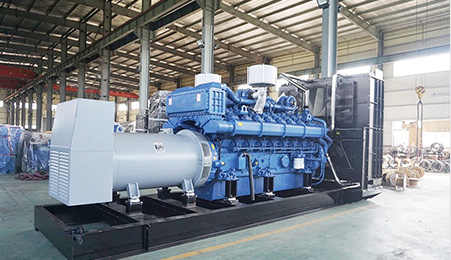
The most frequent sourcing mistake in this category is treating Yuchai as a fully commodity product where any supplier offering the same model number and kW rating is equivalent. Engine model numbers are the same, but the complete generator set specification — alternator, base frame, control system, enclosure quality, and pre-delivery testing standard — varies significantly by supplier. Two quotes for a YC6TD840L-D20-powered 600 kW set can represent genuinely different products if the surrounding assembly and component selection differ.
A second common pitfall is accepting verbal warranty assurances without reviewing the written warranty document. In export transactions, warranty terms that are not documented in the commercial invoice, packing list, or a separate warranty certificate have limited enforceability. Always request the warranty document in writing before the order is placed, not after payment is made.
Certain supplier behaviors are reliable indicators of elevated procurement risk. Unwillingness to provide traceable engine serial numbers before payment is a strong negative signal. Pressure to accept payment terms that release funds before pre-shipment inspection is completed suggests the supplier prioritizes their cash position over your quality assurance. Quotes that arrive without a clear specification sheet — just a price and a kW number — indicate either a trading operation with limited technical depth or a supplier who does not want the buyer to make a direct comparison.
Price volatility is another indicator to watch. A legitimate authorized dealer operates with factory-pegged pricing that has moderate, predictable movement. A supplier whose quoted price shifts by 20% between your initial inquiry and the pro forma invoice stage is likely sourcing on the spot market and does not have stable factory access — meaning supply reliability for repeat orders is uncertain.
Selecting the right Yuchai generator set wholesale supplier comes down to three verifiable factors: documented authorization within the Yuchai dealer network, transparent and comparable pricing based on fully specified configurations, and demonstrated after-sales capability for the engine series and power range you need. In a market where the volume of suppliers presenting themselves as factory-direct sources continues to grow, the due diligence process described in this guide provides a practical filter that protects project timelines, budget integrity, and long-term equipment reliability.
For procurement managers, project developers, and regional distributors evaluating suppliers ahead of 2026 purchasing cycles, the investment in upfront supplier qualification — documentation review, reference checks, and clear specification alignment — consistently outperforms the short-term savings of selecting on price alone. The Yuchai brand carries strong recognition and technical credibility in most target markets; the value of that brand is best realized when the supply chain behind the equipment is as reliable as the engine itself.
延伸阅读:For Chinese product selection and local support, visitWanjin's Chinese service site.
Browse server-rendered product categories, application solutions, project references and technical articles. These direct links help buyers and search crawlers reach useful pages without relying on JavaScript menus.
Compare equipment families before confirming output, duty, environment and accessories.
Start selection from critical loads, motor starting, operating hours and site derating.
Read project references, company updates and generator-set selection or maintenance articles.
Wanjin supports generator-set sales, configuration checks, quotation, installation coordination, repair and scheduled maintenance.

