


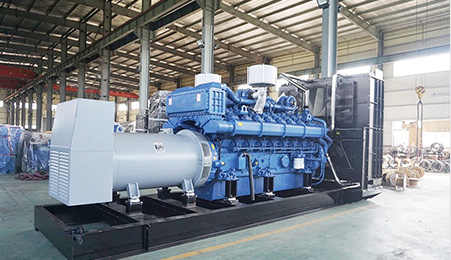
A Yuchai generator set is a diesel-powered generating unit built around an engine manufactured by Guangxi Yuchai Machinery Co., Ltd., one of China's largest and most established internal combustion engine producers. Understanding how to choose a Yuchai generator set starts with recognizing what distinguishes these units from generic alternatives: factory-engineered reliability, a broad power range spanning from small standby units to heavy industrial configurations exceeding 2000 kW, and a supply chain backed by genuine OEM components. For procurement managers, project engineers, and facilities directors sourcing power equipment for industrial, commercial, or infrastructure applications, this distinction carries direct consequences for uptime, maintenance cost, and total cost of ownership.
Yuchai engines are used across industries including construction, mining, telecommunications, data centers, agriculture, and marine applications. The generator sets combine Yuchai diesel engines with alternators and control systems from established brands, assembled to meet domestic and international standards including ISO, CE, and GB specifications. Because the product line is expansive and technically varied, selecting the right unit requires a structured evaluation process rather than a simple capacity comparison.
The most consequential decision in generator selection is matching the unit's power output to your actual load profile. Yuchai generator sets are rated at both prime power (PRP) and standby power (ESP) levels, and these two figures are not interchangeable. Prime power applies to continuous operation where the generator is the primary power source, while standby power applies to backup applications where grid power is the norm and the generator operates intermittently. Selecting a unit based solely on its standby rating for a prime power application will accelerate engine wear and void warranty coverage.
Load calculation should account for the starting surge of motor-driven equipment, which can be two to six times the running load. For facilities with large inductive loads — HVAC compressors, pumps, or industrial motors — you should calculate the total starting kVA in addition to steady-state kW demand. A common and costly mistake is sizing a generator to the running load and then experiencing voltage dips or shutdown events at startup. Yuchai offers single-phase and three-phase configurations across its range; for most commercial and industrial installations, three-phase units are standard. For remote or mobile applications, containerized and trailer-mounted variants are available within the Yuchai product line, which affects both the specification and the procurement process.
Yuchai generator sets are available in open-frame and soundproofed (silent) enclosures. Open-frame units are appropriate for engine rooms or outdoor installations where noise is managed at the facility level. Silent-type enclosures, which typically reduce noise output to 75 dB(A) or below at 7 meters, are required for urban commercial sites, hospitals, schools, and any location subject to local noise ordinances. The enclosure type affects not only the acoustic profile but also the unit's footprint, ventilation requirements, and fuel access design — all factors that should be resolved before finalizing a specification.
Beyond power output, several technical parameters directly influence whether a specific Yuchai generator set is the right fit for an application. Engine displacement and cylinder configuration affect both power density and fuel consumption at partial loads — a relevant consideration for standby units that may operate infrequently but must start reliably after extended idle periods. Yuchai's engine lineup spans four-cylinder to twelve-cylinder configurations, with turbocharged and intercooled variants available at higher power tiers. Reviewing the engine model designation alongside the generator set specification sheet ensures you are evaluating the correct product, not a relabeled or downgraded assembly.
Alternator brand and winding class are equally important and frequently overlooked in initial procurement. Yuchai generator sets are typically paired with alternators from brands such as Stamford, Leroy-Somer, or equivalent Chinese manufacturers, with insulation class H and protection rating IP23 as common industrial standards. The alternator's voltage regulation accuracy (AVR performance) matters significantly for sensitive electronic loads; specify a static voltage regulation of plus or minus one percent or better if the generator will power data center equipment, CNC machinery, or medical devices. Control panel specification — whether a manual start panel, an automatic mains failure (AMF) panel, or a remote monitoring-capable system — should be determined by your operational requirements before requesting a quotation.
Fuel efficiency at 75% rated load is the standard reference point for comparing diesel generators, and Yuchai publishes specific fuel consumption figures (g/kWh) for each engine model. For applications with extended run hours, even a modest difference in specific fuel consumption compounds into significant cost over a multi-year operating cycle. When evaluating competing offers, request fuel consumption data at 50%, 75%, and 100% load to understand the efficiency curve across your expected operating range. This is particularly relevant for prime power applications in remote locations where fuel logistics add to the per-liter cost.
Export markets and domestic project tenders increasingly require compliance with specific emissions tiers. Yuchai produces engines meeting China National Standard Stage III and Stage IV requirements, as well as units certified to EU Stage V for export. Before finalizing a specification, confirm the emissions tier required by the destination market, the end-use industry, or the project's environmental permit conditions. Specifying a non-compliant engine tier can result in customs delays, project hold-ups, or post-installation regulatory penalties that far exceed any initial cost savings from selecting a lower-specification unit.
Knowing how to choose a Yuchai generator set means knowing how to evaluate the supplier, not just the product. The Yuchai distribution network includes both authorized dealers and independent resellers, and the distinction has real downstream consequences. Authorized dealers source directly from Guangxi Yuchai or its designated assembly partners, which means the products carry valid factory warranties, use genuine OEM components, and are traceable through Yuchai's manufacturer identification systems. Independent resellers may offer lower initial pricing but carry elevated risk of counterfeit parts, voided warranties, and limited access to Yuchai's factory technical support channels.
When evaluating a supplier, request documentation of their authorized dealer status and verify it through Yuchai's official channel registry if possible. Beyond authorization, assess the supplier's after-sales infrastructure: do they maintain a spare parts inventory for the engine models they sell, do they have qualified service technicians, and do they offer commissioning support at the installation site? For large projects or remote deployments, the availability of a service agreement covering scheduled maintenance, emergency call-out, and parts supply is often more valuable than marginal differences in unit pricing. A generator set that cannot be serviced promptly is a liability, not an asset.
Professional procurement of generator sets should include a pre-shipment testing requirement. Reputable authorized dealers can arrange load bank testing at the factory or assembly facility, with test reports documenting voltage, frequency, fuel consumption, and thermal performance at rated load. For high-value orders, a factory acceptance test (FAT) conducted in the buyer's presence or by a third-party inspection agency provides documented assurance before the equipment ships. Request that test reports, engine serial number records, and compliance certificates accompany every shipment as standard documentation — not as an optional add-on.
One of the most frequent errors in generator procurement is under-sizing the unit to reduce upfront cost. A generator consistently operated above 80% of its rated prime power output will experience accelerated wear, higher maintenance frequency, and shorter service life. The cost difference between a correctly sized unit and an undersized one is almost always recovered within the first two to three years of operation through reduced maintenance expenditure and avoided replacement costs. Size for the actual load with a minimum 20% headroom as a standard engineering practice.
Equally problematic is purchasing a generator set without confirming parts availability in the destination market. Yuchai has an extensive service network across Southeast Asia, Africa, the Middle East, and other regions, but coverage varies by country and by engine model. Before committing to a specific model, confirm that consumable parts — filters, belts, injectors, and gaskets — are stocked by a local distributor or can be air-freighted within a commercially acceptable lead time. For critical infrastructure applications, holding a defined spare parts kit on-site from day one is standard risk management practice, not an optional expense.
Finally, avoid treating the generator set as a standalone purchase decision disconnected from the broader power system. The interface between the generator, the automatic transfer switch (ATS), the building management system, and any parallel operation controls must be engineered as a system. Yuchai generator sets support parallel operation for redundancy and load sharing, but this requires compatible control architecture and commissioning by personnel with relevant experience. Engaging a qualified electrical engineer at the specification stage — before issuing a purchase order — prevents expensive redesign and delays during installation and commissioning.
Selecting the right Yuchai generator set for an industrial or commercial application is a multi-variable engineering and procurement decision. It requires accurate load analysis, careful matching of engine and alternator specifications to the application, verification of emissions compliance, and rigorous evaluation of the supply chain behind the product. Working with an authorized Yuchai dealer who can provide genuine factory products, documented pre-shipment testing, and structured after-sales support reduces procurement risk and protects the long-term performance of the installation. Taking the time to specify correctly at the outset is consistently more cost-effective than correcting a mismatched or poorly supported installation after the fact.
Browse server-rendered product categories, application solutions, project references and technical articles. These direct links help buyers and search crawlers reach useful pages without relying on JavaScript menus.
Compare equipment families before confirming output, duty, environment and accessories.
Start selection from critical loads, motor starting, operating hours and site derating.
Read project references, company updates and generator-set selection or maintenance articles.
Wanjin supports generator-set sales, configuration checks, quotation, installation coordination, repair and scheduled maintenance.

