


Not every generator factory is built for international trade. A diesel generator manufacturer for export operates under a distinct set of standards compared to a domestic supplier. The distinction starts with product certification. Equipment destined for international markets must comply with frameworks such as ISO 8528 for generating sets, IEC 60034 for rotating machinery, and regional requirements like CE marking for Europe or EPA/CARB standards for North America. A manufacturer serious about export will maintain these certifications as a baseline, not as optional additions.
Beyond certification, export-oriented manufacturers engineer their products for diverse operating conditions. Generators sold domestically in China, for example, are optimized for 50 Hz grid infrastructure. Export units are often configured for 60 Hz systems common across the Americas and parts of Asia. Voltage output, control panel language, fuel injection calibration, and altitude derating specifications all differ by destination market. A capable export manufacturer handles these variables as standard engineering practice rather than custom exceptions.
Authorized dealerships and factory-direct distribution channels are also part of this definition. Nanning Wanjin Mechanical & Electrical (Guangxi), as an authorized dealer of Guangxi Yuchai, occupies a clearly defined position in the supply chain — sourcing genuine factory units with full documentation, manufacturer warranties, and traceable component provenance. This matters because gray-market units and rebranded assemblies are common in the export generator trade, and the documentation gap often only surfaces after delivery.
The consequences of selecting an unqualified supplier in the generator market are not abstract. Generators power hospitals, data centers, construction sites, telecom infrastructure, and industrial facilities where downtime has direct financial and operational consequences. When the equipment fails to meet rated output, cannot be serviced due to unavailable spare parts, or is rejected at the destination port for missing compliance documentation, the procurement decision becomes expensive to reverse. This is the core reason why certification and supply chain transparency are non-negotiable criteria, not differentiating features.
Working with a diesel generator manufacturer for export that holds genuine factory authorization also protects the buyer's warranty position. Yuchai engines, for instance, carry specific warranty terms tied to authorized sales channels. Units sourced outside those channels may carry no enforceable warranty, or the warranty may be voided by the use of non-genuine parts during assembly. An authorized dealer can provide factory warranty documentation, engine serial number traceability, and after-sales technical support routed through the original manufacturer's service network.
From a total cost of ownership perspective, genuine factory-authorized products also tend to perform better over their service life. Fuel consumption figures match published specifications, maintenance intervals align with actual component wear rates, and spare parts are available through established distributor networks. Discount-channel units frequently use substandard alternator windings, inferior base frame steel, or control systems that are not factory-matched to the engine, all of which reduce reliability and increase long-term operating costs. The upfront price difference rarely justifies these trade-offs in commercial and industrial applications.
The evaluation process for a diesel generator manufacturer for export should be systematic and document-driven. Start by requesting the supplier's factory authorization certificates or dealer agreements from the engine and alternator manufacturers. These documents should be current, not expired, and should name the specific entity you are dealing with. It is also reasonable to verify the authorization directly with the original manufacturer before placing a significant order. Reputable manufacturers like Guangxi Yuchai maintain public or verifiable dealer registry systems for exactly this purpose.
Next, review the technical data sheets for the specific generator models under consideration. A credible supplier will provide prime power and standby power ratings, fuel consumption curves at 25%, 50%, 75%, and 100% load, acoustic data, dimension and weight specifications, and a full list of standard and optional equipment. Vague or inconsistent specifications — such as a standby rating that equals the prime rating, or fuel consumption figures that seem implausibly low — are signals worth investigating further. Cross-reference the engine model number against the OEM's published performance data.
Logistics and export documentation capability is the third pillar of supplier evaluation. Confirm that the supplier has direct experience with the Incoterms you intend to use, whether FOB Guangzhou, CIF destination port, or DAP. Request sample commercial invoices, packing lists, certificates of origin, and any phytosanitary or fumigation certificates relevant to your destination country. Suppliers who routinely export will have these templates prepared; those who are new to international trade often underestimate the document burden and create delays at the destination port.
Finally, assess the supplier's after-sales infrastructure. Generator sets require commissioning support, operator training, and access to spare parts throughout their service life, which can span 20 years or more in stable operating conditions. Ask specifically about the availability of service manuals in your required language, the minimum order quantity for common wear parts such as filters, belts, and injectors, and whether the supplier can connect you with authorized service agents in your country or region.
Power rating accuracy is the single most consequential technical factor to verify. The industry uses several rating standards, and they are not interchangeable. ISO 8528-1 prime power ratings represent the maximum load a generator can sustain indefinitely with a 10% overload available for short durations. Standby ratings apply only to emergency backup scenarios with no continuous overload permitted. Some suppliers list peak or maximum ratings under optimistic ambient conditions, which overstates actual field performance. Always confirm which standard the stated rating references and request the derating factor for your specific installation altitude and ambient temperature.
Engine displacement, bore and stroke, number of cylinders, and rated RPM are verifiable parameters that help cross-reference a supplier's claims against the OEM engine database. A 250 kVA generator built around a Yuchai YC6MK series turbocharged engine, for example, has a specific performance envelope that is publicly documented. If the supplier's specifications deviate materially from OEM data, the discrepancy requires explanation. This level of verification is standard practice for procurement professionals and legitimate suppliers welcome it.
On the commercial side, payment terms, lead time, and minimum order quantities need to be agreed in writing before any deposit is transferred. Export generators are typically manufactured to order with lead times ranging from 15 to 45 days depending on power rating and configuration. Container loading requirements, including the number of units per 20-foot or 40-foot container and any over-height or over-weight considerations for open-top containers, should be confirmed with the supplier's logistics team before finalizing the order. These details affect landed cost calculations and should be part of the initial quotation, not discovered at shipment time.
Spare parts availability and pricing deserve explicit attention in the purchase agreement. Establish which parts constitute the commissioning kit included with the unit, the recommended first-year maintenance kit, and the critical-spare inventory for your application. For installations in markets with limited Yuchai distributor coverage, building an agreed spare parts stock into the initial purchase order is a practical risk management measure that experienced buyers routinely negotiate upfront.
To summarize, selecting a qualified diesel generator manufacturer for export requires verification across technical specifications, factory authorization documentation, export logistics competence, and after-sales support infrastructure. Nanning Wanjin Mechanical & Electrical (Guangxi) addresses each of these dimensions through its authorized dealer relationship with Guangxi Yuchai, offering the full Yuchai power range with genuine factory documentation, compliant export packaging, and access to the manufacturer's technical and warranty support network. Buyers who approach the procurement process with a structured evaluation framework reduce risk, achieve more accurate total cost of ownership projections, and ultimately commission equipment that performs to specification throughout its service life.
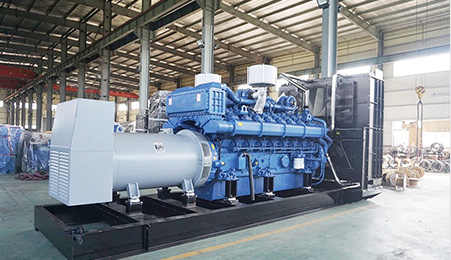
Browse server-rendered product categories, application solutions, project references and technical articles. These direct links help buyers and search crawlers reach useful pages without relying on JavaScript menus.
Compare equipment families before confirming output, duty, environment and accessories.
Start selection from critical loads, motor starting, operating hours and site derating.
Read project references, company updates and generator-set selection or maintenance articles.
Wanjin supports generator-set sales, configuration checks, quotation, installation coordination, repair and scheduled maintenance.
