


A Yuchai generator set is a diesel-powered generating unit built around an engine produced by Guangxi Yuchai Machinery Co., Ltd., one of China's largest and most established internal combustion engine manufacturers. Yuchai engines are deployed across construction, marine, industrial standby, and prime power applications worldwide. For B2B buyers — whether they are EPC contractors, project developers, or equipment distributors — selecting the right Yuchai generator set manufacturer or authorized supplier is not simply a procurement formality. It directly affects engine authenticity, warranty coverage, after-sales support, and total cost of ownership over the asset's service life. The market includes genuine authorized dealers, gray-market assemblers, and rebranded products of varying quality, which makes due diligence essential before committing to any supplier.
Guangxi Yuchai does not operate as a single end-to-end generator set manufacturer. The company produces diesel and gas engines, which are then integrated into complete generating sets by a network of OEM assemblers, licensed dealers, and independent canopy fabricators. This tiered structure means that two suppliers can both legitimately claim to offer "Yuchai generator sets" while delivering very different levels of quality, traceability, and after-sales accountability.
At the top of the supply chain sit Yuchai's own authorized assembly partners and regional distributors — entities that receive engines directly from the factory, integrate them with compatible alternators (typically from brands such as Stamford, Leroy-Somer, or Chinese-made equivalents), and sell complete sets under documented supply agreements. Below that tier are independent fabricators who source Yuchai engines from secondary distributors and assemble canopy units with varying degrees of engineering rigor. Understanding where a given Yuchai generator set manufacturer sits in this hierarchy is the first step in any credible supplier evaluation.
Regional concentration matters as well. Guangxi province, where Yuchai's headquarters is located, hosts the highest density of authorized dealers and factory-adjacent suppliers. Companies based in Guangxi — particularly those with direct dealer agreements — typically have faster access to genuine spare parts, factory technical support, and up-to-date engine configurations. Buyers sourcing from provinces far removed from the factory should apply additional scrutiny to warranty and parts supply chains.
Comparing suppliers in this segment requires a structured framework rather than a simple price comparison. The following criteria provide a practical evaluation basis for procurement teams and project engineers.
The single most important verification step is confirming that a Yuchai generator set manufacturer holds a current, documented dealer or OEM agreement with Guangxi Yuchai. Authorized dealers can provide engine serial numbers that are traceable through Yuchai's internal registration system, allowing buyers to confirm engine model, production date, and emission certification. Request the dealer authorization certificate and verify it directly with Yuchai's sales or export division if the purchase volume justifies it. Suppliers unwilling to provide traceable documentation should be treated with caution regardless of pricing.
The engine is only one component of a complete generating set. The alternator, control panel, base frame, cooling system, and exhaust configuration all affect reliability and compliance. A credible Yuchai generator set manufacturer will be transparent about alternator sourcing — specifying brand, frame size, insulation class, and winding type — rather than describing it generically. For critical applications such as data centers, hospitals, or offshore installations, specify international-brand alternators and request test certificates including voltage regulation, total harmonic distortion, and temperature rise data.
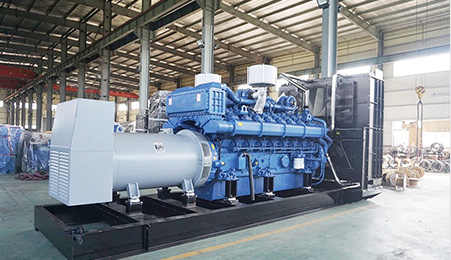
Yuchai's engine lineup covers a broad power band, roughly from 15 kW to over 2,000 kW for diesel applications, with natural gas variants extending the range further. A well-established Yuchai generator set manufacturer should be able to supply across this range from stock or short lead-time assembly, and should offer application-specific configurations: open-frame, soundproofed canopy, containerized, mobile trailer-mounted, and marine-classification variants. Narrow product ranges can indicate limited assembly capability or restricted supply agreements.
For international buyers, after-sales capability is frequently underweighted during procurement and overweighted during equipment downtime. Evaluate whether the supplier maintains a technical team capable of remote diagnostics, can supply genuine Yuchai spare parts within commercially acceptable lead times, and has experience supporting equipment in the buyer's target region. Request references from existing international customers and, where possible, verify that warranty claims have been honored in practice.
Pricing for Yuchai generator sets in 2025 varies significantly based on power output, configuration, alternator specification, and export terms. The following ranges reflect typical FOB China pricing from authorized Yuchai generator set manufacturers and should be treated as benchmarks for budgeting purposes rather than firm quotations, given that steel, copper, and logistics costs remain subject to market fluctuation.
For small-scale units in the 20–100 kW range, expect FOB pricing between approximately USD 2,500 and USD 12,000 for open-frame configurations with a domestic-grade alternator. Soundproofed canopy versions in the same power band typically add 15–30% to the base price. Mid-range sets from 100–500 kW — the most common band for commercial and light industrial projects — generally fall between USD 10,000 and USD 65,000 FOB, with international-brand alternators (Stamford, Leroy-Somer) adding a measurable premium over Chinese-brand equivalents. Large industrial sets above 500 kW are quoted on a project basis and can exceed USD 150,000 FOB for fully integrated containerized solutions with paralleling switchgear.
Pricing from unauthorized or gray-market assemblers may appear 10–25% lower than authorized dealer pricing. However, this discount rarely accounts for the hidden costs: non-genuine or reconditioned engines, absent factory warranty, incompatible spare parts, and potential compliance issues in markets that require emission or noise certification. Total cost of ownership over a five-to-ten year operational period almost invariably favors sourcing from a credentialed Yuchai generator set manufacturer, even at a higher initial purchase price.
When comparing quotations, ensure that all pricing is evaluated on equivalent terms. Key variables include Incoterms (FOB vs. CIF vs. DDP), warranty duration and scope, commissioning support, and spare parts package inclusion. A quotation that appears competitive on unit price may carry significant hidden costs in freight, customs clearance, or first-service consumables.
The generator set market — particularly in the sub-500 kW segment — has a documented history of misrepresentation, including engines sold as new that contain reconditioned components, alternator nameplates that do not match internal specifications, and load test reports fabricated rather than witnessed. Buyers with limited on-site inspection resources can reduce exposure through a combination of contractual protections and practical due diligence steps.
Be cautious of suppliers who cannot provide an engine serial number prior to order confirmation, who resist witnessed factory acceptance testing (FAT), or who offer payment terms that front-load the buyer's financial exposure before production is confirmed. Similarly, quotations that do not specify alternator brand, control system model, or protection relay configuration are often covering for component substitutions made at the supplier's discretion. A legitimate Yuchai generator set manufacturer will welcome technical specification alignment because it protects both parties from post-delivery disputes.
Abnormally short lead times can also indicate that a supplier is shipping from uncommitted stock assembled to a lower specification, rather than building to the buyer's confirmed order. Standard lead times from reputable assemblers range from three to eight weeks depending on configuration complexity and factory loading.
For orders above USD 20,000, a pre-shipment inspection by a third-party inspection body (such as SGS, Bureau Veritas, or TUV) adds relatively modest cost against the value of independently confirmed compliance. The inspection scope should include verification of engine serial numbers against Yuchai's records, alternator nameplate and winding resistance checks, and a witnessed load bank test at 100% rated load for a minimum of two hours with recorded voltage, frequency, and fuel consumption data. These steps are standard practice for infrastructure projects and should be incorporated into the purchase contract rather than treated as optional add-ons.
Contractual protections should include a clear warranty clause specifying repair-or-replace obligations, a defined spare parts availability commitment, and a jurisdiction clause that is commercially practical for the buyer to enforce. International buyers should be aware that enforcing warranty claims through Chinese courts involves significant practical challenges; a supplier with a regional service partner or bonded warranty fund provides stronger practical protection than contractual language alone.
The Yuchai generator set market in 2025 offers genuine value for B2B buyers who approach supplier selection with appropriate rigor. Yuchai engines have a well-established track record across industrial and infrastructure applications globally, and the availability of authorized dealers — particularly those with direct factory relationships in Guangxi — means that buyers can access genuine products, traceable documentation, and credible after-sales support when they select the right partner.
The key differentiator between a sound procurement outcome and a costly one is rarely the headline unit price. It is the depth of a supplier's authorization credentials, the transparency of their component sourcing, the robustness of their after-sales infrastructure, and the practical enforceability of the commercial terms they offer. Evaluating each Yuchai generator set manufacturer candidate against these criteria — rather than on price alone — is the most reliable path to acquiring equipment that performs as specified over its intended service life.
Browse server-rendered product categories, application solutions, project references and technical articles. These direct links help buyers and search crawlers reach useful pages without relying on JavaScript menus.
Compare equipment families before confirming output, duty, environment and accessories.
Start selection from critical loads, motor starting, operating hours and site derating.
Read project references, company updates and generator-set selection or maintenance articles.
Wanjin supports generator-set sales, configuration checks, quotation, installation coordination, repair and scheduled maintenance.

