


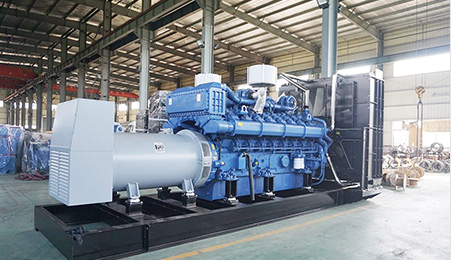
A Yuchai generator set for data center backup power is an engine-driven standby power system designed to support critical electrical loads when the utility supply fails or falls outside acceptable limits. A complete system normally includes a Yuchai diesel engine, alternator, control panel, starting system, cooling system, fuel system, base frame, and related switching or paralleling equipment. For data center projects, selection must go beyond engine horsepower or nameplate kW: the buyer must verify operating duty, transient performance, kVA, voltage, frequency, synchronization, installation conditions, commissioning requirements, and long-term maintenance support. As an authorized Yuchai dealer and exporter, Nanning Wanjin Mechanical & Electrical can coordinate quotations around verified engine and alternator specifications for industrial and international projects.
A data center generator set is one part of a larger backup power architecture. The system may work alongside an uninterruptible power supply, automatic transfer switch, battery system, medium- or low-voltage switchgear, and a building management or power monitoring system. The generator does not normally replace the UPS. Instead, the UPS carries the critical load during the short interval between utility failure and generator acceptance, while the generator supplies sustained backup power after it starts, reaches rated speed, and is connected to the load.
The Yuchai engine provides mechanical power, while the alternator converts that power into electrical output. The final performance depends on the complete configuration, not only the engine model. A quotation should therefore identify the engine model, rated speed, fuel consumption data, cooling arrangement, starting voltage, alternator make and model, insulation and protection details where applicable, controller, radiator, enclosure or open-frame arrangement, and the rated output in both kW and kVA.
Buyers should also distinguish between standby, prime, and continuous ratings. Standby power is generally associated with emergency operation during utility outages, while prime power is intended for applications where the generator is used as the principal source and load varies over time. Continuous operation involves a steady load for extended periods. The correct rating depends on the utility arrangement, expected outage profile, operating hours, load profile, and local project requirements. A data center specification should never assume that a standby rating is automatically suitable for continuous operation.
The engine model should be matched to the required output and duty rather than selected only by familiar model names. The alternator must be capable of handling the electrical characteristics of the data center, including UPS input behavior, motor starting, nonlinear loads, harmonic currents, and step-load changes. Depending on the project, the system may require one generator or several generator sets operating in parallel. Paralleling introduces additional requirements for synchronization, load sharing, protection, circuit breakers, communications, and control logic.
The control system should provide the functions required by the project, such as automatic start, automatic stop, alarm indication, event recording, voltage and frequency monitoring, emergency stop, and communication with external systems. The exact features should be confirmed in the technical offer. If remote monitoring or integration with a data center management platform is required, the communication protocol, interface, data points, and responsibility for integration should be defined before purchase.
Data centers have low tolerance for interruption, unstable voltage, or incorrect recovery sequencing. Even a short disturbance can affect servers, storage equipment, cooling systems, network devices, security systems, and other critical infrastructure. The generator must therefore start reliably, achieve stable voltage and frequency, accept the required load, and continue operating under the specified environmental conditions.
Reliability is a system property. A correctly selected engine cannot compensate for an undersized alternator, inadequate fuel storage, incorrect cable sizing, poor ventilation, weak batteries, unsuitable switchgear, or incomplete commissioning. Likewise, a high-quality generator set can fail to support the facility if the automatic transfer sequence conflicts with the UPS settings or if the generator is not tested under realistic load conditions.
Load behavior is particularly important. Data center loads may include rectifiers, variable-speed drives, pumps, fans, chillers, and UPS systems. These loads can produce inrush current, harmonic distortion, or rapid changes in demand. The generator must maintain acceptable electrical performance during these events. The technical review should consider not only the normal running load but also the largest step load, motor starting sequence, UPS recharge behavior, cooling load, and any planned future expansion.
Backup equipment may operate infrequently, but it must remain ready for immediate service. Maintenance access, spare parts planning, battery replacement, coolant and lubricant management, and periodic testing all influence availability. The buyer should establish who will perform scheduled maintenance, what consumables are required, how troubleshooting will be handled, and which service documents will be supplied with the equipment.
Lifecycle cost includes more than the purchase price. Fuel consumption, installation materials, exhaust treatment, acoustic treatment, load-bank testing, transport, commissioning, operator training, and future servicing can materially affect the total project cost. A clear quotation separates the generator set from optional or project-specific items so that the customer can compare offers on an equivalent basis.
Start with a load schedule that lists every load supported by the emergency power system. Separate critical IT loads from mechanical, life-safety, security, lighting, and auxiliary loads. Record normal running kW, starting or inrush characteristics, power factor, duty cycle, and required priority. If the data center will expand, include the planned future load rather than relying on an unconfirmed general allowance.
kW measures real power, while kVA represents apparent power. The relationship is commonly expressed as kW = kVA multiplied by power factor. A generator specified only by kW may not have enough kVA capacity for the actual electrical equipment. The project specification should state rated kW, rated kVA, voltage, phase, frequency, power factor, and the applicable rating standard or project basis.
Altitude, ambient temperature, humidity, dust, salt exposure, ventilation, fuel quality, and enclosure location can affect generator performance. Engines and alternators may require derating at high altitude or high ambient temperature. The quotation should state whether the offered output is valid at the project site conditions or whether a derated rating applies.
Installation planning should cover airflow, radiator discharge, combustion air, exhaust back pressure, noise control, vibration isolation, fuel storage, drainage, fire protection, access for maintenance, and safe removal of major components. For an indoor plant room, the cooling and ventilation design is essential. For an outdoor installation, the enclosure must be suitable for the climate and access requirements specified by the project; its exact construction and protection level should be documented rather than assumed.
The UPS manufacturer should provide the generator compatibility requirements. Important information may include minimum generator-to-UPS capacity, acceptable frequency variation, voltage distortion limits, ramp rates, rectifier settings, battery recharge behavior, and generator input power factor. These requirements should be reviewed together by the generator supplier, UPS supplier, electrical contractor, and data center designer.
The automatic transfer sequence should define utility failure detection, generator start, warm-up or stabilization time, breaker transfer, retransfer to utility, cooldown, and shutdown. Where multiple generator sets are used, the design should also define lead-lag rotation, automatic synchronization, load sharing, redundancy philosophy, and failure response. The final control logic should be tested during commissioning instead of being accepted only from a written description.
Factory testing and site commissioning should be defined in the purchase specification. Depending on the contract, testing may include visual inspection, insulation checks, control verification, no-load operation, load-bank testing, step-load testing, automatic transfer testing, emergency stop testing, alarm verification, and parallel operation checks. The exact test scope should reflect the project requirements and be agreed before shipment.
Commissioning should confirm that the installed generator performs at the site, not only in the factory. The team should record voltage, frequency, current, load, fuel consumption where required, alarms, breaker operation, and recovery sequence. Operators should receive manuals, maintenance schedules, wiring information, recommended consumables, and practical operating guidance. Export projects should also clarify shipping documents, import responsibilities, site service arrangements, and the division of responsibility between the supplier and local contractors.
One common mistake is sizing the generator from the current IT load alone. Cooling, pumps, fans, emergency lighting, fire systems, security, controls, and future expansion may also require backup power. Another is selecting a generator only by kW while ignoring kVA, power factor, harmonics, UPS behavior, and step-load performance.
A second mistake is treating the engine model as the complete product specification. The same engine family may be paired with different alternators, controllers, cooling arrangements, or output configurations. Buyers should request a complete model schedule and verify that the engine, alternator, control panel, breaker, and accessories match the technical requirement.
Other avoidable errors include failing to account for altitude derating, underestimating ventilation requirements, omitting fuel autonomy from the design, and assuming that a generator can be installed without a coordinated exhaust and cooling plan. It is also risky to postpone commissioning tests until after the data center is occupied. Early testing identifies wiring, controls, transfer, and load-related issues while correction is still practical.
Before requesting a quotation, prepare the project data: required standby, prime, or continuous duty; total and critical load in kW and kVA; voltage, phase, frequency, and power factor; UPS make and operating characteristics; largest motor or step load; required autonomy; installation altitude and ambient temperature; indoor or outdoor location; noise requirements; fuel type and storage plan; transfer or paralleling arrangement; and expected expansion capacity.
Ask the supplier to identify the Yuchai engine model, alternator make and model, rated output, rating basis, fuel consumption, cooling method, starting system, controller, breaker arrangement, dimensions, weight, and applicable derating. Request separate descriptions for standard supply, optional equipment, installation materials, commissioning, load-bank testing, training, warranty terms, and after-sales support. Do not accept unclear phrases such as “complete set” without a detailed scope of supply.
Finally, verify the commercial and technical documents together. The pro forma invoice, technical data sheet, wiring information, packing list, and quotation should describe the same configuration. Confirm lead time only after the specification is finalized, and do not assume stock, certifications, local service coverage, or project references unless they are specifically documented and applicable to the destination market. A disciplined review protects the buyer from selecting a generator that appears adequate on paper but does not integrate correctly with the facility.
Choosing a Yuchai generator set for data center backup power requires coordinated evaluation of the engine, alternator, controls, load profile, UPS, transfer equipment, installation environment, testing plan, and maintenance strategy. The most dependable procurement process begins with an accurate load schedule and ends with documented site commissioning. By verifying kW and kVA ratings, duty classification, environmental conditions, scope of supply, and after-sales responsibilities, data center owners and contractors can develop a backup power system that is technically suitable, maintainable, and aligned with the project’s actual operating requirements.
延伸阅读:For Chinese product selection and local support, visitWanjin's Chinese service site.
Browse server-rendered product categories, application solutions, project references and technical articles. These direct links help buyers and search crawlers reach useful pages without relying on JavaScript menus.
Compare equipment families before confirming output, duty, environment and accessories.
Start selection from critical loads, motor starting, operating hours and site derating.
Read project references, company updates and generator-set selection or maintenance articles.
Wanjin supports generator-set sales, configuration checks, quotation, installation coordination, repair and scheduled maintenance.

