


Choosing a Yuchai generator set for hospital backup power requires more than selecting an engine with a suitable nameplate rating. A hospital standby system must support critical medical equipment, life-safety systems, communications, lighting, ventilation, pumps, and other essential services when the utility supply fails. The complete solution normally includes a Yuchai diesel engine, alternator, generator controller, starting system, fuel system, cooling arrangement, switchgear, automatic transfer equipment, and site-specific installation and commissioning. For an export or industrial project, the purchaser should verify the technical configuration, operating conditions, local electrical requirements, and after-sales scope before accepting a quotation.
A hospital generator set is a standby or prime-power package designed to provide electrical power to designated hospital loads during a utility interruption or in locations without a dependable grid connection. In a typical standby application, the set remains available for automatic starting and operates when the normal power source is unavailable. It does not necessarily supply every load in the facility. Instead, the electrical design usually separates essential, legally required, and nonessential circuits so that the generator capacity is matched to the hospital’s actual emergency-power strategy.
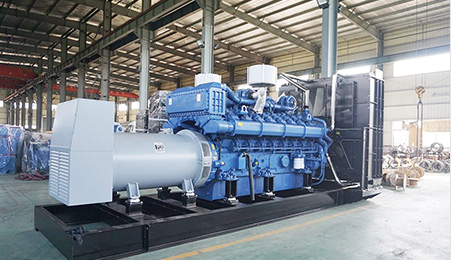
A Yuchai generator set for hospital backup power uses a Yuchai diesel engine coupled to an alternator. The engine converts diesel fuel into mechanical energy, while the alternator produces electrical power at the required voltage, frequency, and phase arrangement. The package may also include a control panel, batteries and charger, radiator or remote cooling system, exhaust components, fuel tank, vibration isolators, circuit breaker, and weatherproof or sound-attenuated enclosure where appropriate. The exact engine model, alternator brand, controller, and auxiliary equipment should be stated in the technical offer rather than assumed from the generator set’s general brand name.
Hospital applications commonly require automatic transfer from the normal source to the emergency source and, after utility restoration, controlled retransfer back to the normal source. The generator controller and automatic transfer switch must be compatible with the facility’s distribution system. The specification should also identify the required starting time, voltage and frequency regulation, protection functions, short-circuit performance, remote monitoring interfaces, and permitted operating modes. These details are especially important when the set will be integrated with existing switchboards, parallel generators, or a central building management system.
Power continuity in a hospital has direct operational and safety consequences. An interruption can affect operating rooms, intensive-care equipment, medical gas systems, elevators, fire pumps, data networks, refrigeration, sterilization equipment, and environmental controls. Even where individual devices have internal batteries or uninterruptible power supplies, those systems may only bridge the interval before the generator starts. The generator therefore forms one part of a coordinated emergency-power architecture rather than functioning as an isolated machine.
Correct sizing protects both patients and equipment. An undersized generator may experience excessive voltage and frequency dips when motors, pumps, compressors, or imaging equipment start. Repeated overloads can cause nuisance trips, overheating, poor combustion, and reduced service life. An oversized set can also create problems, particularly if it operates for long periods at very light load. Low loading may contribute to inefficient fuel use and carbon deposits, depending on the engine and operating pattern. A load study should therefore consider continuous loads, intermittent loads, motor starting, non-linear loads, future expansion, and the sequence in which loads are connected.
Reliability also depends on the complete installation. A technically suitable engine and alternator cannot compensate for an incorrectly sized fuel system, inadequate ventilation, poor exhaust routing, weak foundations, unsuitable batteries, or a transfer switch that is not coordinated with upstream protection. For export projects, climate and logistics matter as well. Ambient temperature, altitude, humidity, dust, salt exposure, fuel quality, transportation conditions, and the availability of local service personnel can affect the practical performance of the package.
Using an authorized Yuchai dealer or experienced exporter helps the purchaser establish what is included in the supply. Nanning Wanjin Mechanical & Electrical can support the quotation and technical clarification process for Yuchai diesel generator sets intended for export and industrial applications. The purchaser should still review the final engine and alternator datasheets, drawings, test requirements, warranty terms, and commissioning responsibilities before placing an order.
The first step is to prepare a load schedule. List each essential load, its rated voltage, phase, frequency, running power, starting method, power factor, and expected operating time. Separate loads that must start immediately from loads that can be connected through a staged sequence. Include pumps, fans, chillers, lifts, compressors, sterilizers, medical equipment, lighting, servers, security systems, and battery chargers where they are part of the emergency supply.
Generator output is normally discussed in kW and kVA. Kilowatts represent real power, while kilovolt-amperes represent apparent power. The relationship is approximately kW = kVA multiplied by power factor. A set rated at 500 kVA at 0.8 power factor, for example, corresponds to 400 kW under that rating basis. The purchaser must confirm whether the project specification is expressed in kW or kVA and whether the required power factor differs from the rating used in the quotation. Motors and electronic equipment may also create starting or harmonic demands that are not visible from running kW alone.
Ask the supplier to state whether the proposed set is rated for standby, prime, or continuous operation. Standby ratings are generally associated with emergency operation when the utility supply is unavailable, while prime and continuous ratings address more demanding operating patterns. The correct rating depends on the project duty cycle and local requirements. Do not compare offers based only on the largest headline number; compare the rating definition, allowable load profile, overload capability, and operating limitations.
Site conditions should be written into the technical specification. Confirm altitude, minimum and maximum ambient temperature, humidity, dust level, enclosure requirements, ventilation arrangement, fuel characteristics, and installation location. Engine output and cooling performance can be affected by high ambient temperature and elevation. The supplier should identify any applicable derating and provide the relevant performance data. For a containerized or enclosed installation, the design must account for combustion air, radiator discharge, heat rejection, service access, and noise control.
Request the exact Yuchai engine model and its published technical data, including rated speed, displacement where relevant, fuel consumption, cooling method, starting voltage, emissions information, and maintenance intervals. Confirm the alternator manufacturer and model, insulation and protection characteristics, voltage regulator arrangement, winding configuration, and available voltage and frequency options. These items should be selected for the actual project rather than copied from a generic catalogue.
The control system should provide the functions required by the hospital distribution design. Typical requirements may include automatic start and stop, low oil pressure and high coolant temperature protection, overspeed protection, overcurrent and short-circuit protection, emergency stop, battery monitoring, generator measurements, event records, and communication interfaces. If remote monitoring is needed, define the protocol, signal list, cable responsibilities, and cybersecurity expectations. A controller description should not be treated as proof that the entire system has been integrated or tested for the purchaser’s switchgear.
For a single generator installation, the automatic transfer switch must be rated for the connected voltage, current, fault level, switching method, and neutral arrangement. For multiple-generator systems, the specification may require synchronization, load sharing, priority sequencing, and automatic start of additional sets. Hospitals with high availability requirements may use separate emergency branches or redundant generator capacity, but the appropriate arrangement depends on the facility design and applicable local codes.
Ask for a single-line diagram showing the generator breaker, transfer equipment, bypass or maintenance arrangements, grounding and neutral treatment, and connection points for essential loads. The quotation should clearly state whether the automatic transfer switch, paralleling panel, fuel tank, exhaust system, cables, installation materials, and protection studies are included. Ambiguity at this stage can lead to cost and schedule disputes after delivery.
One common mistake is choosing the generator only from the total connected load. Connected load does not show which equipment starts together, how much starting current is required, or which circuits can be shed. Another mistake is using a residential or commercial sizing assumption for a hospital without reviewing essential-load classifications and emergency operating procedures. The purchaser should obtain a load schedule and, where necessary, a motor-starting or transient analysis.
A second mistake is accepting a generic quotation that does not identify the engine, alternator, controller, rating, voltage, frequency, or site conditions. “Yuchai generator” is not a complete technical specification. Different engine models and alternator configurations can have different outputs, dimensions, fuel consumption, and service requirements. The final offer should include a model-specific datasheet and a list of exclusions.
Another frequent error is overlooking low-load operation, fuel storage, and fuel quality. Hospital sets may run for extended periods during a prolonged outage, and fuel systems must be designed for safe storage, filtration, replenishment, drainage, and access. The purchaser should also confirm the required fuel autonomy and whether the tank is integral, external, or supplied by others. Local fire, environmental, and building requirements must be checked by the project’s responsible engineers.
Installation and commissioning are sometimes treated as minor details. In practice, ventilation, exhaust back pressure, battery charging, grounding, cable termination, fuel cleanliness, and transfer-switch testing all affect operational reliability. Factory testing and site acceptance testing should be separated in the contract. The acceptance plan should define test loads, alarms, automatic transfer sequences, retransfer behavior, emergency stops, protection trips, remote signals, and documentation.
Before requesting a quotation, prepare the project information: required kW and kVA, voltage, frequency, phase, standby or prime duty, ambient temperature, altitude, installation location, fuel type, required autonomy, enclosure or container needs, noise limitations, and delivery destination. Provide the essential-load schedule and identify large motors, variable-frequency drives, medical imaging equipment, UPS systems, and other non-linear or high-inrush loads.
When comparing offers, verify the exact Yuchai engine model, alternator model, controller, generator rating, fuel consumption, dimensions, weight, cooling method, starting system, and applicable derating. Confirm what is included for the circuit breaker, automatic transfer switch, batteries, charger, fuel tank, exhaust, flexible connections, vibration isolators, enclosure, documentation, and spare parts. If a component is not included, it should be clearly marked as excluded rather than left for later interpretation.
Define the commercial and service scope in writing. This should cover quotation validity, manufacturing and delivery terms, packing, export documentation, warranty conditions, recommended spare parts, remote technical support, installation supervision if required, commissioning responsibilities, operator training, and maintenance guidance. Do not assume that an exporter’s quotation includes local installation or statutory approval unless those services are expressly stated.
Finally, request a commissioning and maintenance plan. The plan should identify pre-start inspections, coolant and lubricant checks, battery tests, fuel-system checks, no-load and load tests, transfer tests, alarm verification, and record keeping. Preventive maintenance intervals must follow the selected engine and alternator documentation, operating hours, fuel quality, and site conditions. A hospital should also maintain a periodic exercise schedule and document any failed start, alarm, overload, or transfer event for corrective action.
A Yuchai generator set for hospital backup power should be evaluated as a complete engineered system, not simply as an engine package. Accurate load assessment, verified engine and alternator specifications, suitable transfer equipment, correct installation, and documented commissioning are central to dependable emergency operation. By defining the electrical duty, site conditions, supply scope, and long-term service responsibilities before purchase, hospital project teams and exporters can reduce technical uncertainty and establish a practical basis for reliable backup power.
延伸阅读:For Chinese product selection and local support, visitWanjin's Chinese service site.
Browse server-rendered product categories, application solutions, project references and technical articles. These direct links help buyers and search crawlers reach useful pages without relying on JavaScript menus.
Compare equipment families before confirming output, duty, environment and accessories.
Start selection from critical loads, motor starting, operating hours and site derating.
Read project references, company updates and generator-set selection or maintenance articles.
Wanjin supports generator-set sales, configuration checks, quotation, installation coordination, repair and scheduled maintenance.

