


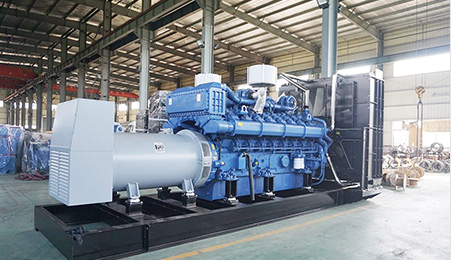
A Yuchai generator set for aquaculture facilities is a diesel-powered generating system selected to supply standby, prime, or continuous electrical power for fish farms, shrimp farms, hatcheries, recirculating aquaculture systems, and related processing areas. These facilities depend on pumps, aerators, blowers, oxygen systems, feeders, controls, lighting, refrigeration, and water-treatment equipment. A suitable set must therefore be selected from verified engine and alternator specifications, correctly matched to motor starting conditions, and supported by an installation and maintenance plan suited to the operating environment.
A generator set combines a diesel engine, an alternator, a control system, a starting system, a cooling system, a fuel system, and a structural frame. Depending on the project, it may also include an automatic transfer switch, circuit breakers, a sound-attenuated enclosure, a fuel tank, remote monitoring, and synchronization equipment. The Yuchai engine model, alternator model, controller, and rating should be identified clearly in the technical offer rather than described only by a general power range.
In an aquaculture application, the generator set may serve as emergency standby power when the utility supply fails, prime power where grid service is limited, or continuous power for an off-grid facility. The required configuration depends on the operating pattern and local electrical system. A small hatchery may prioritize stable power for circulation pumps and oxygen equipment, while a large farm may require multiple sets, automatic load transfer, parallel operation, and separate distribution for critical and noncritical loads.
Critical loads commonly include water circulation pumps, aeration blowers, oxygen concentrators or oxygen distribution equipment, recirculation system controls, water-level monitoring, filtration equipment, and alarm systems. Depending on the species and production process, temperature-control systems, heating equipment, refrigeration, feeding systems, lighting, workshops, and administration buildings may also be connected to the generator.
These loads do not behave in the same way. Electronic controls may require clean and stable voltage, while pumps and blowers can draw several times their running current during startup. Heating and refrigeration equipment may cycle automatically. The load schedule should distinguish between running power, starting power, operating hours, and priority. This information is more useful than simply adding the nameplate kW of every device.
Power reliability in aquaculture is directly connected to water quality and animal welfare. If circulation or aeration stops, dissolved oxygen can decline and water conditions can change quickly, particularly in densely stocked tanks, hatcheries, and recirculating systems. A generator is not only a source of electricity; it is part of the facility’s risk-control system. Its performance should be evaluated by how quickly it starts, how reliably it accepts load, and how long it can operate under the site’s conditions.
The generator set should be integrated with the facility’s emergency procedures. Automatic transfer equipment can start the set and transfer selected loads after a utility failure, while manual operation may be acceptable for certain low-risk or attended sites. Critical equipment should be connected through a planned distribution system, with clearly identified breakers and suitable protection. Where a process has no tolerance for interruption, the generator may need to work with an uninterruptible power supply or another short-duration ride-through system so that controls and oxygen equipment remain active during starting and transfer.
Rated power is only one part of reliability. The engine must be suitable for the intended duty, and the alternator must support the voltage, frequency, phase, and motor-starting requirements of the facility. The control system should provide useful information such as operating hours, coolant temperature, oil pressure, battery condition, frequency, voltage, and alarm or shutdown status. These features help operators respond before a minor issue becomes a production interruption.
The installation environment also affects performance. Aquaculture sites may have high humidity, salt exposure, dust, corrosive chemicals, spray, or poor ventilation. The generator room should allow adequate combustion air, cooling-air movement, exhaust routing, service access, and drainage. Outdoor installations may require an appropriate enclosure and foundation, but the enclosure specification should be confirmed for the actual environment rather than assumed from a standard package.
Start with a complete load schedule. Record each item’s rated kW or kVA, voltage, phase, frequency, power factor, starting method, starting current if available, and operating priority. Identify which loads must start immediately, which can be delayed, and which can remain disconnected during an outage. Include pumps, aerators, blowers, oxygen systems, filtration, heating or cooling, lighting, controls, communications, and auxiliary equipment.
Generator capacity is commonly discussed in both kW and kVA. kW represents real power, while kVA represents apparent power. The relationship is generally expressed as kW = kVA multiplied by power factor. For example, a load of 400 kVA at a power factor of 0.8 corresponds to approximately 320 kW of real power. The exact project calculation must use the actual load power factor and the generator manufacturer’s rating conditions. A set should not be selected by converting a single kW figure without considering motor starting, unbalanced loads, harmonic-producing equipment, and future expansion.
Large pumps, blowers, and compressors can cause a voltage dip when they start. If several motors start simultaneously, the generator may fail to reach stable voltage or frequency even when the total running load appears acceptable. The solution may involve a larger alternator, a different engine-generator combination, reduced-voltage starting, variable-frequency drives, soft starters, or a programmed sequence that starts the most important loads first.
Load sequencing is particularly useful in aquaculture because not every device must start at the same instant. A typical sequence might prioritize control panels and alarms, followed by circulation pumps, aeration equipment, filtration, oxygen systems, and lower-priority loads. The final sequence must be designed around the actual process and verified during commissioning. It should also include a recovery plan for a second power interruption or an unsuccessful motor start.
Standby, prime, and continuous ratings are not interchangeable. Standby operation generally refers to limited-duration use during utility outages, while prime or continuous operation is intended for more frequent or sustained loading. The correct rating depends on the site’s operating profile and the current technical data for the selected Yuchai engine and alternator. Ask for the rating definition, rated speed, rated voltage, frequency, fuel consumption, allowable load factor, and environmental derating information.
For larger facilities, two or more generator sets may provide operating flexibility and maintenance redundancy. Parallel systems can allow one set to carry a light load while another is stopped for service, but they require compatible alternators, controls, protection, synchronization, and load-sharing functions. A single larger set may be simpler, while multiple smaller sets may improve partial-load efficiency and service continuity. This decision should be based on a documented load study and maintenance strategy.
Before requesting a quotation, prepare the following information:
Site location, altitude, ambient temperature range, humidity, exposure to salt or chemicals, installation type, and available space.
Required output voltage, phase, frequency, neutral arrangement, short-circuit requirements, and connection to the facility distribution system.
Running and starting data for every critical motor, pump, blower, compressor, heater, refrigeration unit, and electronic control load.
Required duty rating, expected annual operating hours, fuel autonomy, noise limitations, exhaust restrictions, and preferred manual or automatic transfer method.
Required accessories such as a base fuel tank, external fuel tank, battery charger, jacket-water heater, enclosure, remote monitoring, synchronizing panel, and spare parts.
The quotation should identify the Yuchai engine model, alternator model, controller, rated kW and kVA, voltage, frequency, power factor, fuel consumption, dimensions, weight, warranty terms, delivery scope, and documentation. Any item that depends on project conditions should be marked as subject to confirmation. Nanning Wanjin Mechanical & Electrical, as an authorized Yuchai dealer, can coordinate export and industrial project quotations around the verified configuration rather than treating every generator set as identical.
One common mistake is selecting the generator solely from the sum of running kW. This can overlook motor-starting current, low power factor, voltage drop, and the need to start critical equipment in sequence. Another mistake is choosing a standby rating for a site that will operate the generator for long periods as a primary source. The rating and maintenance plan must match the actual duty.
It is also risky to assume that a standard generator set includes every required accessory. Automatic transfer equipment, fuel storage, exhaust components, weather protection, battery charging, remote communication, and installation materials may be excluded from the base quotation. The buyer should request a line-by-line scope showing what is included, what is optional, and what must be supplied locally.
Ignoring environmental conditions is another frequent error. High ambient temperature and altitude can reduce available engine and alternator output. Humidity, salt, and chemical exposure can affect electrical connections and metal surfaces. Poor ventilation can increase room temperature and cause shutdowns. These conditions should be provided to the supplier before the final model and enclosure are confirmed.
The foundation should support the set and limit vibration, while access should be maintained for oil changes, filter replacement, battery service, alternator inspection, and control-panel testing. The exhaust system must be routed safely and sized to avoid excessive back pressure. Fuel piping should be installed with suitable filtration, isolation, and spill-control provisions. Cooling-air intake and hot-air discharge should be arranged so that heated air is not recirculated into the engine room.
Electrical installation should include correctly rated cables, protection devices, grounding or earthing, phase identification, and transfer equipment. The installer should confirm voltage, frequency, phase sequence, insulation condition, emergency stop operation, battery charging, coolant protection, alarm functions, and shutdown settings. All work should follow the project design and applicable local electrical and safety requirements.
Commissioning should begin with a no-load inspection and controlled startup. The team should then verify voltage and frequency, test the transfer sequence, apply loads in the planned order, and observe voltage and frequency response during motor starting. Where practical, the set should be tested at representative load levels rather than only at idle. Record readings, alarm responses, fuel consumption observations, and any changes made to the control settings.
Aquaculture operators should maintain a written service schedule based on engine hours, calendar time, and site conditions. Routine work may include checking lubricating oil, coolant, fuel quality, filters, belts, hoses, batteries, terminals, exhaust components, ventilation, and electrical connections. Fuel storage also requires attention because water or contamination can affect reliable starting and injector performance.
Periodic load testing helps confirm that the set can start, transfer, and carry the required equipment after remaining idle for an extended period. Operators should also practice manual startup and emergency shutdown procedures. Service records should include operating hours, parts replaced, test results, alarms, and corrective actions. For export and industrial projects, after-sales support should be discussed before the order, including technical documentation, recommended spare parts, troubleshooting assistance, commissioning support, and the process for warranty or service communication.
A Yuchai generator set for aquaculture facilities should be treated as a complete power solution rather than a diesel engine with an alternator. The correct choice depends on the facility’s critical loads, motor-starting requirements, kW and kVA relationship, duty rating, environmental conditions, transfer method, and future expansion plans. A clear quotation should identify the verified engine and alternator configuration, included accessories, installation boundaries, and support arrangements.
By preparing a detailed load schedule, prioritizing biological and process-critical equipment, planning load sequencing, and completing structured commissioning and maintenance, aquaculture operators can reduce the risk of power-related production losses. Working with an authorized Yuchai dealer and reviewing technical details before shipment also helps ensure that the generator set is aligned with the project’s electrical design, operating conditions, and after-sales requirements.
Browse server-rendered product categories, application solutions, project references and technical articles. These direct links help buyers and search crawlers reach useful pages without relying on JavaScript menus.
Compare equipment families before confirming output, duty, environment and accessories.
Start selection from critical loads, motor starting, operating hours and site derating.
Read project references, company updates and generator-set selection or maintenance articles.
Wanjin supports generator-set sales, configuration checks, quotation, installation coordination, repair and scheduled maintenance.

