


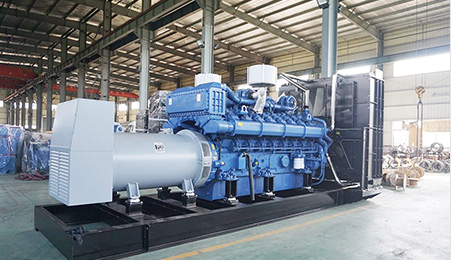
Yuchai generator set spare parts identification is the process of confirming the correct replacement component from the engine model, generator set data, part number, technical specifications, and application details. It is more than matching a component by appearance. A diesel generator set may include a Yuchai engine, an alternator, a control system, a cooling system, a fuel system, and installation-specific accessories, so the correct replacement depends on the complete equipment configuration. For export orders and industrial projects, accurate identification helps prevent delayed commissioning, incompatible installation, repeated freight costs, and avoidable equipment downtime.
Yuchai generator set spare parts identification starts with establishing exactly which equipment the part belongs to. The engine model is important, but it may not be sufficient by itself. The same engine family can be supplied in different configurations, with variations in fuel system components, sensors, belts, filters, cooling arrangements, electrical connections, and control interfaces. The generator set model, engine serial number, build information, and the original component details provide a more reliable basis for selection.
A complete identification record normally includes the Yuchai engine model, engine serial number, generator set rating, rated speed, alternator brand and model, control panel type, and the intended operating environment. If available, the original part number, component name, quantity, dimensions, connector information, and photographs of the nameplate or removed part can further support verification. A photograph may help communication, but it should not replace the technical data because visually similar parts can have different specifications.
Many replacement items are associated with the Yuchai engine, including oil filters, fuel filters, air filters, belts, hoses, gaskets, sensors, pumps, thermostats, and selected internal service parts. Other components belong to the generator set rather than the engine. These can include alternator-related items, battery charging components, circuit breakers, relays, control modules, wiring harnesses, radiator parts, exhaust components, and mounting hardware.
This distinction matters when requesting a quotation. A request that only states “Yuchai generator spare parts” may be too general for technical confirmation. The supplier needs to know whether the requirement concerns the engine, alternator, control system, cooling system, fuel system, or a complete scheduled-maintenance package. Clear classification reduces the risk of receiving an engine part when the actual requirement is a control or alternator component.
Correct identification protects the reliability and operating performance of the generator set. A filter with a similar thread or external shape may not have the required filtration area, pressure rating, sealing arrangement, or flow capacity. A belt with the wrong length or profile can affect water-pump, fan, or charging-system performance. An incorrect temperature sensor or pressure sensor may produce inaccurate readings or cause unnecessary alarms and shutdowns.
Compatibility is also important for commissioning and warranty administration. When a replacement part does not match the engine or control configuration, technicians may spend additional time diagnosing a problem that originated with the order. In an export project, sending a substitute after delivery can involve customs procedures, additional freight, site delays, and labor costs. Identification before shipment is normally more efficient than correction after installation.
Accurate identification supports planned maintenance as well as emergency repair. Industrial operators often need service kits for specific running-hour intervals. A properly prepared kit can include the required filters, sealing elements, belts, lubricants, and other scheduled items based on the approved maintenance instructions for the applicable engine and generator set. However, the exact contents should be confirmed against the engine documentation and operating conditions rather than copied from a generic list.
Generator sets are assembled systems. The engine output, alternator rating, control panel, cooling package, fuel tank, enclosure, and site installation can affect the required parts. For example, a standby set and a prime-power set may operate under different load patterns. A set installed in a hot, dusty, humid, or high-altitude environment may require closer attention to filtration, cooling, and maintenance intervals.
For this reason, a spare-parts inquiry should identify whether the set is used for standby, prime, or continuous operation, where relevant to the supplier’s technical review. It should also state the required delivery quantity, destination country, project schedule, and whether the parts are for routine service, troubleshooting, overhaul, or commissioning support. This information helps the exporter prepare a quotation that is practical for the actual application.
The first step is to collect the equipment data before selecting any part. Record the information from the engine nameplate and generator set nameplate exactly as shown. Important details can include the engine model, engine serial number, rated power, rated speed, generator set model, alternator model, and manufacturing or build information when available. Avoid relying on memory or on a model name that has been shortened in previous correspondence.
The second step is to identify the component by its original reference. Look for a stamped, printed, or catalog part number on the part, packaging, maintenance record, or approved parts list. Record the complete number, including suffixes, prefixes, and revision indicators. A missing suffix can be significant because it may distinguish different materials, connectors, dimensions, or production versions.
The third step is to describe the application and physical details. For a filter, provide the type, housing or element dimensions, connection information, sealing method, and service location. For a belt, provide the belt marking, length or profile where available, and the driven equipment. For a sensor, provide the measured parameter, connector type, thread, installation position, and operating range if known. For a gasket, specify the mating components and whether it is part of a particular repair assembly.
The most reliable reference is normally the equipment-specific documentation or approved parts information associated with the engine and generator set. Maintenance records, previous invoices, and the removed component can provide useful supporting evidence. General online listings and marketplace descriptions should be treated cautiously because they may combine several engine variants under one commercial title.
When data conflicts, do not select a part based only on price or visual similarity. Ask the supplier to confirm the discrepancy using the engine serial number, original part number, and application information. An authorized Yuchai dealer or experienced export supplier can review the available information and clarify whether the requirement concerns an original part, an approved equivalent, or a component supplied by another generator set manufacturer.
For a quotation, prepare a structured parts list. Each line should include the item description, part number if known, quantity, unit of measure, application, and any required technical notes. Separate confirmed information from information that still requires verification. This makes it easier for the supplier to return a clear quotation with model, quantity, packing, lead time, shipping terms, and any technical limitations.
The quotation should clearly state how each component is identified. An original Yuchai engine part, an approved equivalent, and a locally sourced general-purpose item are not automatically interchangeable. This distinction is particularly important for sensors, electronic control components, injectors, fuel-system parts, gaskets, and components that affect engine protection or emissions-related operation.
If an equivalent is considered, confirm the manufacturer, reference number, dimensions, material, performance requirements, and intended application. The buyer should also understand whether the equivalent has been verified for the specific engine configuration. For critical components, written technical confirmation is preferable to an informal statement that the part is “the same.”
One common mistake is ordering by generator set output alone. A rating such as 500 kVA identifies the general electrical capacity, but it does not uniquely identify the engine part, alternator component, or control-system item. Another mistake is using only the engine family name without the serial number or build information. Model families can include production changes and optional configurations.
A further mistake is matching dimensions while ignoring performance. Two filters may have similar length and diameter but different filtration ratings or bypass-valve characteristics. Two sensors may share the same thread but produce different electrical signals. Two belts may appear similar while having different load capacity or length. Technical compatibility should therefore be verified before the item is ordered.
It is also risky to combine a spare-parts request with an unclear photograph and no written description. Photos can be useful, especially for identifying connectors, mounting positions, and damage, but the image should be accompanied by the equipment data and original references. Another frequent problem is failing to state the quantity and delivery requirement, which can result in an incomplete maintenance kit or an unsuitable shipping arrangement.
Before sending a request for quotation, check the following information:
1. Confirm the exact Yuchai engine model and engine serial number.
2. Record the generator set model, rated kW or kVA, rated speed, and alternator model where available.
3. Identify whether each item is an engine, alternator, control, cooling, fuel, exhaust, electrical, or installation component.
4. Copy the complete original part number, including all letters, numbers, and suffixes.
5. State the required quantity, service interval, and whether the parts are for maintenance, repair, overhaul, or commissioning.
6. Provide dimensions, connectors, thread details, markings, or application information when the part number is missing.
7. Distinguish between original parts and proposed equivalents, and request technical confirmation for substitutions.
8. Confirm packing requirements, destination, delivery deadline, shipping terms, and whether documents are needed for customs clearance.
9. Ask the supplier to identify any items that remain subject to serial-number or configuration verification.
10. Review the final quotation against the submitted parts list before approving the order.
The supplier should be able to explain the identification basis for each critical item. Useful questions include: Which engine or generator set data was used? Is the quoted part number complete? Is the item an original component or an equivalent? Does the item require additional configuration information? Is the quoted quantity sufficient for the stated maintenance task? Are installation instructions, seals, fasteners, or related service items required separately?
For electronic or control-related parts, ask whether programming, parameter setting, or commissioning support may be required. For overhaul components, ask whether additional measurements are needed before ordering, since internal engine parts can depend on inspection results and repair dimensions. These questions help prevent a partial order that cannot be installed or commissioned as planned.
Identification does not end when the parts arrive. Check the shipment against the quotation, packing list, labels, and part numbers before installation. Inspect packaging for damage and confirm that seals, connectors, and machined surfaces are protected. If the received item differs from the approved description, isolate it until the discrepancy is resolved.
Installation should follow the applicable Yuchai engine and generator set maintenance instructions, together with the procedures used for the alternator and control system. Cleanliness is essential when working on fuel, lubrication, intake, and hydraulic-related circuits. Use the specified tightening methods and replace sealing elements where required. Do not force a component into position or modify connectors, threads, brackets, or wiring to make a questionable part fit.
After replacement, perform the appropriate inspection and operational checks. Depending on the component, this may include checking for leaks, confirming sensor readings, reviewing alarms, checking belt tension, verifying coolant circulation, inspecting electrical connections, and running the generator set under an appropriate test load. Maintenance records should include the installation date, running hours, part number, quantity, and any observed condition.
Keep the final identification record for future service. A well-maintained parts history can make later quotations faster and more accurate, particularly when the same generator set operates at a remote industrial site. It also helps the owner distinguish recurring failures from normal scheduled maintenance and provides useful information for technical support.
In summary, Yuchai generator set spare parts identification should be based on complete equipment data rather than a general model name, output rating, or visual resemblance. Confirm the engine and generator set details, use the full part number where available, separate engine parts from alternator and control components, and request technical verification for any substitution. A structured buying checklist and careful post-delivery inspection help ensure that the supplied parts are suitable for maintenance, repair, commissioning, and long-term industrial operation.
延伸阅读:For Chinese product selection and local support, visitWanjin's Chinese service site.
Browse server-rendered product categories, application solutions, project references and technical articles. These direct links help buyers and search crawlers reach useful pages without relying on JavaScript menus.
Compare equipment families before confirming output, duty, environment and accessories.
Start selection from critical loads, motor starting, operating hours and site derating.
Read project references, company updates and generator-set selection or maintenance articles.
Wanjin supports generator-set sales, configuration checks, quotation, installation coordination, repair and scheduled maintenance.

