


diesel generator export delivery inspection checklist: Common Mistakes and Buying Checklist: The Complete Guide
A diesel generator export delivery inspection checklist is a documented set of checks used to confirm that a generator set, its supplied accessories, paperwork, and shipment condition match the agreed order. For an industrial buyer, the process begins before dispatch and continues through receipt at the destination. It does not replace factory testing, site commissioning, or the purchase contract; it connects those stages by making the agreed requirements visible and giving both buyer and supplier a consistent way to record exceptions.
The checklist should be built from the confirmed quotation, technical submittals, purchase order, approved drawings, and shipping terms. Its purpose is to compare what was ordered with what is presented for shipment and ultimately delivered. A useful record identifies the generator set by its documented model and serial information, states which items were checked, names the documents reviewed, and records any differences requiring resolution.
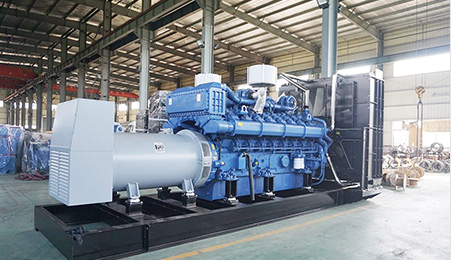
Inspection should cover more than the engine. A diesel generator set is an assembly whose configuration may include an engine, alternator, controller, starting system, cooling arrangement, base frame, enclosure, and optional equipment. Which of these are supplied depends on the agreed scope. Buyers should therefore avoid treating a generic product brochure as proof that every listed feature is included in their particular order.
Check the engine and alternator models against the approved specification, along with the stated frequency, voltage, phase arrangement, and rated output. Confirm whether the quoted rating is expressed in kW, kVA, or both, and whether it is identified as standby or prime power. kW describes real electrical power; kVA describes apparent power. The relationship between them depends on the power factor used for the stated rating, so a kVA figure should not be assumed to equal the same number of kW.
For orders involving a Yuchai-powered set supplied by Nanning Wanjin Mechanical & Electrical, the inspection record should refer to the exact engine and alternator specifications confirmed for that order. It should not rely on an assumed configuration based only on a product family name. If a rating, model designation, or option differs across the quotation, drawing, and nameplate, resolve the discrepancy before treating the set as accepted.
A visual and document review can confirm identification, apparent completeness, packaging condition, and consistency with the order. It cannot, by itself, prove that the unit will meet every operating requirement at the installation site. Factory test records, where included in the agreed scope, provide a separate source of performance evidence. Site installation and commissioning provide another opportunity to check the assembled system under the conditions in which it will be used.
The checklist should distinguish between an item that has been physically inspected, an item supported by a supplier document, and an item deferred until installation or commissioning. This distinction prevents a signed delivery form from being mistaken for confirmation that every operational test has already been completed.
Export orders involve several handoffs: configuration approval, production, packing, carrier collection, customs documentation, inland transport, and destination receipt. Details can be lost between those stages even when the equipment itself is correct. A consistent inspection record helps the parties identify when a discrepancy was found and which document defines the expected condition.
It also helps protect the installation schedule. If a separately packed item, connection drawing, or required document is missing, the problem may not become apparent until the generator is at site. Recording the supplied items before dispatch gives the buyer and supplier an earlier opportunity to reconcile the shipment against the purchase order.
The generator set and its export shipment are related but different scopes. Equipment checks address configuration, identification, accessories, and available test documentation. Logistics checks address packing lists, package identification, handling information, and visible condition at each transfer point. Both matter: a correctly specified set can still arrive with missing loose items, while a complete shipment can still contain equipment that does not match the approved technical documents.
The quotation should make inclusions and exclusions clear. Buyers should confirm whether items such as an enclosure, exhaust components, batteries, battery charger, fuel-system accessories, cables, spare parts, or commissioning services are included, supplied separately, or excluded. These are examples of possible scope items, not a standard package. The inspection checklist should follow the signed agreement rather than assume any accessory is supplied automatically.
An effective checklist leaves room for evidence and corrective action. For each discrepancy, record the item, the observed condition, the relevant order requirement, the date, and the person or party responsible for follow-up. Photographic evidence may be useful in a separate inspection record, but the written description should still be precise enough to stand on its own.
Classify open items by their effect on acceptance. A missing document may require a paperwork correction; an incorrect rating or damaged component may require technical review before shipment or installation proceeds. Acceptance should be tied to the contract and agreed inspection process, not to an informal assumption that an issue can be fixed later.
Use the checklist in stages rather than as a single signature page. First, confirm the order baseline: approved specifications, scope of supply, drawing revisions, required documents, delivery terms, and the parties responsible for inspection. Next, review the assembled unit and loose items before packing. Then check packing and shipment documents. Finally, perform a receiving inspection when the goods arrive and record any differences from the pre-shipment condition.
Each stage should use clear status terms such as checked, not applicable, pending, or exception noted. Avoid marking an item as passed when it has only been promised for a later stage. If an independent inspection is required by the purchase agreement, confirm its timing and reporting requirements before the unit is packed.
Compare the generator set identification with the approved documents. Check the engine and alternator model information, the generator nameplate data, the controller specified for the order, and any agreed options that can be verified visually. Review whether separately supplied components and accessories are identified and counted. Where applicable, compare available factory test documentation with the unit identification so the records can be traced to the set being shipped.
Inspect accessible areas for visible damage, loose components, missing covers, or signs that protective closures are incomplete. This is a condition check, not an instruction to dismantle the unit or perform technical tests. Record limitations, such as components that cannot be seen after assembly, rather than implying they were inspected.
Match each package or crate identifier to the packing list. Confirm the listed quantity of packages and the description of separately packed items. Review the commercial and technical documents required under the agreed transaction, which may include the invoice, packing list, manuals, drawings, test records, and warranty or service information if those were part of the agreed deliverables. Document requirements vary by contract and destination, so use the buyer’s confirmed requirements rather than a generic template as the final authority.
Check that the packing method and external markings are consistent with the agreed transport plan. Record visible package condition before carrier handover. If handling or storage instructions are supplied, make sure the receiving party can identify them. Do not assume that an intact outer package proves the contents are undamaged; it provides a useful reference point for the arrival inspection.
At receipt, compare package counts and identifiers with the shipping documents, then record visible damage or signs of mishandling. Follow the agreed claims and notification procedure if a package is damaged or an item is missing. Once unpacking is authorized, reconcile the contents with the packing list and pre-shipment record. Keep delivery inspection separate from commissioning: correct receipt confirms what arrived, while commissioning checks the installed system.
Before commissioning is scheduled, confirm that any open delivery exceptions have been assigned and that required installation documents are available. The site team should also verify that the generator set’s approved electrical configuration is compatible with the project design. Any change to the intended operating arrangement should be reviewed through the appropriate technical and contractual process rather than assumed acceptable at delivery.
The most common checklist mistake is starting too late. If inspection begins only after the shipment arrives, it becomes harder to distinguish a configuration error from a packing omission or transport damage. Agree on the inspection points when placing the order, including what evidence the supplier will provide and which issues must be closed before dispatch.
Another mistake is treating a rating as a complete sizing decision. A buyer may compare two sets by their headline kVA figures without checking the associated kW rating, duty classification, voltage, frequency, and project load requirements. Generator sizing should be resolved during technical selection. Delivery inspection then verifies that the supplied unit matches that approved selection; it should not be the first time the buyer discovers a mismatch.
Ask for the exact proposed engine and alternator models, the stated generator ratings and their basis, the electrical configuration, and the controller and options included. Confirm which accessories are installed, which are shipped loose, and which are excluded. Request a clear list of documents and test records to be supplied, together with the inspection and acceptance stages that apply to the order.
Clarify installation, commissioning, maintenance, and after-sales responsibilities separately. A supplier may provide equipment and documentation without providing on-site installation, or commissioning may be a separately agreed service. For an export project, establish who will receive the shipment, inspect it, manage any transport claim, prepare the site, and coordinate technical support. Clear responsibility is more useful than a broad statement that support is available.
Avoid signing off against an outdated drawing or an early quotation when a later revision defines the order. Do not leave serial information, package counts, or exception fields blank merely to finish the form. Do not mark a test as completed because a test report is expected but has not been provided. Where information is pending, say so and identify the document or action needed to close the item.
Finally, do not treat delivery acceptance as a substitute for installation and maintenance planning. The diesel generator export delivery inspection checklist establishes a traceable handover of the agreed equipment and documents. It works best when paired with an approved technical specification, a clearly defined quotation scope, a receiving procedure, and a separate commissioning plan. Together, those records give industrial buyers a practical basis for resolving discrepancies and moving the generator set from shipment to service.
Browse server-rendered product categories, application solutions, project references and technical articles. These direct links help buyers and search crawlers reach useful pages without relying on JavaScript menus.
Compare equipment families before confirming output, duty, environment and accessories.
Start selection from critical loads, motor starting, operating hours and site derating.
Read project references, company updates and generator-set selection or maintenance articles.
Wanjin supports generator-set sales, configuration checks, quotation, installation coordination, repair and scheduled maintenance.

