


When evaluating standby or prime power equipment for industrial, commercial, or infrastructure projects, precise technical data is not a secondary consideration — it is the starting point. Yuchai generator set specifications and dimensions determine whether a unit fits the intended installation space, meets the electrical load requirements, integrates with existing switchgear, and complies with local regulations. Guangxi Yuchai Machinery, one of China's largest diesel engine manufacturers, produces generator sets across a broad power range that serve data centers, hospitals, manufacturing plants, mining operations, and telecommunications facilities worldwide. Understanding how to read, compare, and apply the full specification sheet for any Yuchai generator model is the foundation of an accurate project budget, a safe installation, and reliable long-term operation.
Every Yuchai generator set specification sheet begins with two power figures: standby power (ESP) and prime power (PRP), expressed in kilowatts (kW) and kilovolt-amperes (kVA). Standby power represents the maximum output available for variable loads in the event of a utility failure, typically rated for up to 200 hours of operation per year with no overload capability. Prime power is the maximum output the set can deliver continuously under variable load conditions, with a 10% overload available for one hour in twelve. For critical facilities that run the generator as the sole power source, continuous power (COP) ratings also apply. Selecting the correct rating category before comparing models prevents costly undersizing or oversizing errors.
The engine section of the specification sheet covers displacement, number of cylinders, bore and stroke, compression ratio, aspiration type, and governed speed. Yuchai diesel engines used in generator applications — including the YC6A, YC6B, YC6C, YC6J, YC6K, YC6MK, and YC12VC series among others — are four-stroke, water-cooled, turbocharged and aftercooled designs running at either 1500 RPM (50 Hz) or 1800 RPM (60 Hz). Fuel consumption at 100% load and at 75% load is listed in liters per hour, which feeds directly into fuel tank sizing and operating cost calculations. Lube oil capacity, coolant volume, and oil change intervals complete the fluid management data needed for maintenance planning.
The alternator section specifies rated voltage (typically 400/230V three-phase or 380/220V depending on the target market), frequency, power factor (standard 0.8 lagging), insulation class (usually Class H), protection class (IP21 or IP23 for open sets, IP44 or higher for enclosed), and winding connection (star with accessible neutral). Voltage regulation, typically within ±1% in steady state, and transient response data — voltage dip and recovery time under sudden load application — are critical for sensitive loads such as medical imaging equipment or variable frequency drives.
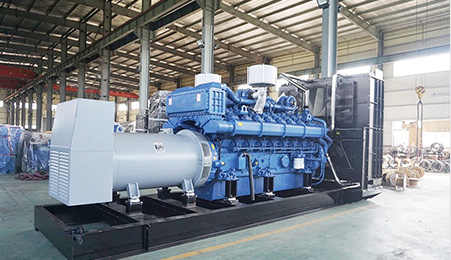
Physical dimensions — overall length, width, and height of the base assembly — vary significantly across the Yuchai power range and must be confirmed against the available installation footprint before any other evaluation proceeds. Open-frame generator sets (without an acoustic enclosure) are the most compact configuration. As a general reference, lower-capacity models in the 20–50 kW range typically measure approximately 1,500–1,800 mm in length, 700–800 mm in width, and 1,000–1,100 mm in height. Mid-range units from 100–250 kW commonly fall between 2,200–2,800 mm in length and 900–1,050 mm in width. High-capacity open sets in the 500–1,000 kW range extend to 3,200–4,000 mm in length, 1,100–1,300 mm in width, and up to 1,800 mm in height. These are representative ranges; always request the certified dimensional drawing for the specific model and configuration ordered.
Canopy-enclosed or soundproof generator sets add 150–300 mm to each external dimension and introduce additional weight. The acoustic enclosure houses the exhaust silencer, battery, control panel, and sometimes a day tank, so the net operating weight increases considerably. Dry weight and wet weight (with coolant, lubricating oil, and fuel) are both listed on the specification sheet and are essential inputs for structural engineers calculating floor loading, seismic anchor requirements, and lifting equipment selection. Anti-vibration mounts — either rubber pads or spring isolators — are specified by static deflection and load capacity, and their dimensions affect the final installed height.
Radiator cooling data links physical dimensions to site thermal management. The specification sheet lists air flow volume (cubic meters per minute), the temperature rise across the radiator, and the minimum clearance required at the radiator face for adequate airflow. Undersized ventilation openings are one of the most common causes of derating and premature engine wear in enclosed generator rooms. For remote-radiator configurations used in confined plant rooms, the specification will include maximum coolant pipe run length and permissible static head to ensure the cooling circuit remains effective.
Translating a specification sheet into a workable site plan requires cross-referencing several data points simultaneously. Start with the load schedule: total connected load in kW, the power factor of that load, the largest single motor or inductive load that will be started across-the-line (which determines required transient performance), and whether the load is continuous, intermittent, or emergency-only. Map these requirements against the rated output column, applying a typical derating of 1% per 100 m altitude above sea level and approximately 3% per 5°C ambient temperature above the standard 40°C reference. Yuchai publishes altitude and temperature derating curves in their technical documentation, and any Yuchai authorized dealer can supply site-specific calculations.
With the power requirement confirmed, extract the dimensional envelope and weight from the specification sheet and overlay it on the building floor plan. Account for the mandatory service clearance — typically 1,000 mm on the control panel side and 600–800 mm on the remaining three sides for open sets. Exhaust outlet location (end or side mounted) affects how exhaust piping is routed and where the silencer is positioned, both of which have dimensional implications. The fuel system drawing — showing tank inlet, return, and day tank connections — determines pipe routing and secondary containment sizing. If a paralleling application is planned, the specification sheet will confirm whether the AVR and governor are compatible with load-sharing controllers, and the control panel dimensions will need to accommodate an additional synchronizing module.
Electrical installation drawings should reference the generator output terminals, neutral point, earth terminal, and any included circuit breaker rating. The specification sheet lists short-circuit capability (expressed as a multiple of rated current) and motor starting capability (kW of motor the set can start), both of which affect protection relay coordination with upstream switchgear. Noting the battery voltage (12V or 24V DC) and battery charger output is also necessary for integrating the generator into a building management or remote monitoring system.
Several details on a specification sheet merit additional verification beyond a straightforward reading. First, confirm whether the quoted power rating follows ISO 8528-1, ISO 3046, or BS 5514 standards — ratings can differ by 5–10% between standards, and mixing comparisons across standards produces misleading cost-per-kilowatt figures. Yuchai generator sets are rated to ISO 8528-1, which is the internationally recognized benchmark for genset performance, but verify this on any document supplied.
Second, check the emission standard the engine is certified to. Yuchai engines for generator applications may meet China's GB standard, EU Stage II, or EPA Tier 2 levels depending on the model year and export configuration. If the installation site imposes local emission requirements, this must be confirmed before the purchase order is placed rather than after delivery. Related to this, the exhaust backpressure limit listed in the specification — typically 5–10 kPa — constrains the length and number of bends in the exhaust system, and exceeding it will derate engine output and increase fuel consumption.
Third, review the control system specification carefully. Yuchai generator sets are commonly supplied with DeepSea Electronics (DSE), ComAp, or Yuchai's own branded controllers. Each has different communication protocols (Modbus, CANbus, SNMP), alarm and shutdown logic, and remote monitoring capability. Confirming controller compatibility with the site's building management system or remote SCADA platform during the specification review stage avoids integration costs after commissioning. Battery voltage, number of pre-alarm and shutdown channels, and automatic mains failure (AMF) response time are all listed in the control panel section of the full technical datasheet.
Finally, request the certified test record (factory acceptance test data) for the specific unit, not just the model. The test record will confirm that the actual unit met rated output, voltage regulation, frequency stability, and engine performance under load at the factory. Cross-referencing the test record serial number against the nameplate on delivery is standard practice for any project where generator reliability is contractually critical.
Yuchai generator set specifications and dimensions are not bureaucratic paperwork — they are the technical language that connects a buyer's power requirements to a specific, deliverable product. Working through the specification sheet systematically, from rated power and engine data through physical dimensions, electrical parameters, and control system details, produces a procurement decision grounded in verified engineering data rather than catalog summaries. For projects ranging from a single standby unit at a commercial building to a multi-megawatt prime power installation at a remote industrial site, the same discipline applies: confirm every parameter against the site conditions, document any derating requirements, and retain the factory test record as part of the project handover package.
Nanning Wanjin Mechanical & Electrical, as an authorized Guangxi Yuchai dealer, supplies complete technical documentation — including certified dimensional drawings, full specification sheets, and factory test records — for all models across the Yuchai generator range. Buyers requiring site-specific derating calculations, parallel operation configurations, or custom enclosure dimensions can work directly with the technical team to verify compatibility before order placement.
Browse server-rendered product categories, application solutions, project references and technical articles. These direct links help buyers and search crawlers reach useful pages without relying on JavaScript menus.
Compare equipment families before confirming output, duty, environment and accessories.
Start selection from critical loads, motor starting, operating hours and site derating.
Read project references, company updates and generator-set selection or maintenance articles.
Wanjin supports generator-set sales, configuration checks, quotation, installation coordination, repair and scheduled maintenance.

