


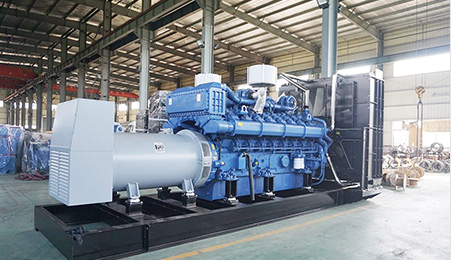
Yuchai generator set fuel consumption calculation is the process of estimating or verifying how much diesel a generator set uses at a defined electrical load and operating condition. The result is normally expressed in liters per hour, liters per day, or specific fuel consumption in grams per kilowatt-hour. For export projects and industrial installations, a reliable calculation supports fuel tank sizing, operating-cost estimates, logistics planning, autonomy requirements, and comparison of generator set options. The calculation should be based on the exact Yuchai engine model, alternator rating, rated power, load profile, and verified manufacturer data rather than on a single generic fuel-consumption figure.
A generator set does not consume the same amount of fuel at every operating point. Fuel use changes with engine speed, electrical load, ambient conditions, control settings, alternator efficiency, and the condition of the engine. A diesel generator operating at 25% load may consume considerably less fuel per hour than it consumes at full load, but its fuel use is not normally one quarter of the full-load figure. Fixed engine losses and auxiliary systems can make low-load operation less efficient.
The first step is to distinguish between electrical power and apparent power. Generator ratings are commonly stated in kilowatts, or kW, and kilovolt-amperes, or kVA. The relationship is:
kW = kVA × power factor
For example, a generator rated at 500 kVA at a power factor of 0.8 corresponds to 400 kW of active power. If the project load is described in kW but the generator is selected in kVA, the power factor must be considered before calculating the percentage load. Using the wrong rating can lead to an incorrect estimate of fuel consumption and an unsuitable fuel storage plan.
Fuel consumption matters in both technical and commercial decisions. A higher hourly fuel rate may require a larger day tank, more frequent refueling, increased fuel transportation capacity, and a higher lifecycle operating cost. On the other hand, selecting a larger generator only to achieve a lower apparent load may increase capital cost and may create inefficient operating conditions. The correct objective is to match the generator set to the actual continuous, standby, prime, or variable load profile.
The most reliable general method is to use the fuel-consumption table or curve for the exact Yuchai engine and generator set configuration. A typical table may show fuel use at 25%, 50%, 75%, and 100% load. Some data may be stated in liters per hour, while other data may be stated as specific fuel consumption in grams per kilowatt-hour. Manufacturer data is preferable because it reflects the selected engine, speed, injection system, rated output, and test conditions.
When requesting a quotation, the buyer should ask for the applicable fuel-consumption data for the proposed model, including the rated power basis and load points. The data should identify whether the values apply to the engine alone or to the complete generator set. A complete set may include fuel used by engine-driven or electrically powered auxiliaries, and the stated test conditions may affect the result.
If the manufacturer provides specific fuel consumption in grams per kilowatt-hour, the following formula can be used:
Fuel use in liters per hour = electrical output in kW × specific fuel consumption in g/kWh ÷ (1,000 × diesel density in kg/L)
For example, an illustrative 500 kW output with a specific fuel consumption of 210 g/kWh and diesel density of 0.84 kg/L would be calculated as follows: 500 × 210 ÷ (1,000 × 0.84), resulting in approximately 125 liters per hour. This is only a calculation example. It is not a stated consumption value for any particular Yuchai generator set. The actual result must use the verified specific fuel consumption for the selected model and the applicable operating point.
Specific fuel consumption is useful for comparing efficiency, but it is not always the same as a direct fuel-flow figure. Density varies with fuel composition and temperature, and published engine data may be based on test standards that differ from the project site. For budgeting, the calculation can provide a sound estimate; for tank design and guaranteed performance, the quotation should state the applicable conditions and measurement basis.
When only a full-load fuel rate is available, an approximate load-based estimate can be made. For a preliminary calculation, the full-load rate may be multiplied by an estimated load factor. This is simple but less accurate because diesel engine fuel consumption is not perfectly linear. A 50% load may use more than 50% of the full-load liters per hour, depending on the engine and generator set.
This approach is acceptable for early-stage project screening when the load profile is not yet finalized. It should not replace the manufacturer’s part-load table for a firm technical offer, especially where the generator will operate for many hours at a variable or low load. A project with a large difference between minimum and maximum load may require a load-bank study, multiple generator sets, or a staged operating strategy to maintain efficient loading.
For an installed generator set, actual consumption can be verified using a calibrated fuel-flow meter, a measured tank-level change, or a controlled refueling record. The test should record electrical output, power factor, engine speed, operating duration, fuel temperature where relevant, and ambient conditions. Short tests may be distorted by tank-level measurement errors, fuel return-flow arrangements, or changes in load.
Measured results are valuable for commissioning, performance monitoring, and maintenance planning. However, field measurements should be interpreted with the same care as published data. A generator operating at a changing load cannot be compared directly with a stable manufacturer test point unless the load and measurement period are properly documented.
Identify the proposed Yuchai generator set model, rated kW, rated kVA, frequency, voltage, phase, and power factor. Also confirm whether the application is standby, prime, or continuous operation. These ratings describe different duty expectations and should not be treated as interchangeable. A standby rating may be suitable for emergency operation but may not be appropriate for a site that requires long-term continuous power.
Next, define the expected load. Use the actual active load in kW where possible, including motors, heating equipment, pumps, lighting, control systems, and other connected equipment. For variable loads, prepare a load profile showing operating hours at each approximate load level. A daily or monthly fuel estimate is more accurate when it uses the number of hours at each load instead of applying one average percentage to the entire period.
If the load or generator rating is supplied in kVA, convert it to kW using the expected power factor. For example, a 300 kVA load at a power factor of 0.8 represents 240 kW. If the alternator is rated at 500 kVA and the site load is 300 kVA, the apparent load is 60%, but the active load at a power factor of 0.8 is 240 kW. The calculation must use a consistent basis.
Power factor can vary significantly when large motors, transformers, variable-speed drives, or welding equipment are connected. A project specification should therefore state whether the load values are measured, calculated, or assumed. Where the load is highly inductive or has substantial harmonic content, alternator selection and performance should be reviewed separately from the basic fuel calculation.
Use the Yuchai fuel-consumption table that corresponds to the selected engine and generator set. If the table provides values at 25%, 50%, 75%, and 100% load, assign the expected operating hours to those points. For loads between published points, interpolation may be used for a preliminary estimate, but the quotation should identify it as an estimate rather than a guaranteed value.
A simple daily estimate can be expressed as:
Daily fuel use = fuel use at load point 1 × hours at load point 1, plus fuel use at load point 2 × hours at load point 2, plus fuel use at each remaining load point × its operating hours.
For monthly planning, multiply the daily result by the expected operating days, then add a reasonable operational reserve. The reserve should be defined by the project operator because it depends on delivery schedules, site access, emergency requirements, local fuel availability, and the required autonomy period.
After calculating liters per hour, determine the required storage period. A tank intended for eight hours of operation should not be sized only from the nominal full-load rate if the generator may operate continuously at a higher or variable load. Allowance is also needed for unusable tank volume, expansion, sediment management, transfer equipment, and the operating limits of the fuel system.
Fuel tank design must comply with the applicable project, environmental, fire-safety, and local regulatory requirements. The generator supplier can provide fuel inlet and return requirements, but the final tank arrangement may involve the site contractor, electrical contractor, mechanical contractor, and local authority. Fuel consumption calculation is therefore one input to the fuel-system design, not a substitute for the complete installation review.
The exact engine model is critical. Yuchai offers generator engines with different displacements, power outputs, speeds, and operating characteristics. A fuel rate from one engine family should not be transferred to another model merely because the rated kW is similar. The alternator, control system, cooling package, and complete set configuration can also affect the final specification.
Published fuel data may be based on standard reference conditions. High altitude, high ambient temperature, restricted ventilation, poor fuel quality, and inadequate cooling can affect available power and operating efficiency. The site elevation and ambient temperature should be supplied during quotation so that the engine and generator set can be checked for applicable derating.
Low-load operation requires particular attention. Extended operation at very light load may cause poor combustion, carbon deposits, wet stacking, and other maintenance concerns on some diesel engines. The acceptable minimum load and recommended operating practice should be confirmed from the engine documentation. If the site has long periods of low demand, possible solutions may include load management, a smaller parallel generator set, automatic generator sequencing, or periodic load-bank operation where appropriate.
Fuel quality and maintenance also influence real-world consumption. Blocked filters, incorrect injector performance, contaminated fuel, restricted air intake, cooling problems, and overdue servicing can increase fuel use or reduce output. Maintenance planning should include oil and filter service, coolant checks, battery condition, exhaust inspection, fuel-system inspection, and periodic testing under a representative load.
Quotation documents should clearly separate estimated fuel consumption from guaranteed performance. The commercial and technical scope should identify the Yuchai engine model, generator set rating, frequency, voltage, power factor, fuel type, fuel-consumption reference, test conditions, included control panel, starting system, cooling arrangement, and any optional fuel tank or remote radiator. Installation, commissioning, operator training, spare parts, and after-sales support should also be defined rather than assumed.
For export and industrial projects, Nanning Wanjin Mechanical & Electrical can use the project load profile and required operating conditions to prepare a quotation around the applicable Yuchai generator set configuration. The final fuel estimate should be checked against the verified engine and alternator documentation supplied for that specific offer. This helps the buyer compare options on a consistent basis and avoid relying on an unqualified generic liters-per-hour figure.
In summary, Yuchai generator set fuel consumption calculation is most dependable when it combines the exact generator rating, real kW or kVA load, power factor, operating hours, and manufacturer fuel data. A curve or load-point table is preferable to a simple linear estimate, while field measurement provides useful confirmation after installation. By checking duty rating, site conditions, low-load operation, tank requirements, and quotation scope, project teams can develop a realistic fuel plan and select a generator configuration that supports reliable long-term operation.
Browse server-rendered product categories, application solutions, project references and technical articles. These direct links help buyers and search crawlers reach useful pages without relying on JavaScript menus.
Compare equipment families before confirming output, duty, environment and accessories.
Start selection from critical loads, motor starting, operating hours and site derating.
Read project references, company updates and generator-set selection or maintenance articles.
Wanjin supports generator-set sales, configuration checks, quotation, installation coordination, repair and scheduled maintenance.

