


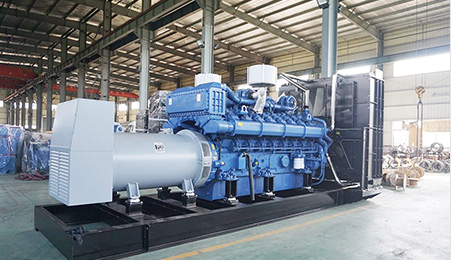
Yuchai generator set engine and alternator matching is the process of selecting a compatible diesel engine and alternator so that the complete generating set delivers the required kW, kVA, voltage, frequency, starting performance, and operating reliability. For industrial projects and export orders, the engine should not be selected separately from the alternator. Nanning Wanjin Mechanical & Electrical, an authorized Yuchai dealer, can coordinate the engine, alternator, control system, cooling package, fuel system, and project requirements so the quoted set is evaluated as a complete power-generation system rather than as a collection of unrelated components.
A diesel engine provides mechanical power through the crankshaft, while the alternator converts that mechanical power into electrical power. The engine must have sufficient continuous or standby output to drive the alternator at the specified speed. The alternator, in turn, must be suitable for the required voltage, frequency, phase arrangement, power factor, insulation system, excitation method, and load characteristics.
In practical terms, matching involves more than comparing the engine’s rated horsepower with the alternator’s nameplate rating. The complete set must operate at the correct rotational speed. For example, a four-pole alternator commonly operates at 1,500 rpm for 50 Hz or 1,800 rpm for 60 Hz, although the correct configuration depends on the alternator design and project requirements. The engine governor must maintain stable speed, while the alternator excitation and automatic voltage regulator must maintain acceptable voltage under changing load.
Yuchai offers diesel engines in different power ranges and configurations. The appropriate engine model depends on the required generator output, duty rating, emissions or site requirements where applicable, operating environment, and service conditions. An alternator may be sourced from different qualified manufacturers or selected according to the project specification. Because available combinations can vary by model and market, the final engine–alternator pairing should be confirmed through current technical datasheets and a formal quotation.
Generator capacity is commonly expressed in both kilowatts and kilovolt-amperes. Kilowatts represent real electrical power, while kVA represents apparent power. The relationship is:
kW = kVA × power factor
At a power factor of 0.8, a 500 kVA generator corresponds to approximately 400 kW of real power. This does not mean every load will operate at exactly 0.8 power factor. Motors, transformers, welding equipment, variable-frequency drives, UPS systems, and other industrial loads can produce different power-factor characteristics. The generator should therefore be sized against the actual load profile rather than only the nominal kVA figure on a preliminary equipment list.
Correct matching affects whether a generator can accept load smoothly, maintain voltage and frequency, and operate within the thermal limits of both the engine and alternator. If the alternator is too large for the available engine output, the set may not achieve its stated electrical capacity. If the engine is selected with insufficient reserve, frequency may fall when large motors start or when several loads are connected at once.
Oversizing can also create problems. A generator that operates for long periods at a very low percentage of its rated load may experience inefficient fuel use, wet stacking or incomplete combustion concerns in certain operating conditions, and reduced economic value. The solution is not to choose the smallest possible set, but to select a capacity that accommodates the normal load, starting requirements, future expansion, and the specified duty profile.
Alternator selection also affects voltage quality. Sensitive control systems, data equipment, medical equipment, and automation systems may require tighter voltage and frequency performance than basic resistive loads. The alternator design, AVR response, excitation system, winding arrangement, and control integration all influence the result. These characteristics must be considered together with the engine’s governor and the generator controller.
Running load and starting load are not the same. A motor may draw several times its normal running current during direct-on-line starting. Pumps, compressors, fans, elevators, conveyors, and refrigeration systems can therefore require substantial transient capacity even when their steady-state kW is moderate.
When assessing a project, identify the largest motor, its starting method, the order in which loads will be connected, and whether other loads are already operating when starting occurs. Star-delta starters, soft starters, and variable-frequency drives may reduce starting demand, but their effects should be confirmed with the equipment manufacturer. The generator supplier can then evaluate transient voltage dip, frequency recovery, and the required engine and alternator capacity.
The first step in Yuchai generator set engine and alternator matching is to establish a complete electrical and operating specification. Confirm the required rated output in kW and kVA, voltage, frequency, phase, neutral arrangement, power factor, duty rating, and operating hours. Also identify whether the generator is intended for prime power, standby power, continuous operation, peak shaving, rental use, or another duty profile.
Prime and standby ratings should not be treated as interchangeable. A standby set may be suitable for emergency operation with limited annual running hours and defined load conditions. A prime-rated set is intended for more demanding or variable operation, subject to the applicable rating rules. The selected Yuchai engine and alternator must be quoted against the correct rating category, not simply against a single headline capacity.
A standard combination is generally appropriate when the project has a conventional load profile, moderate starting requirements, and no unusual voltage-quality demands. This option may provide a straightforward configuration with a commonly specified Yuchai engine, a compatible alternator, standard controller functions, and the required cooling and exhaust systems.
When comparing standard options, review the actual engine model, rated speed, fuel consumption data, alternator model, rated current, insulation and protection details, AVR arrangement, controller functions, and available documentation. A standard configuration should still be checked against the site’s altitude, ambient temperature, voltage, frequency, and load sequence.
A higher transient-performance configuration may be appropriate for projects with large motors, transformers, elevators, compressors, or rapidly changing loads. The alternator may be selected for improved transient response, while the engine and governor must provide adequate power recovery during sudden load application.
This option can involve a larger generator rating, a different alternator frame or excitation arrangement, improved control settings, or a revised load sequence. It should be evaluated from measured or documented load data rather than assumed from the generator’s nominal kVA. The quotation should clearly state the basis of the transient-performance assessment and any limitations related to starting methods or step-load application.
Oversizing may be justified when a project has a documented expansion plan, substantial motor-starting requirements, high harmonic content, or a need to reduce voltage and frequency disturbance. However, the additional capacity should be linked to a specific technical reason. Excessive oversizing increases purchase, transportation, fuel, and maintenance costs and may create low-load operating issues.
A staged capacity plan may be more suitable than one significantly oversized set. For example, a project may use multiple generator sets for load sharing, redundancy, or future expansion. Parallel operation requires compatible controllers, synchronizing equipment, protection settings, load-sharing arrangements, and a suitable switchboard. These requirements should be defined before equipment selection because they influence both the alternator and engine-control configuration.
Where space, transport access, or installation weight is limited, the selection may focus on physical dimensions, radiator arrangement, exhaust routing, fuel tank configuration, and service access. A compact package must still provide adequate airflow and safe heat rejection. Reducing enclosure size without checking ventilation can cause high coolant or alternator temperatures.
For export projects, compare the complete shipping dimensions and gross weight, not only the generator base frame. The package may include a radiator, silencer, batteries, control panel, circuit breaker, acoustic enclosure, fuel system, and optional trailer or container components. These details can affect logistics, foundation design, lifting arrangements, and site installation.
A reliable quotation should identify the exact Yuchai engine model and rating, alternator manufacturer and model, generator output, frequency, voltage, phase, power factor, rated speed, controller, circuit breaker arrangement, cooling system, starting system, fuel tank provisions, exhaust components, and included accessories. If an item is excluded, such as cables, fuel storage, synchronization equipment, or site installation, it should be stated clearly.
Request the technical datasheets for both the engine and alternator. Confirm that the engine’s rated mechanical output is adequate for the alternator’s electrical rating at the specified speed and duty. Review fuel consumption at relevant load points, rather than relying only on a no-load or full-load figure. For large projects, request a load schedule and use it to check continuous load, peak load, motor starting, future expansion, and emergency operating conditions.
Altitude and ambient temperature can reduce available engine and alternator performance. High-altitude sites have lower air density, while high ambient temperatures reduce cooling efficiency. Enclosures, restricted ventilation, dust, humidity, and salt-laden air may also influence the final configuration. The quotation should state the reference conditions and identify whether derating or additional cooling measures are required.
Installation planning should include foundation loading, vibration control, ventilation openings, exhaust back pressure, fuel supply, battery charging, grounding, cable routing, and access for maintenance. The generator room must provide enough space to inspect filters, belts, batteries, coolant connections, control panels, and alternator terminals. A technically suitable set can still underperform if the installation restricts airflow or creates excessive exhaust back pressure.
Commissioning should verify phase sequence, output voltage, frequency, protection functions, emergency-stop operation, coolant and lubrication conditions, battery charging, and load response. Where practical, the set should be tested under an appropriate load rather than only operated without load. The test should confirm that the engine and alternator respond together when loads are applied and removed.
Maintenance planning should be based on the Yuchai engine manual, alternator documentation, controller instructions, operating hours, and site conditions. Routine work may include oil and filter service, coolant inspection, fuel-system checks, battery maintenance, belt inspection, radiator cleaning, exhaust inspection, and periodic electrical testing. Nanning Wanjin Mechanical & Electrical can support the specification, supply, installation coordination, commissioning, maintenance guidance, and after-sales communication required for an export or industrial project, subject to the agreed project scope.
Yuchai generator set engine and alternator matching should be treated as a complete engineering decision. The correct combination depends on electrical capacity, duty rating, motor-starting demand, voltage and frequency requirements, site conditions, future expansion, installation limitations, and maintenance expectations. Comparing only the engine brand or generator kVA does not provide enough information to judge whether the configuration is suitable.
A sound decision begins with a documented load profile and ends with a quotation that identifies the engine, alternator, controls, accessories, site assumptions, and support responsibilities. By checking the mechanical and electrical ratings together, project owners and contractors can reduce the risk of underperformance, unnecessary oversizing, difficult commissioning, and avoidable service issues.
Browse server-rendered product categories, application solutions, project references and technical articles. These direct links help buyers and search crawlers reach useful pages without relying on JavaScript menus.
Compare equipment families before confirming output, duty, environment and accessories.
Start selection from critical loads, motor starting, operating hours and site derating.
Read project references, company updates and generator-set selection or maintenance articles.
Wanjin supports generator-set sales, configuration checks, quotation, installation coordination, repair and scheduled maintenance.

