


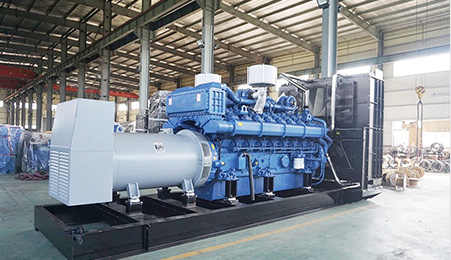
Yuchai generator set installation requirements define the technical, environmental, electrical, mechanical and operational conditions needed to install and operate a Yuchai diesel generator set safely and reliably. They cover generator room planning, foundation design, ventilation, exhaust discharge, fuel supply, electrical connection, grounding, control systems, commissioning and maintenance access. For export and industrial projects, these requirements should be checked against the selected engine and alternator specifications, the project load profile, applicable local regulations and the installation instructions supplied with the specific generator set.
Yuchai generator set installation requirements are not limited to placing the machine on a concrete floor and connecting cables. A complete installation must provide suitable support for the genset, adequate airflow for combustion and cooling, safe removal of exhaust gases, a correctly designed fuel system and an electrical connection that matches the rated output and operating mode.
The exact requirements depend on the generator set model, engine rating, alternator, enclosure or open-frame configuration, ambient conditions and intended application. A standby generator for emergency power may have different operating requirements from a prime-power unit used for long running hours. Before construction begins, the project team should confirm the engine model, alternator model, rated kW and kVA, rated voltage, frequency, phase configuration, power factor, control panel functions and allowable operating conditions.
The installation package should include the generator set datasheet, dimensional drawing, wiring diagram, foundation or base-frame information, control-panel documentation, recommended service clearances and instructions for starting, stopping and commissioning. Depending on the project scope, it may also include fuel-system information, exhaust back-pressure limits, battery requirements and recommended maintenance intervals.
Specifications must be verified for the actual unit being quoted or supplied. Engine output, alternator capacity and complete genset rating should not be assumed from a general product category. If the project requires a particular voltage, frequency, enclosure, automatic transfer arrangement or remote monitoring function, these details should be confirmed before installation materials are ordered.
The generator room or outdoor enclosure must provide enough space for operation, inspection and maintenance. Access should allow technicians to reach the control panel, batteries, filters, coolant connections, oil drain points, circuit breaker and other service components. Space is also required for moving the generator set into position and removing major components if future repair is necessary.
The floor should be level, sufficiently strong and suitable for the weight and vibration loads of the complete unit. The generator set should remain accessible after installation; surrounding walls, cable trays and exhaust components should not prevent routine service. For outdoor installations, the enclosure should protect the generator set from rain, dust, flooding and unauthorized access while still maintaining the airflow required by the engine and radiator.
Correct installation directly affects output stability, fuel consumption, engine temperature, starting performance and equipment service life. A generator set with a suitable engine and alternator can still perform poorly if the radiator cannot discharge heated air, the exhaust system creates excessive back pressure, the fuel supply is undersized or the electrical load exceeds the available capacity.
Installation also affects safety. Diesel exhaust contains hazardous gases and must be discharged away from occupied areas and air intakes. Fuel systems require appropriate storage, piping, isolation and spill-control measures. Electrical work must be carried out by qualified personnel in accordance with the applicable regulations and the generator set wiring documentation. Grounding, protective devices and cable selection must be treated as part of the power system design rather than as afterthoughts.
A diesel generator set produces heat through the engine, alternator and exhaust system. The room must supply enough clean air for combustion and remove the heat discharged by the radiator. In a radiator-cooled installation, the usual arrangement is to direct hot air from the radiator through a properly sized discharge opening or duct, while cooler air enters through an intake opening positioned to support a clear airflow path.
Ventilation openings should be designed around the actual radiator airflow and pressure requirements provided for the generator set. Restrictions caused by undersized louvers, sharp duct bends, protective screens or long exhaust paths can raise engine coolant temperature. Recirculation of hot air from the radiator outlet back to the air intake can produce overheating even when the room appears adequately ventilated.
The installation should also consider the site altitude and ambient temperature. High temperature and high altitude can reduce available engine performance or require derating, depending on the engine and generator set specifications. These conditions should be reviewed during sizing and confirmed with the supplier before final selection.
The exhaust system should use suitable materials, support the pipe independently where necessary and route gases safely away from the generator room. The exhaust pipe should be sized and arranged so that total back pressure remains within the engine manufacturer’s specified limit. Excessive back pressure can increase exhaust temperature, reduce engine performance and affect long-term reliability.
Flexible exhaust connections are commonly used near the engine to accommodate movement and reduce the transfer of vibration to rigid pipework. The system may require thermal insulation or guarding where personnel could contact hot surfaces. Exhaust outlets should be positioned so that gases cannot enter the generator room, nearby buildings, ventilation intakes or regularly occupied work areas.
The generator set should be installed on a foundation or support structure capable of carrying its operating weight and dynamic loads. The base should be level, stable and compatible with the base frame or vibration isolators supplied for the unit. Incorrect support can cause alignment problems, abnormal vibration, noise and stress on connected exhaust, fuel or electrical systems.
Vibration isolation should be selected according to the generator set arrangement and building structure. Flexible connections may be needed for exhaust, fuel and cable routes so that normal movement does not transfer excessive force to fixed services. The final arrangement should be checked after installation and again during commissioning.

The most reliable approach is to begin with the load and site conditions, then select and install the generator set around verified technical data. Yuchai generator set installation requirements should be reviewed during quotation, engineering, delivery preparation and commissioning. This prevents a mismatch between the generator set and the proposed room, fuel system or electrical distribution equipment.
Prepare a load schedule showing the connected loads, starting currents, running loads, operating sequence and required generator mode. Motors, pumps, compressors, transformers and other inductive loads may require additional capacity during starting. Sensitive electronic equipment may also require attention to voltage and frequency stability.
Generator capacity is commonly stated in kW and kVA. The relationship is expressed as:
kW = kVA x power factor
For example, a generator set rated at 100 kVA at a 0.8 power factor corresponds to 80 kW under that rating basis. The actual project calculation must consider the generator set’s stated rating, load power factor, motor starting requirements, future load growth and whether the unit will operate in standby, prime or another specified duty. The kW and kVA values should be confirmed from the selected engine-alternator combination rather than inferred from engine horsepower alone.
Record the installation altitude, minimum and maximum ambient temperature, humidity, dust exposure, salt exposure, flood risk and available room dimensions. For containerized or outdoor systems, also consider wind, rain, solar exposure, access for lifting equipment and the need for weather protection.
Confirm the available utility voltage and frequency, the required generator voltage and frequency, the number of phases, neutral arrangement and transfer method. If the generator will operate with an automatic transfer switch, synchronizing system or parallel generator sets, the controls and protection scheme must be coordinated before wiring begins.
The fuel system should use clean diesel suitable for the engine and should be designed to provide reliable supply under the expected operating conditions. Tank capacity should be based on the required autonomy, fuel consumption at the expected load and applicable safety rules. Fuel lines should be protected from damage, supported correctly and arranged to permit isolation and maintenance. The supplier’s recommendations should be followed for fuel inlet and return connections.
Starting batteries, chargers and cables must match the generator set requirements. Batteries should be installed where they are protected from excessive heat and where inspection is practical. Cable sizes, circuit breakers, isolators and termination methods should be selected according to the rated current, installation method, voltage drop and local electrical requirements.
Grounding and bonding should be designed as part of the complete electrical system. The generator frame, alternator, control equipment and associated distribution equipment must be connected according to the approved wiring diagram and local regulations. The neutral-to-ground arrangement requires particular attention because it depends on the system design and transfer equipment.
Commissioning should begin with a visual and mechanical inspection. Check mounting, fasteners, fluid levels, battery polarity, cable terminations, fuel connections, exhaust supports, ventilation paths, emergency stops and protective guards. Confirm that all temporary transport supports or protective materials have been removed where required.
The generator set should then be started and allowed to reach stable operating conditions before load testing. Record voltage, frequency, oil pressure, coolant temperature, battery charging voltage and other values available through the control system. Apply load progressively and verify that the generator set responds correctly to the expected operating sequence. Automatic transfer, alarm, shutdown and emergency-stop functions should be tested as part of the commissioning procedure.
Several installation problems occur because a project focuses on the generator set itself but overlooks the surrounding systems. The following points should be reviewed before handover and included in the maintenance plan.
A large room does not automatically provide adequate cooling. Airflow must account for radiator discharge, combustion air, duct resistance, louver pressure drop and heat released by the engine and alternator. The intake and discharge openings should be arranged to avoid short-circuiting airflow. If the room temperature rises during a sustained load test, the ventilation design should be investigated before the generator is placed into regular service.
Long exhaust runs, small-diameter pipes and excessive bends can create back pressure. Unsupported pipework can also load the engine exhaust outlet or flexible connector. Exhaust routing should be reviewed for pipe diameter, total length, bends, supports, expansion, insulation and outlet location. Hot exhaust components must be separated from combustible materials and protected in areas where personnel may come into contact with them.
Routine maintenance requires more than front access to the control panel. Filters, belts, batteries, oil drains, coolant components and electrical terminals should remain accessible. The room should provide enough clearance for safe servicing and sufficient access for lifting or removing major components. A compact installation that prevents basic maintenance can increase downtime and service cost.
The quotation and technical clarification should identify what is included in the generator set supply and what must be provided by the installation contractor. Typical scope questions include fuel tanks and piping, exhaust materials, ventilation equipment, power cables, automatic transfer equipment, grounding works, civil foundations, lifting, testing and operator training.
For export projects, the supplier should provide the verified generator set data and installation documentation available for the selected configuration. The local contractor remains responsible for applying relevant building, electrical, fire and environmental requirements at the installation site unless the contract assigns those duties differently. Clear responsibility limits reduce commissioning delays and prevent incompatible materials or assumptions.
Yuchai generator set installation requirements should therefore be treated as a complete engineering checklist covering the machine, the building and the electrical system. When the rating is matched to the real load, the site conditions are verified, the airflow and exhaust systems are correctly designed, and commissioning is documented, the generator set has a stronger foundation for dependable industrial operation. Ongoing maintenance should follow the applicable engine and generator set documentation, with operating records used to identify changes in temperature, voltage, frequency, alarms or load response.
Browse server-rendered product categories, application solutions, project references and technical articles. These direct links help buyers and search crawlers reach useful pages without relying on JavaScript menus.
Compare equipment families before confirming output, duty, environment and accessories.
Start selection from critical loads, motor starting, operating hours and site derating.
Read project references, company updates and generator-set selection or maintenance articles.
Wanjin supports generator-set sales, configuration checks, quotation, installation coordination, repair and scheduled maintenance.
